Photo by Nikita Kachanovsky on Unsplash
Why Movie Computers Never Sleep
When a character sits down at a computer in a film, the screen is already on. Always. No login screen, no sleep mode, no waiting for the display to wake. The machine glows with perfect readiness, whether it’s 3 a.m. in a darkened apartment or the protagonist’s first moment back at their desk after weeks away.
This isn’t lazy filmmaking. It’s a deliberate compression of time and friction, a small choice that serves the forward momentum of narrative cinema.
The Cost of Digital Realism
In the real world, computers sleep. Screens dim after minutes of inactivity, laptops close into hibernation, and security-conscious workplaces require fresh logins multiple times a day. These pauses exist for power savings, privacy, and security—but they are narrative dead weight on screen.
A character arriving at a desk, wiggling the mouse, waiting three seconds for the screen to wake, then typing a password (possibly twice, because the first attempt always fails) adds fifteen seconds of non-information. That’s fifteen seconds where the audience learns nothing new, feels nothing, and watches a character perform the digital equivalent of unlocking a door. Film grammar has always sought to trim exactly this kind of moment.
Always-On as Visual Shorthand
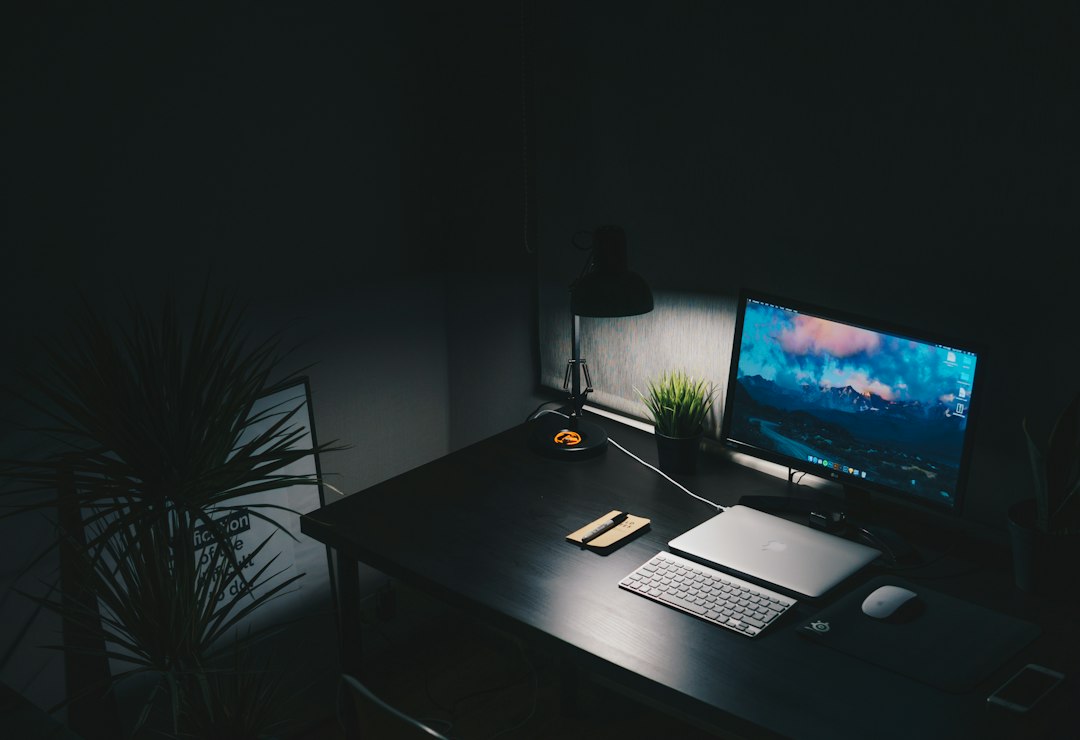
The perpetually awake computer does more than save time. It signals availability and urgency. A glowing screen in a dark room tells the audience that information is accessible right now—that the character can, without delay, search a database, read an email, discover a clue. The absence of friction between intention and action keeps the story’s tempo intact.
This is especially important in thrillers and procedurals, where a character’s relationship to a computer is often investigative or reactive. The hacker arriving at a terminal, the detective checking case files, the scientist reviewing data—all of these moments hinge on immediate access. A login screen would interrupt the urgency the scene is built to deliver.
The Glow as Atmosphere
There’s also a compositional reason. A lit screen provides a practical light source, casting a cool glow across the actor’s face. This is especially valuable in night scenes or moments of isolation, where the computer becomes both a narrative tool and a lighting fixture. Cinematographers rely on this: the blue-white rectangle is a controlled, motivated source that can sculpt a face in close-up without requiring additional rigging.
In contrast, a dark screen is a dead zone in the frame—offering neither information nor illumination. The always-on computer serves the image as much as the story.
When Realism Intrudes
Occasionally, a film does show a character logging in, entering a password, or waiting for a system to boot. These moments are almost always intentional beats—used to build tension (the countdown while the system loads), to emphasize security (the character shouldn’t have access), or to highlight a character’s relationship to technology (they’re unfamiliar, anxious, or methodical).
But these are exceptions. The default state is instant availability, because cinema’s job is not to document how we interact with machines, but to use machines as instruments of storytelling. The perpetually awake computer is just one more invisible edit, a quiet choice that keeps the story moving and the frame alive.