Photo by Jake Walker on Unsplash
Why Movie Computers Always Display Perfect Typography
Watch any thriller where a hacker breaks into a secure system or a detective searches a database, and you’ll notice something immediately: the text on screen is huge, the colors are vivid, and every interface looks like it was designed by a team of graphic designers. Because it was.
Real computer screens don’t work on camera. The text is too small, the contrast is too low, and the information density makes it impossible for an audience to read anything from ten feet away in a darkened theater. So production teams build custom screen graphics from scratch—a specialized discipline called screen graphics design or playback graphics.
The Legibility Problem
A typical desktop application uses 12-14 point type with detailed menus, toolbars, and multiple windows. That’s fine when you’re sitting eighteen inches from a monitor, but in a medium shot framed to show an actor’s face and upper body, that same screen becomes an unreadable blur of gray pixels.
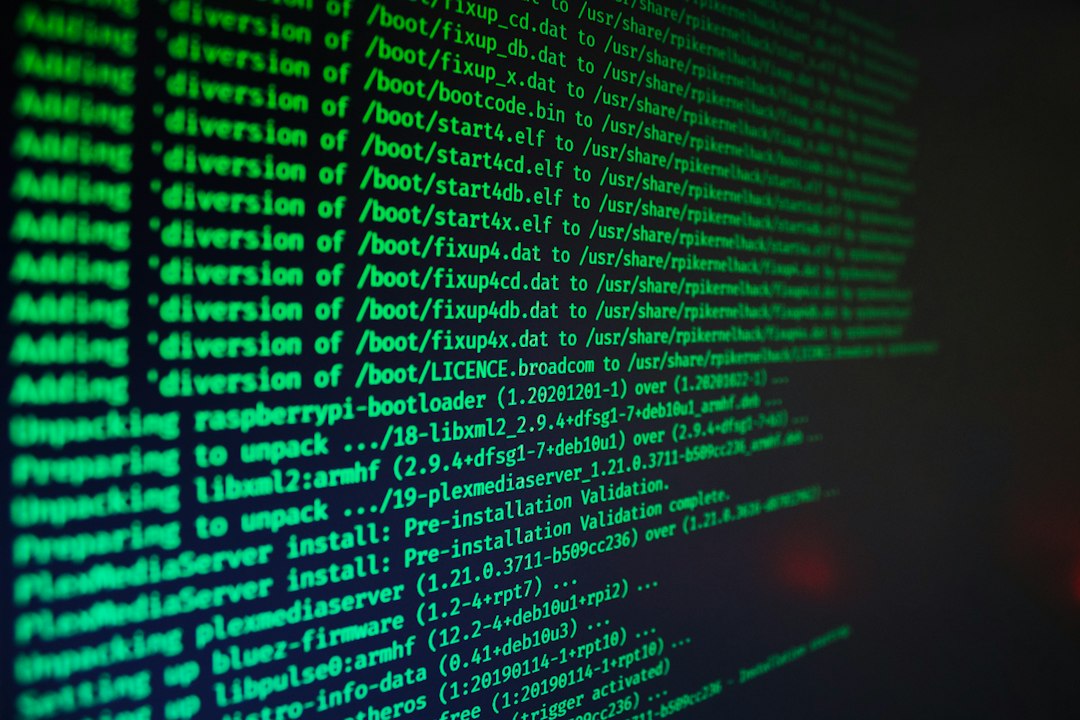
Film graphics solve this by blowing up the type to 24, 36, even 48 points. They strip away unnecessary chrome—no file menus, no toolbars, no status bars. What remains is hyper-legible, often white or bright green text on a dark background, with only the information the story needs to convey. The result looks nothing like actual software, but it reads perfectly on camera.
Custom Builds for Every Screen
Screen graphics artists receive the script and work with the director to determine what each computer needs to display and when. They design fictional interfaces in tools like After Effects or even code functional web-based displays that can respond to the actor’s input in real time.
Some productions use playback operators who sit off-camera triggering animations and screen changes on cue, synchronized to the actor’s dialogue. Others pre-render video files that loop on the monitor during the take. The goal is always the same: make sure the audience can read what matters without squinting or pausing.
Why Everything Looks Like a Hologram
When screen graphics get stylized—glowing blue wireframes, rotating 3D data cubes, cascading columns of code—it’s usually because the alternative is boring or incomprehensible. Real data analysis involves spreadsheets and SQL queries. Real hacking involves text editors and terminal windows. Neither of these is visually dynamic, so designers invent animated interfaces that convey progress, urgency, and technical sophistication even if they bear no relationship to how the software actually works.
These fantasy interfaces also give actors something to react to. A static screen of white text offers no movement, no focal point, no sense of advancing action. An animated interface with progress bars, flashing alerts, and cascading data gives the actor beats to play against and gives the editor material to cut on.
The Trademark Trap
Another reason production teams build custom graphics: they can’t show real software without permission. Displaying a recognizable application—complete with its logo, trade dress, and UI—can constitute trademark infringement or require a licensing deal. It’s easier and cheaper to design a fictional interface that evokes the idea of email, mapping software, or a security system without copying any actual product.
The same concern applies to websites and social media platforms. Films either negotiate product placement deals or build fictional equivalents. That’s why so many movie characters use phones with generic icons and browse social networks with names like “FriendSpace” or “ConnectHub.”
When Real Software Sneaks Through
Occasionally a film will use actual software, especially in lower-budget productions or scenes where the screen isn’t the focus. But even then, production assistants often increase the system font size, switch to high-contrast themes, or zoom the display to 150 percent. The goal remains the same: make sure the audience can see what the character sees, even if it means breaking the realism of the interface.
The next time you watch a technician pull up a database or a hacker navigates a file system, notice the oversized type, the simplified layout, and the suspiciously well-designed color scheme. That’s not a real application. That’s a piece of screen graphics built specifically for the camera, crafted to be read from the back row of a theater and edited to match the rhythm of the scene. It’s invisible craft work that makes the impossible feel immediate.