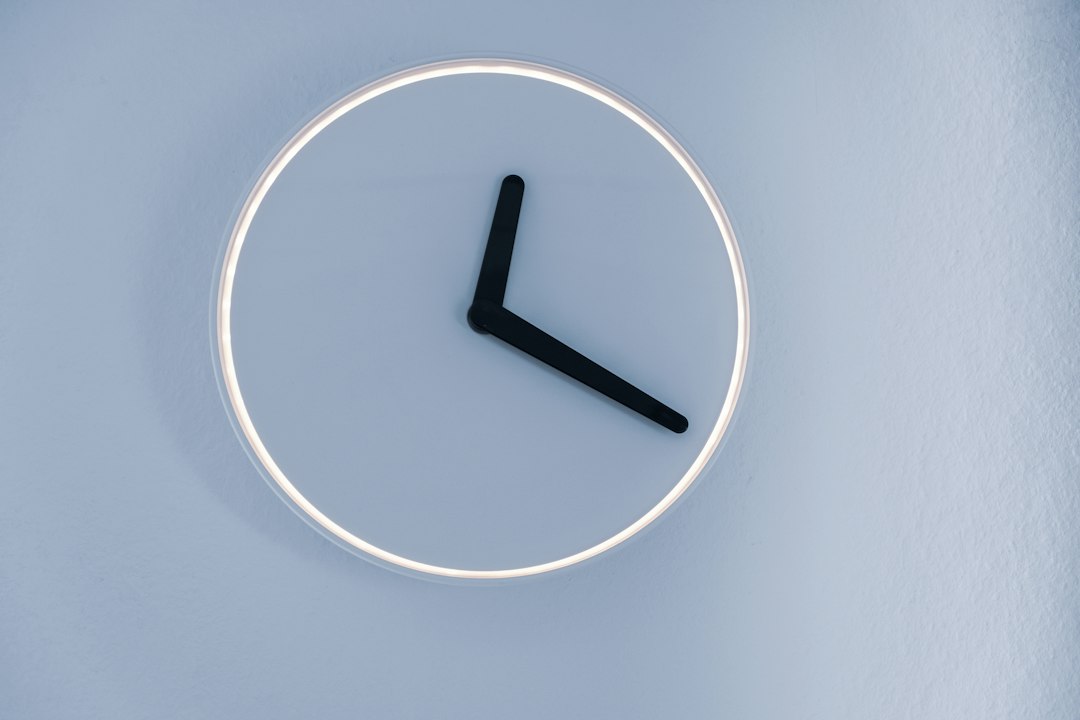
Photo by Moritz Kindler on Unsplash
Why Movie Clocks Never Show the Real Time
Watch enough films and you’ll notice something odd: when a character glances at a wall clock or checks their watch, the time shown is rarely random. Clocks in movies are set pieces, chosen as deliberately as any line of dialogue or camera angle. They tell the audience something specific about the moment, the urgency, or the world—and they almost never reflect the actual time of day the scene was filmed.
The Magic Hours: 7:00, 3:00, and Midnight
Certain times appear more often than others because they carry built-in meaning. Seven in the morning signals routine, the beginning of a workday, the threshold between sleep and action. It’s why alarm clocks in countless films click over to 7:00 AM—it’s immediately legible as “morning” without needing exterior light or additional context.
Three o’clock—whether AM or PM—has its own weight. In the afternoon, it’s the school dismissal hour, the late-day slump, the moment when time starts to run out. At night, 3:00 AM reads as the loneliest hour, the deep middle of sleeplessness or danger. Midnight, of course, is the ultimate threshold: the end of one day, the start of another, the witching hour.
These aren’t arbitrary. They’re cultural shorthand, and filmmakers use them the way a composer uses a minor chord.
Avoiding the Ambiguous Middle
Times like 10:42 or 4:18 don’t communicate much at a glance. They feel random, unmotivated. A clock showing 10:42 makes the audience ask, “Is that morning? Night? Does it matter?” In a medium where every frame costs money and every detail should serve the story, ambiguity is expensive.
Filmmakers prefer times that land clearly: early morning, late night, high noon, the edge of evening. If the story doesn’t need precision, the clock will show a round, recognizable number that orients the viewer instantly.
Continuity and the Problem of Real Time
Shooting a scene rarely happens in sequence or even on the same day. A conversation in a kitchen might be filmed over six hours, with coverage from multiple angles. If the wall clock in the background were running, it would jump from 2:00 PM to 8:00 PM between shots. The solution: stop the clock, or set it to a time that makes sense for the scene’s narrative context, not the production schedule.
Props departments handle this routinely. Clocks are set before every setup, checked against continuity notes, and adjusted if the scene is reshot weeks later. The time on screen is a continuity detail, treated like the level of liquid in a glass or the position of a pen on a desk.
When Precision Matters
Sometimes the exact time is weight-bearing. A thriller might hinge on a countdown—“You have until 9:00 PM”—and every clock in every subsequent shot becomes a narrative device, ticking toward the deadline. In these cases, the time shown is planned shot by shot, sometimes adjusted in post-production with digital replacement if the story changes in the edit.
Even then, the times are chosen for clarity. If a character has thirty minutes to defuse a bomb, the clock won’t start at 6:47. It’ll start at 7:00, so the audience can track the countdown without doing mental math.
The Invisible Craft
Most viewers never consciously register the time on a clock in the background. That’s the point. When it’s chosen well, it reinforces the scene’s context—morning routine, late-night crisis, the ticking urgency of a deadline—without drawing attention to itself. When it’s wrong, or random, or inconsistent, it pulls focus. The clock becomes a mistake instead of a tool.
Film is an art of control, and time—both narrative and literal—is one more variable under the filmmaker’s hand. The clock on the wall isn’t there to tell you what time it is. It’s there to tell you what kind of time it is.