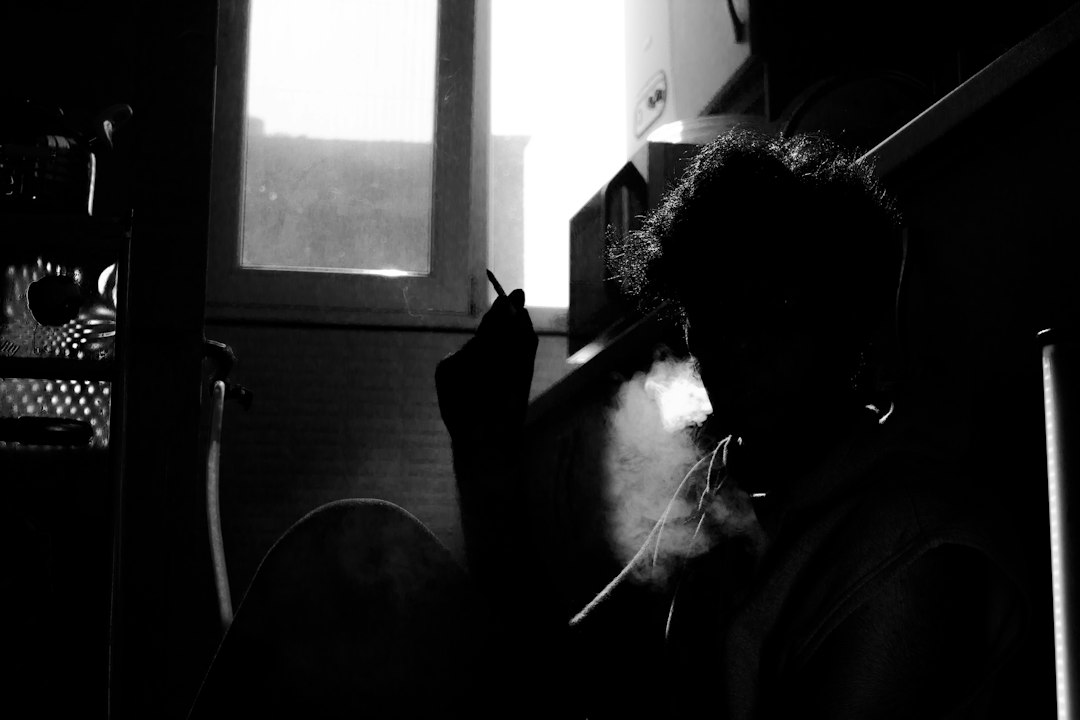
Photo by Hamed Hoseini Pur on Unsplash
Why Movie Characters Always Light Cigarettes Twice
Watch enough classic noir or contemporary drama and you’ll notice something odd: characters frequently light the same cigarette multiple times across consecutive shots. A detective strikes a match in close-up, cuts to a wide angle, and suddenly he’s lighting it again. The cigarette that was half-finished a moment ago is now pristine and unlit.
This isn’t carelessness. It’s one of the most persistent continuity challenges in filmmaking, born from the collision between how movies are shot and how smoking actually works.
The Coverage Problem
Films are built from coverage: multiple angles of the same moment captured separately, then assembled in editing. A conversation might require a wide master shot, individual close-ups, over-the-shoulder angles, and insert shots of hands or objects. Each angle is filmed as its own take, often minutes or hours apart.
When a character smokes during this scene, every take burns through another cigarette. The actor performs the wide shot, cigarette gradually shortening. Then the camera repositions for a close-up, and a fresh cigarette must be used because the first one is spent. By the time you’ve shot four or five angles, you’ve gone through four or five cigarettes at different stages of consumption.
The editor now faces an impossible puzzle: cutting between shots where the cigarette length jumps wildly, the ash appears and disappears, and the smoke patterns never match.
Why Cigarettes Are Uniquely Difficult
Most props can be reset between takes. Pour the coffee again, replace the beer, swap in a fresh sandwich. But cigarettes announce their timeline. They burn continuously, shorten predictably, and accumulate ash that betrays exactly how much time has passed.
Script supervisors photograph each setup and take meticulous notes about prop states, including cigarette length. Actors try to time their drags and flicks consistently across takes. But precision matching is nearly impossible when you’re juggling performance, dialogue timing, and the physical behavior of burning tobacco.
Some productions measure remaining cigarette length and try to match it across angles. Others simply accept that perfect continuity is unattainable and cut where the performance works best, trusting that most viewers won’t notice or care about the mismatch.
The Double-Light Solution
The most visible symptom is the double-light: a character strikes a lighter or match in one shot, then appears to light the same cigarette again after the cut. This happens when the editor needs a specific moment from one angle—say, a great line reading in close-up—but the cigarette continuity doesn’t line up with the previous shot.
Rather than jarring jump in cigarette length, the editor chooses to show the lighting action twice. It breaks continuity, but in a way that reads as deliberate. The eye accepts “he’s lighting his cigarette” more readily than it accepts “his cigarette just grew an inch longer.”
Shooting Around It
Modern productions with tight continuity control sometimes avoid the problem entirely by having characters smoke in a single unbroken shot, or by simply not showing lit cigarettes during coverage-heavy scenes. Digital effects can extend or shorten cigarettes in post-production, though this is expensive and rarely worth the effort for background business.
Some directors embrace the artificiality. The stylized worlds of Wes Anderson or the Coen Brothers operate under heightened visual rules where small continuity breaks feel consistent with the overall aesthetic. When everything is precisely composed and slightly unreal, a regenerating cigarette fits right in.
Why It Persists
The double-light endures because the alternative—limiting camera angles or avoiding smoking entirely—is worse. Films need coverage to create rhythm, emotion, and spatial clarity. Smoking remains a powerful visual tool for character, mood, and period setting.
So the cigarette gets lit twice. The ash disappears. The length fluctuates. And for most viewers, the story continues uninterrupted, because cinema has always been built from these invisible compromises between what the camera captures and what the edit requires.