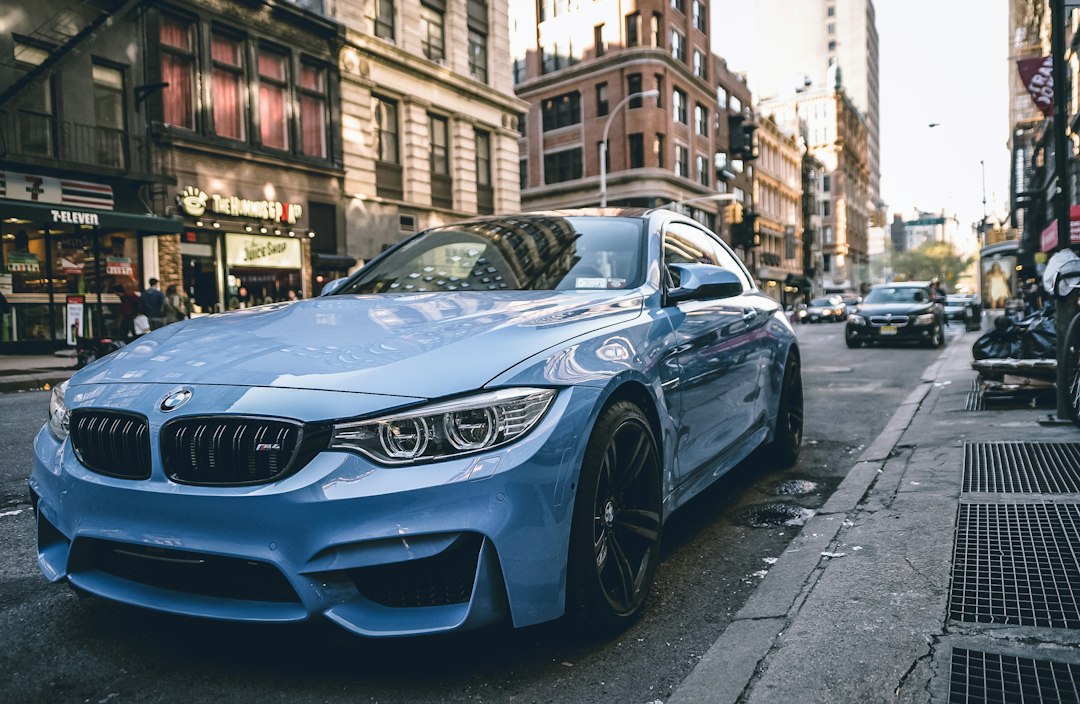
Photo by Zan Lazarevic on Unsplash
Why Movie Characters Always Park in Front of Buildings
Watch any film and you’ll notice something that never happens in real life: characters always find parking directly in front of their destination. The detective pulls up to the crime scene and parks at the curb. The couple arrives at the restaurant and slides into the spot by the entrance. No circling the block, no parking garage, no walking three blocks from the only available space.
This isn’t lazy writing. It’s a deliberate production choice driven by the mechanics of visual storytelling.
Spatial continuity requires efficiency
Film compresses time and space. When a character drives to a location, the audience needs to understand the journey is complete and the next story beat can begin. Parking directly in front creates instant spatial clarity: the character was in the car, now they’re at the destination, and we can move forward.
If a character parked around the corner, the film would need additional shots to maintain spatial geography. You’d need an establishing shot of the building, a shot of the character walking from wherever they parked, maybe a corner turn or two. That’s twenty to thirty seconds of screen time devoted to walking, and unless that walk serves a narrative purpose—a conversation, a moment of tension, a visual reveal—it’s dead weight.
Every scene in a film must justify its existence. Parking in front eliminates connective tissue that adds nothing.
Production logistics favor proximity
From a practical standpoint, filming a character parking far away creates complications. If your actor parks three blocks from the building, you now need to control or clear those three blocks for continuity. You need permits, traffic management, and multiple camera setups to cover the walk.
Parking in front means your entire scene happens in one controlled location. The camera can hold on the car, follow the character to the door, and maintain visual coherence without cutting away. This saves time, money, and logistical headaches.
It’s the same reason characters in films always live on corner apartments with excellent natural light. Production design follows the path of least resistance.
The exceptions that prove the rule
When films do show characters struggling to park, it’s always motivated by story. A character circling for parking might be late for something important, building tension. A character parking far away might be hiding their arrival or setting up a long walk that allows for dialogue or character development.
The opening of a thriller might show a character in a parking garage several floors down, using the isolated setting to build unease. A comedy might play parking frustration for laughs. But these are conscious choices, not defaults.
The default is efficiency.
Real life doesn’t photograph well
This is true across filmmaking: real behavior often doesn’t serve the story. People say “um” and “uh” constantly in conversation, but film dialogue cuts those out. People take much longer to do basic tasks than films depict. People forget things, backtrack, and waste time in ways that would kill a film’s pacing.
Parking in front is part of this larger pattern. It’s not that filmmakers don’t know finding parking is hard. It’s that depicting it accurately would slow the story to a crawl for no narrative gain.
The invisible grammar of convenience
Over decades, audiences have learned to accept these conveniences as part of film grammar. We don’t question why the detective always finds a spot, just like we don’t question why characters never stumble over words or why apartments are three times the size they should be.
These aren’t errors. They’re the invisible architecture that allows films to focus on what matters: the story, the characters, the conflict. Parking in front is a small piece of a much larger system designed to keep the audience engaged and the camera moving.
The next time you watch a character pull up directly in front of their destination, you’re seeing a hundred years of filmmaking convention at work. It’s not realism. It’s something more useful: clarity.