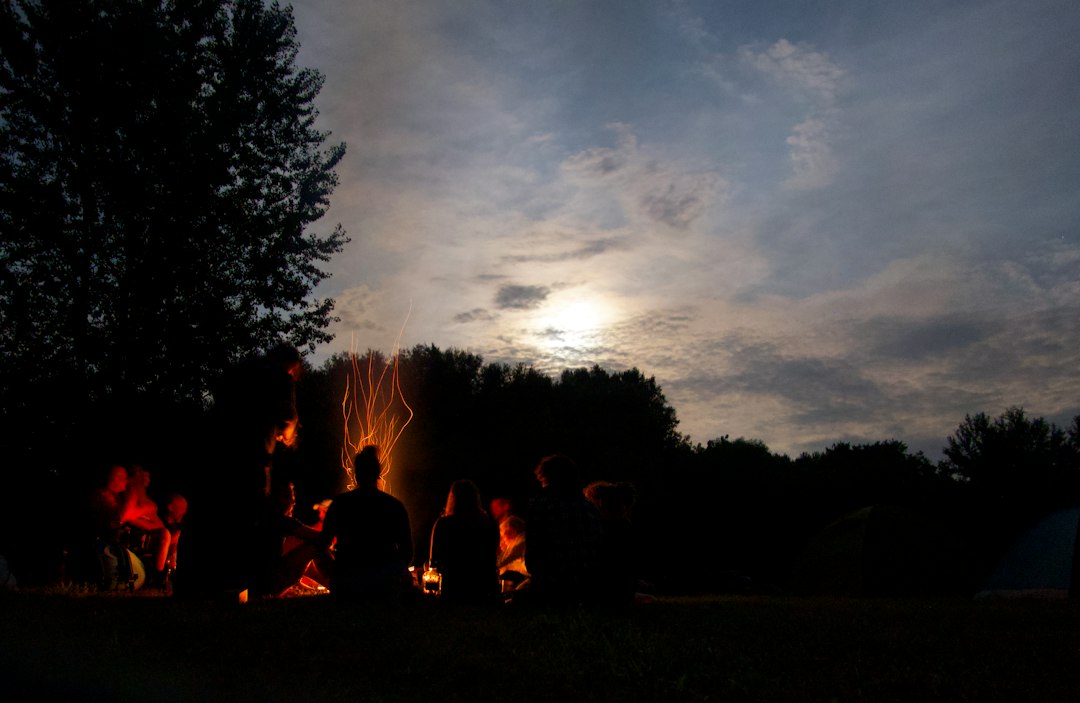
Photo by Mihály Köles on Unsplash
Why Movie Campfires Stay Perfectly Lit
Watch any movie campfire scene and you’ll notice something odd: the fire never needs tending. Characters sit around the flames for extended conversations, sometimes covering hours of story time, and the fire maintains the same height, intensity, and warm glow throughout. No one adds logs. No one pokes at embers. The flames never die down or flare up unexpectedly.
Real campfires don’t work this way. They need constant attention—wood added every twenty minutes, logs repositioned, airflow adjusted. They smoke, pop, and shift. Their light output varies wildly as flames rise and fall.
Film production can’t afford that unpredictability.
The Control Problem
Continuity is the fundamental issue. A dialogue scene might take four hours to shoot, capturing different angles and coverage of the same two-minute conversation. The fire needs to look identical in every shot, whether you’re filming the wide establishing shot at 2 PM or the close-up reaction at 6 PM.
A real fire changes constantly. Flames might be high in the master shot but reduced to coals by the time you shoot the reverse angle. That creates a continuity nightmare in the edit, where cuts between angles reveal obvious differences in light intensity, flame height, and smoke patterns.
The solution: most movie campfires aren’t primarily wood fires at all.
Gas-Powered Flames
Professional film campfires typically run on propane, fed through carefully hidden gas lines buried under the set or concealed beneath prop logs. A gas valve offscreen gives the gaffer or special effects supervisor precise control over flame height and intensity.
The flames stay consistent because they’re essentially outdoor gas burners dressed to look like wood fires. Production designers arrange real logs around the gas jets, sometimes partially burning them in advance so they look like they’ve been in the fire for a while. The gas flames lick around the wood, selling the illusion without the wood actually fueling the fire.
This setup eliminates smoke control problems too. Propane burns cleaner than wood, producing less smoke that might drift into frame, obscure actors’ faces, or trigger smoke detectors in sound stages. When visible smoke is needed for atmosphere, it’s often added separately using smoke machines positioned to create the desired haze without the unpredictable gusts a real wood fire produces.
Supplemental Lighting
The campfire you see is rarely the light source you’re actually watching. While the practical fire provides some illumination and interactive light on actors’ faces, cinematographers almost always supplement it with hidden film lights.
Gas flames don’t produce the same intensity of light as a roaring wood fire, and they don’t throw light far enough to properly expose faces sitting around the circle. So lighting technicians position orange-gelled lights—often LED panels with programmable flicker effects—just outside the frame, bouncing warm light off reflectors to simulate firelight at a controlled, camera-friendly intensity.
The practical fire still matters because it creates genuine interactive light—those dancing shadows and amber highlights moving across faces. But the heavy lifting of actually lighting the scene comes from the supplemental sources locked to the same color temperature and intensity across every setup.
When Real Fire Shows Up
Wood does appear in certain shots. Extreme close-ups of flames, inserts of hands warming over the fire, or shots of kindling catching might use actual burning wood because the detail matters at that magnification. These inserts are filmed separately, often at different times, and cut into the scene.
Action sequences sometimes demand real pyrotechnics—fires that spread, explode, or genuinely threaten characters require special effects coordination and safety protocols far beyond a controlled propane setup. But for the typical dialogue scene around a campfire, the steady gas flame delivers exactly what the scene needs: reliable, repeatable, safe firelight that never goes out before the director calls cut.
The movie campfire doesn’t need tending because it’s not really a campfire. It’s a lighting instrument disguised as one.