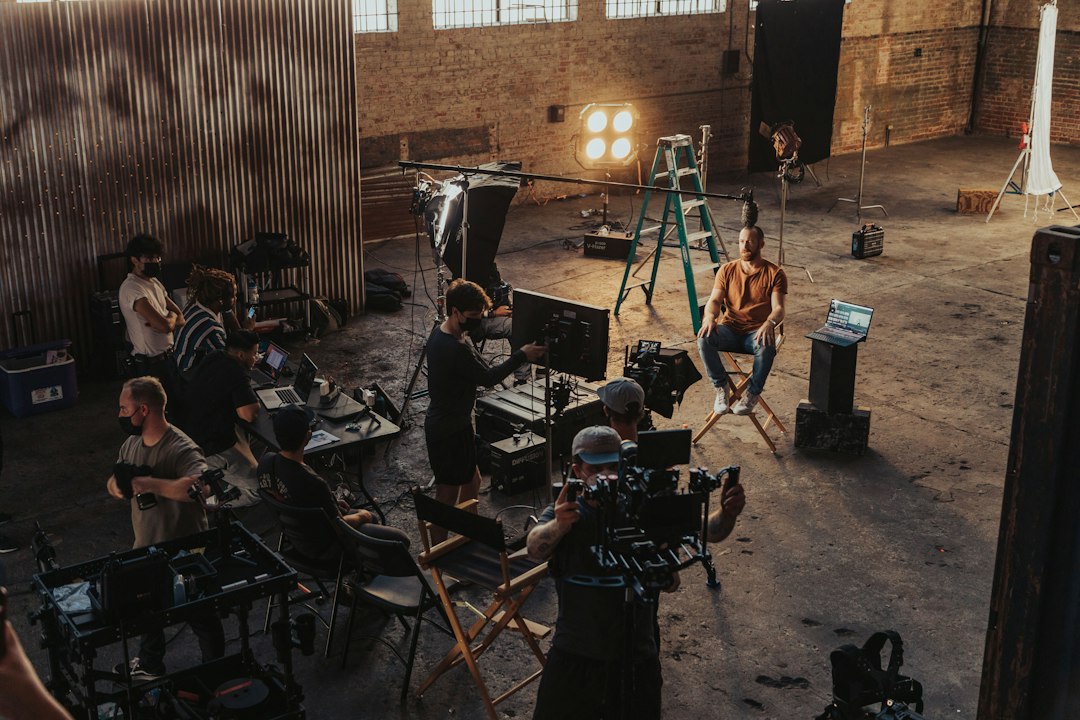
Photo by Jakob Owens on Unsplash
Why Movie Cameras Keep Rolling After "Cut"
When a director calls “cut” on a film set, you might assume the camera operator immediately stops recording. In reality, most professional camera operators keep the camera rolling for several seconds after the cut is called. This isn’t a mistake or laziness—it’s a deliberate practice rooted in decades of production experience and a handful of very practical reasons.
Capturing the Actor’s Recovery
The moment immediately after a director calls cut often contains something valuable: the actor’s natural transition out of character. Sometimes this includes a genuine emotional release, a spontaneous reaction, or a continuation of the performance that wasn’t consciously controlled. Editors occasionally find gold in these unguarded seconds—a subtle expression, an exhale, or a micro-gesture that feels more authentic than anything in the scripted take.
Directors like David Fincher and actors like Joaquin Phoenix are known for blurring the line between “in character” and “out of character,” and the footage captured after cut can become part of the final film. Even if it’s never used, having that buffer gives the editor more material to work with, especially for emotional scenes where the tail end of a reaction might be the most honest moment on screen.
Avoiding Technical Cutoffs
Digital cinema cameras and film cameras alike need a brief wind-down period. Stopping recording the instant “cut” is called can result in abrupt technical artifacts—frame corruption, stuttering, or incomplete data writes. By letting the camera roll a few extra seconds, the operator ensures the last frame of usable footage is clean and intact.
This practice dates back to film stock days, when the camera mechanism needed a moment to stabilize after the director’s call. Even though digital cameras don’t have the same mechanical constraints, the habit persists because it still solves real problems: file integrity, metadata logging, and timecode continuity all benefit from that extra cushion.
Protecting Against Premature Cuts
Sometimes a director says “cut,” then immediately changes their mind. Maybe an actor ad-libbed something unexpected, or the director realized the scene could continue naturally for another beat. If the camera has already stopped, that moment is lost. By keeping the camera rolling for a few extra seconds, the operator gives the director a narrow window to reverse course or let the scene play out.
This is especially common in improvisational styles of filmmaking or when working with directors who encourage actors to explore beyond the scripted action. The cost of a few extra seconds of media storage is trivial compared to the cost of losing an irreplaceable moment.
The Editor’s Safety Net
In post-production, editors often need a few extra frames before and after the intended action to smooth out transitions, adjust timing, or finesse a cut. Those additional seconds of footage after “cut” provide exactly that. They’re not part of the performance, but they’re part of the recording buffer that makes editing flexible.
Professional editors refer to this extra material as “handles,” and they’re considered essential. Without them, certain transitions become impossible or require awkward workarounds. The practice of rolling past cut is, in part, a gift from the set to the cutting room.
The Human Lag
There’s also a simple human factor: the camera operator’s reaction time. Even the most experienced operator needs a fraction of a second to process the director’s call, locate the record button, and press it. Rolling a few extra seconds ensures that nothing important is clipped by reflex or timing error. It’s a small insurance policy against the unpredictability of human coordination on a busy set.
The next time you watch a behind-the-scenes featurette and hear “cut,” watch the camera operator. Chances are, their finger doesn’t move for another two or three seconds. That’s not hesitation—it’s craft.