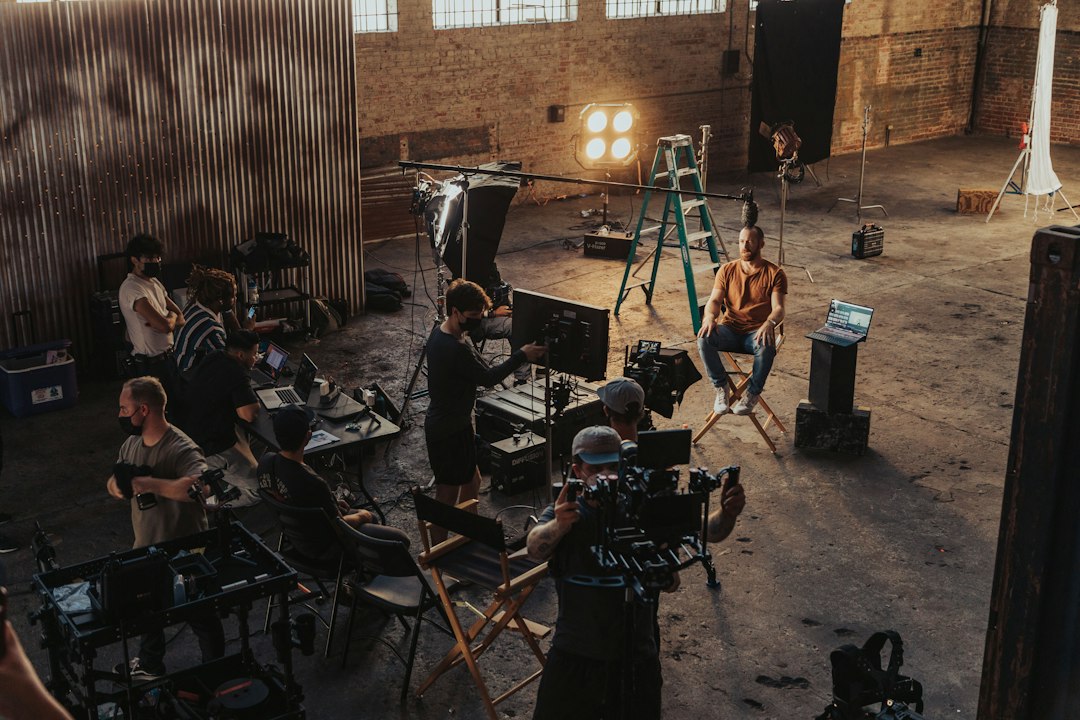
Photo by Jakob Owens on Unsplash
Why Movie Blood Looks Nothing Like Real Blood
Real blood is dark, almost maroon when it dries. It doesn’t flow like water, and it definitely doesn’t glow bright red under tungsten lights. Yet movie blood has to read as blood to an audience sitting in a dark theater, watching performers under artificial light, captured through camera sensors that interpret color differently than the human eye does in person.
The result is a visual language of blood that filmmakers have refined over decades—one that prioritizes readability and emotional impact over medical accuracy.
The Classic Formula
Most practical stage blood is built on a corn syrup base, mixed with food coloring and sometimes cocoa powder or coffee to darken the tone. The exact recipe varies by production, but the goal is consistent: a liquid that photographs well, flows convincingly, and won’t stain costumes or skin permanently.
Herschell Gordon Lewis, director of 1960s splatter films, used Kaopectate for its opacity. Later productions switched to Kensington Gore, a commercial formula named after a London street, which became the industry standard for decades. Modern recipes often add methyl cellulose to control viscosity—thicker for arterial spray, thinner for pooling wounds.
The color is always brighter than real blood. On camera, especially under cool lighting or through digital sensors, genuine blood looks brown or black. To register as red on screen, stage blood needs to be almost candy-colored in person.
Matching the Medium
Film stock and digital sensors don’t see red the same way. Older film emulsions were less sensitive to red wavelengths, so blood had to be even brighter. Digital cameras handle red better but can oversaturate, creating clipping or that telltale “too perfect” red that signals CGI or bad practical work.
Cinematographers adjust for this by testing blood under their specific lighting setup and camera package before shooting. A formula that works under daylight might look wrong under sodium vapor practicals. A mix that reads well on ARRI sensors might fail on RED.
This is why productions often have a special effects supervisor mix blood on set rather than buying pre-made. The blood has to match the image, not reality.
Digital Blood and Hybrid Approaches
CGI blood solved several practical problems: actors don’t need to sit in makeup for resets, and directors can control exactly how much blood appears and when. Digital also allows for physics that practical effects can’t easily achieve—misting sprays, dripping that interacts with complex surfaces, blood that soaks into clothing in real time.
But digital blood still has to follow the visual rules established by practical effects. Audiences have learned to read bright, slightly translucent red as blood. Make it too dark or too realistic, and it stops registering emotionally. Make it too glossy or too fluid, and it feels fake in a different way.
Many contemporary productions use a hybrid method: practical blood for contact points and actor interaction, with digital enhancements for volume, spray, and cleanup. The actor gets hit with a small squib burst, then post-production extends the splash and adds the pool forming beneath them.
Why It Still Matters
Even in an era of extensive digital post-production, practical blood remains the standard for horror, action, and war films. It gives actors something to react to, provides interactive lighting and texture on set, and grounds CGI enhancements with physical reference.
The craft lies in making something that doesn’t exist in nature—a photogenic, emotionally effective representation of violence—that an audience accepts without question. Movie blood isn’t real blood. It’s a tool in the visual language of cinema, refined over a century to do one job: make you feel the impact of what you’re seeing, even if it looks nothing like the real thing under examination.
That gap between reality and representation is where the craft lives.