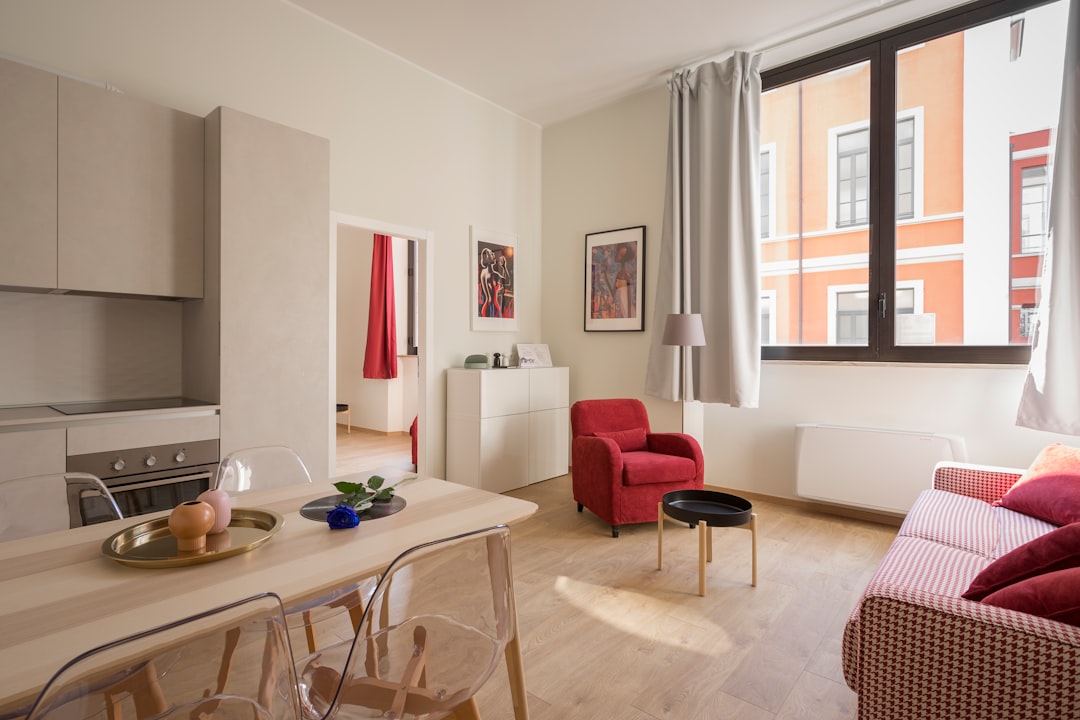
Photo by deborah cortelazzi on Unsplash
Why Movie Apartments Are Impossibly Large
You’ve seen it a hundred times: a twenty-something barista lives in a sprawling New York loft with exposed brick, floor-to-ceiling windows, and enough room to host a dinner party for twelve. A graduate student occupies a San Francisco apartment with a separate dining area and a kitchen island. A junior journalist somehow affords a place where the camera can move freely without bumping into furniture.
These apartments aren’t just unrealistic—they’re production necessities. The gap between what characters could afford and what they actually inhabit reveals one of cinema’s most practical compromises.
The Camera Needs Space
A film crew doesn’t consist of just actors. A single dialogue scene might require a camera operator, focus puller, boom operator, gaffer, key grip, script supervisor, director, and continuity personnel—all squeezed into the same room. Wide shots demand even more distance.
Real apartments, especially in expensive cities where films are often set, can barely fit the furniture, let alone a Steadicam rig on a dolly track. Cinematographers need room to light scenes properly, which means space for C-stands, flags, and bounce boards. Sound recordists need the boom pole to stay out of frame while remaining close enough to capture clean dialogue.
The result: every apartment becomes a soundstage, or at least a carefully chosen location with production-friendly dimensions. Sets are built 10–20% larger than their real-world equivalents, with breakaway walls that can be removed for specific camera angles.
Staging and Blocking
Actors need space to move, and directors need space to compose shots with visual interest. A cramped studio apartment might reflect reality, but it severely limits blocking options. Characters can’t circle each other during an argument, can’t retreat to opposite sides of the room during a tense conversation, and can’t use physical distance to communicate emotional distance.
The oversized apartment becomes a canvas for visual storytelling. When two characters stand on opposite ends of a massive living room, the empty space between them carries meaning. When someone opens the door to a spacious foyer rather than stepping directly into the kitchen, it gives the scene breathing room and establishes a sense of arrival.
Multiple characters in a scene compound the problem. A realistic apartment would force everyone into tight clusters, limiting the director’s ability to use composition and depth. The extra square footage lets filmmakers stage scenes in layers, with foreground, middle ground, and background action all contributing to the story.
The Suspension We Accept
Audiences generally don’t notice or don’t care. We’ve been trained by decades of film and television to accept that fictional apartments follow different economic rules. The visual language of cinema has normalized spacious interiors to the point where a realistically cramped apartment would feel claustrophobic and uncomfortable to watch.
Occasionally, filmmakers acknowledge the absurdity—Friends was frequently mocked for Monica’s enormous rent-controlled apartment, and the show eventually addressed it with an explanation. But most films don’t bother. The apartment is a tool, not a documentary detail.
When a film does commit to authentic cramped quarters, it’s usually making a specific point about poverty, claustrophobia, or urban density. The tight framing becomes part of the story. But for most narratives, the apartment is simply the backdrop, and the backdrop needs to accommodate the machinery of filmmaking.
The impossibly large movie apartment isn’t a mistake—it’s a trade-off between realism and practicality, one that cinema resolved long ago in favor of the camera.