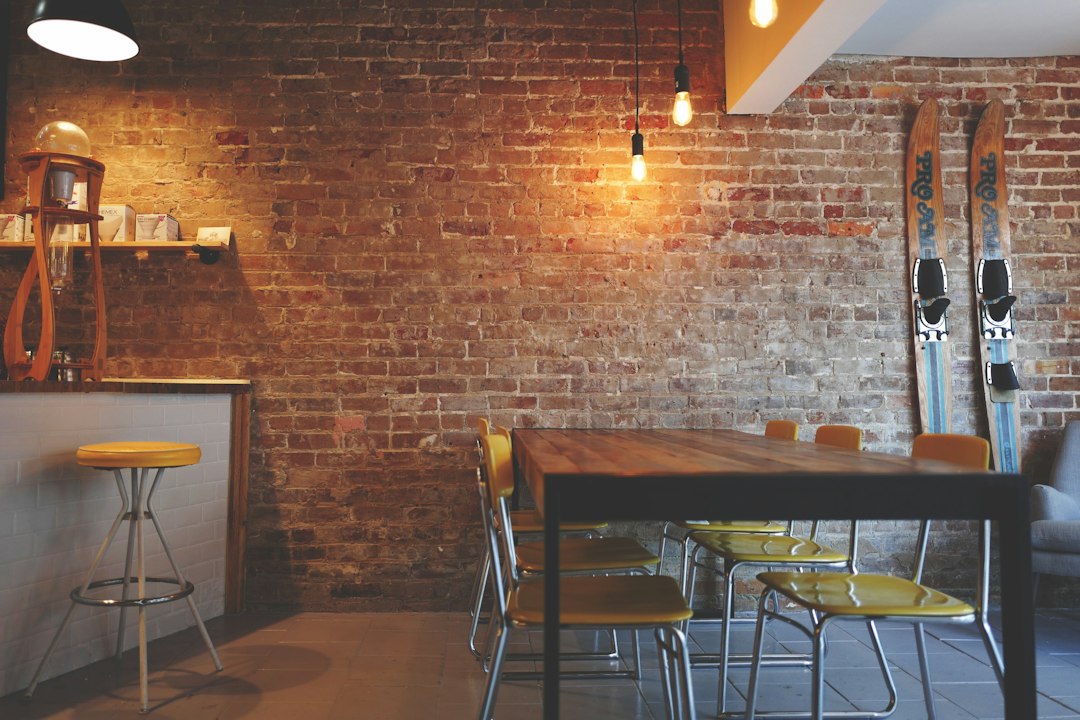
Photo by Drew Coffman on Unsplash
Why Movie Apartments Always Have Brick Walls
Walk into any movie apartment occupied by a creative professional, a struggling artist, or a young urbanite finding themselves, and you’ll almost certainly find at least one wall of exposed brick. It’s as reliable as the oversized windows or the fact that the place is twice as large as anyone could afford in that neighborhood.
Exposed brick has become visual shorthand in cinema, a production design choice that communicates character, place, and aspiration in a single frame. But why this particular architectural detail?
The Language of Authenticity
Exposed brick reads as “authentic” to audiences because it suggests history and permanence. Unlike smooth drywall, brick carries the implication that the building has a past, that the space was once something else—a warehouse, a factory, a commercial building—before being converted to residential use. This transformation narrative mirrors the journey of characters who often inhabit these spaces: they’re in transition, turning themselves into something new.
Production designers favor brick because it does narrative work without dialogue. A character living in a brick-walled loft suggests they’ve chosen creative fulfillment over conventional comfort, that they value aesthetic experience, that they’re urban and culturally engaged. The brick itself becomes a character detail.
The Practical Production Advantage
From a filmmaking standpoint, exposed brick solves several problems simultaneously. It adds visual texture and depth to a frame without requiring additional set dressing. Smooth walls can look flat and uninteresting on camera, especially under the bright lighting a film set requires. Brick creates natural shadow variation and visual interest at no extra cost.
Brick is also forgiving. Scuffs, nail holes, and imperfections that would be visible on painted drywall disappear into the texture of brick. A production can dress and re-dress a brick-walled set multiple times without worrying about wall damage showing on camera. The material is inherently cinematic—it photographs well, holds lighting contrast, and provides a neutral but distinctive backdrop that doesn’t compete with actors or action.
The Cultural Code
The exposed brick apartment carries specific cultural associations that filmmakers deliberately invoke. It suggests a certain income bracket—someone who can afford a trendy neighborhood but isn’t wealthy. It implies creative class membership: the freelance photographer, the emerging playwright, the indie journalist. These are characters who work on laptops at kitchen islands, who might paint or throw pottery, who definitely know where to get good coffee.
This is aspirational space, particularly for younger audiences. The brick-walled apartment represents a fantasy of urban adulthood where even modest living quarters have architectural character. Real exposed brick in real cities often means expensive rent in gentrified neighborhoods, but in movies it codes as bohemian accessibility, the place you live when you’re prioritizing passion over a paycheck.
When Brick Breaks Character
The absence of exposed brick can be just as meaningful. Corporate characters, suburban families, and wealthy professionals live in smooth-walled spaces with crown molding and careful paint choices. The criminal living off the grid occupies a place with wood paneling or peeling wallpaper. The truly destitute get bare drywall, possibly water-stained.
Production designers make these choices consciously, knowing that audiences have learned to read spatial vocabulary. The brick wall isn’t just a design element—it’s a storytelling tool that establishes who a character is before they speak a line.
The Ubiquity Problem
Like many cinematic conventions, exposed brick has been used so consistently that it risks becoming a cliché. The aspiring novelist in the brick-walled Brooklyn loft is now a stock character, as recognizable as the hacker in a hoodie or the detective with a whiskey problem. Some contemporary productions deliberately subvert this, placing creative characters in aggressively modern spaces or cramped, brick-free studios to signal a different kind of realism.
But the exposed brick apartment persists because it remains efficient visual communication. It’s a production design choice that does exactly what cinema needs: it tells you who someone is and what their world looks like in the time it takes to establish a shot.