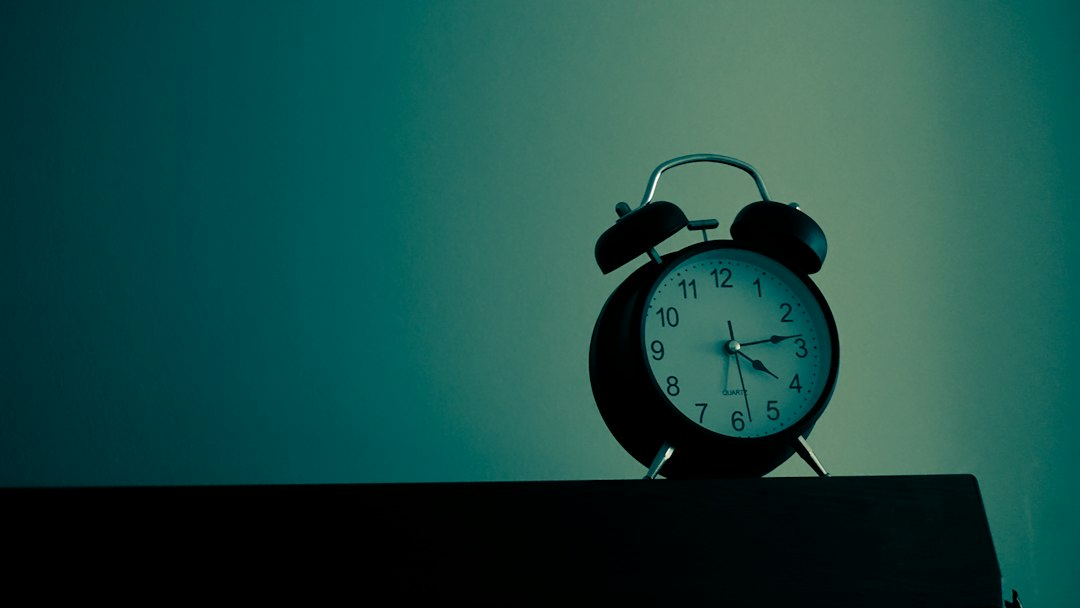
Photo by Abdülkadir Vardi on Unsplash
Why Movie Alarm Clocks Always Show 7:00 AM
Watch enough films and you’ll notice a pattern: when a character wakes to an alarm clock, the display reads 7:00 AM far more often than any other time. It’s not a coincidence, and it’s not because everyone in movies keeps the same schedule. The ubiquity of 7:00 AM is a deliberate production choice rooted in visual clarity, narrative convention, and the psychology of screen time.
Maximum Readability on Screen
Digital alarm clocks with 7:00 displayed offer exceptional on-screen legibility. The numeral seven uses most of the LED segments in a display, creating a strong visual shape that reads clearly even in soft focus or when the clock occupies only a small portion of the frame. Compare this to 1:00 or 11:11, which use minimal segments and can appear sparse or unclear, especially when captured at oblique angles or in low light during a bedroom scene.
Production designers and prop masters know that any readable element in frame needs to work under compressed video, on various screen sizes, and in shots that may last only a second or two. Seven’s diagonal stroke is distinctive, and the double zeroes provide symmetric visual weight. When the alarm clock is a background detail rather than a close-up insert, 7:00 remains identifiable where other times might blur into ambiguity.
The Narrative Logic of Morning
Seven AM sits in a narrative sweet spot: early enough to signal the start of a day, but not so early that it raises questions about the character’s routine. If the clock reads 5:00 AM, audiences wonder why the character is up at that hour—are they a shift worker, an athlete in training, fleeing something? A 9:00 AM alarm implies lateness or unemployment unless the scene is deliberately about disruption.
Seven AM requires no justification. It’s the culturally neutral hour for “getting up for the day,” whether that day involves work, school, or simply the beginning of narrative time. It allows the story to proceed without the clock itself becoming a plot point.
Avoiding Unintended Story Implications
Time on screen always carries meaning, even when filmmakers don’t intend it. A clock reading 6:66 would be impossible and distracting. A time like 4:20 or 9:11 might trigger unintended associations. Even something as innocent as 12:34 can feel artificially sequential, as though the prop department simply typed numbers in order.
Screenwriters and directors learn to avoid “loud” choices in peripheral details. The goal of most alarm clock shots is not to communicate a specific hour but to communicate morning and routine. Seven AM does that work invisibly. It’s specific enough to feel real and general enough to avoid pulling focus from the scene’s actual emotional or narrative content.
The Broader Grammar of Screen Time
This phenomenon connects to a larger pattern in how films handle time. Just as movie phone numbers use the 555 prefix to avoid real numbers, and license plates are carefully art-directed to avoid real registrations, alarm clocks are dressed to communicate function without distraction.
The 7:00 AM alarm clock has become part of the visual grammar of waking-up scenes, a shorthand so embedded that audiences process it without conscious thought. It’s a small craft decision, repeated across thousands of productions, that helps the story flow forward without friction. The clock isn’t there to tell you the time. It’s there to tell you the day is starting, and seven AM does that job better than any other number on the dial.
In this way, the 7:00 AM alarm clock joins a long list of invisible filmmaking choices—each one small, each one reasoned, and all of them working together to keep you inside the story rather than questioning the props.