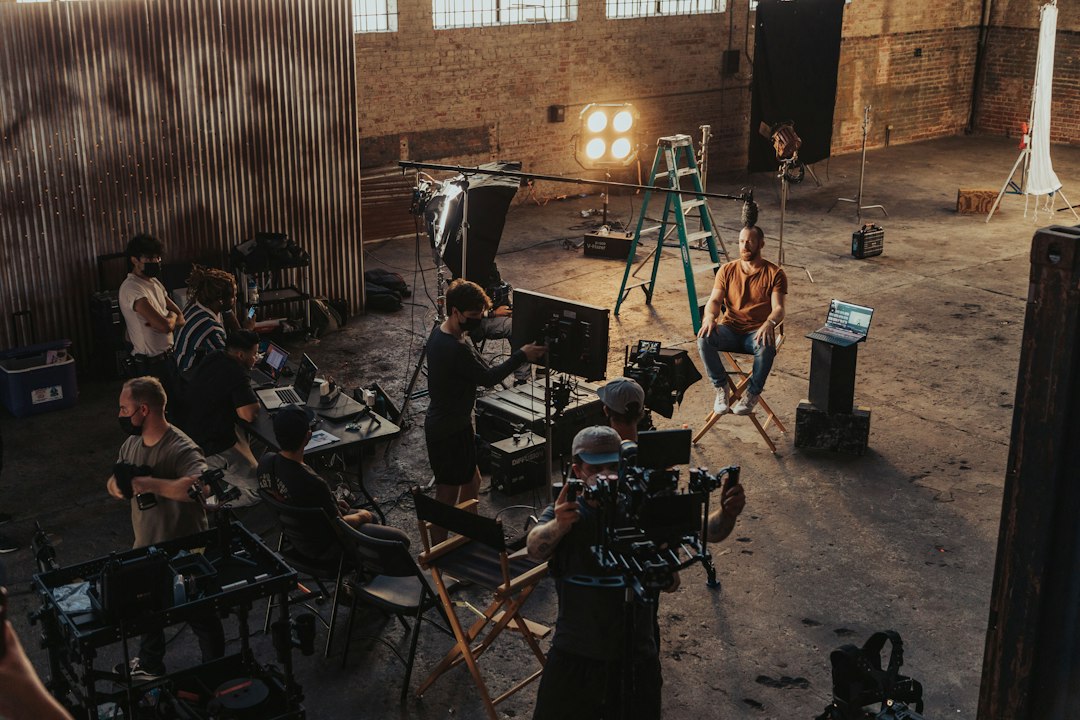
Photo by Jakob Owens on Unsplash
Why Movie Actors Wear Earwigs in Period Films
Watch behind-the-scenes footage from a period drama and you might catch an actor discreetly removing a flesh-colored device from their ear between takes. These are earwigs—miniature earpieces that let directors feed lines, cues, or adjustments to performers in real time. While the technology exists across all genres, period films and historical epics rely on them more heavily than almost any other type of production.
The Challenge of Archaic Dialogue
Period films demand linguistic authenticity. Characters speak in formal registers, antiquated syntax, or dialects that no longer exist in everyday conversation. An actor playing a Victorian aristocrat or a medieval knight must internalize pages of dialogue that feel unnatural on the tongue. Even seasoned performers can stumble over phrasings like “thou shalt” or lengthy courtroom monologues written in 18th-century legal language.
Earwigs solve this by letting a script supervisor or dialect coach feed lines directly into the actor’s ear during the take. The actor hears the next phrase a split second before delivering it, allowing them to maintain period-appropriate cadence without lengthy memorization. This technique is especially common in scenes with rapid-fire ensemble dialogue or when last-minute script revisions happen on set.
Live Direction Without Cutting
Traditional filmmaking requires the director to call “cut,” give notes, reset the scene, and roll again. That process eats time and breaks an actor’s emotional momentum. Earwigs allow directors to whisper real-time adjustments—“slower,” “look left,” “more anger”—while the camera continues rolling.
This proves invaluable in sprawling battle scenes or crowd sequences where stopping production involves resetting hundreds of extras, livestock, and practical effects. A director can guide the lead actor through a complex blocking change or emotional beat without halting the entire machine. The actor receives the note, integrates it mid-performance, and the scene continues seamlessly.
When Non-Actors Play Historical Figures
Biopics and historical dramas often cast non-professional actors in small roles for authenticity—real politicians playing themselves in docudramas, or community members cast as townsfolk. These performers may lack the training to memorize dense historical speeches or navigate complex staging. Earwigs let them deliver lines convincingly by feeding each phrase as needed, ensuring the scene’s historical texture remains intact without requiring weeks of rehearsal.
The Limits of the Technique
Earwigs create their own problems. Actors must listen and speak simultaneously, a skill that requires practice. Poor timing makes the performance sound robotic or creates awkward pauses. Audio bleed can also occur—if the earwig volume is too high, nearby microphones pick up a faint ghost of the feed, forcing the sound team to rerecord dialogue in post-production.
Some performers refuse to use them. They argue earwigs prevent full immersion, turning acting into a reactive exercise rather than an inhabited performance. Directors who prioritize naturalism over efficiency often ban them outright, insisting actors internalize their lines the traditional way.
A Tool, Not a Crutch
The best use of earwigs is invisible. When done well, the audience never suspects an actor is receiving live input. The technique becomes a problem only when it replaces preparation—when performers stop memorizing entirely and rely on the feed as a crutch. Used strategically, though, earwigs are one more tool that lets filmmakers capture ambitious period scenes without sacrificing historical dialogue, on-set spontaneity, or the controlled chaos of a large-scale production.