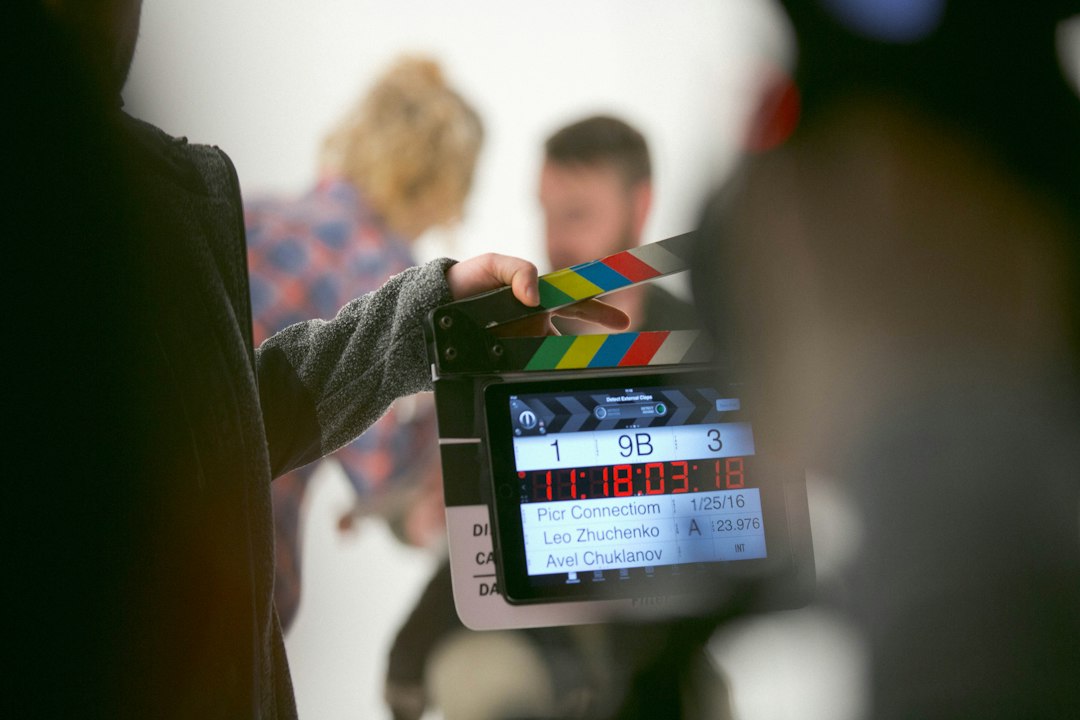
Photo by Avel Chuklanov on Unsplash
Why Movie Actors Look at Each Other's Mouths, Not Eyes
Watch a conversation between two people in real life and you’ll notice they maintain steady eye contact. Watch the same setup in a film and the actors are doing something subtly different: they’re often looking at their scene partner’s mouth rather than directly into their eyes.
This isn’t poor acting. It’s a deliberate technique taught in film acting programs and refined on professional sets. The shift in focus serves multiple technical and emotional purposes that separate screen performance from stage work or everyday interaction.
Staying in Your Light
Film lighting is precise. A key light might be positioned to hit an actor’s face at a specific angle, creating the desired shadow and dimension. If an actor’s head turns even a few degrees off-mark while following their scene partner’s eyes during an emotional moment, they can fall out of their light entirely. The shot becomes unusable.
By anchoring their gaze on the mouth—located lower and more centrally on the face—actors reduce the amount of head movement required to track their partner. The eyeline still reads as engaged and present to the camera, but the actor maintains better control over their head position and stays within the lighting setup.
Anticipating the Cut
Editors need options. A scene might be constructed from dozens of takes, and the cut point often lands on a specific word or reaction. Actors who watch their partner’s mouth can see when a line is about to end, when a breath is about to be taken, or when a pause is coming. This allows them to time their reaction with frame-accurate precision.
If you’re watching someone’s eyes, you get emotional information but little rhythmic warning. The mouth telegraphs speech mechanics in a way that helps actors sync their performance to the dialogue’s pace, making the editor’s job easier and creating cleaner, more dynamic cutting points.
Reading Emotion Without Competing
Looking directly into another actor’s eyes during a close-up can create an unintended intensity that overwhelms the scene. Film captures micro-expressions that would vanish in a theater. Two actors locked in full eye contact can generate a level of confrontation or intimacy that the script doesn’t call for.
The mouth offers emotional information—tension in the jaw, the shape of a smile, the tremble before tears—without the magnetic pull of direct eye contact. Actors still convey connection and presence, but with a softness that gives the scene room to breathe. The camera sees engagement; the audience never notices the technique.
Why Theater Actors Struggle With This
Stage actors are trained to project emotion outward and maintain eye contact to sustain belief across distance. On film, that same training can backfire. New film actors often “play to the eyes” and end up with performances that feel too intense, too presentational, or badly timed for the edit.
The adjustment takes practice. Experienced film actors shift their focal point instinctively depending on the shot size, the lighting, and the emotional tenor of the scene. In a wide shot, full eye contact might work fine. In a tight close-up, the mouth becomes the anchor.
The Invisible Craft
This technique exemplifies what makes film acting its own discipline. The performance must satisfy the camera, the lighting rig, the sound recordist, and the editor—all while appearing effortless and emotionally truthful to the audience. Watching the mouth instead of the eyes is a small mechanical shift that serves enormous practical needs.
Next time you watch a dialogue scene, pay attention to where the actors’ focus actually lands. You’ll start to notice the technique everywhere, hidden in plain sight, doing its job so well that it never pulls you out of the story.