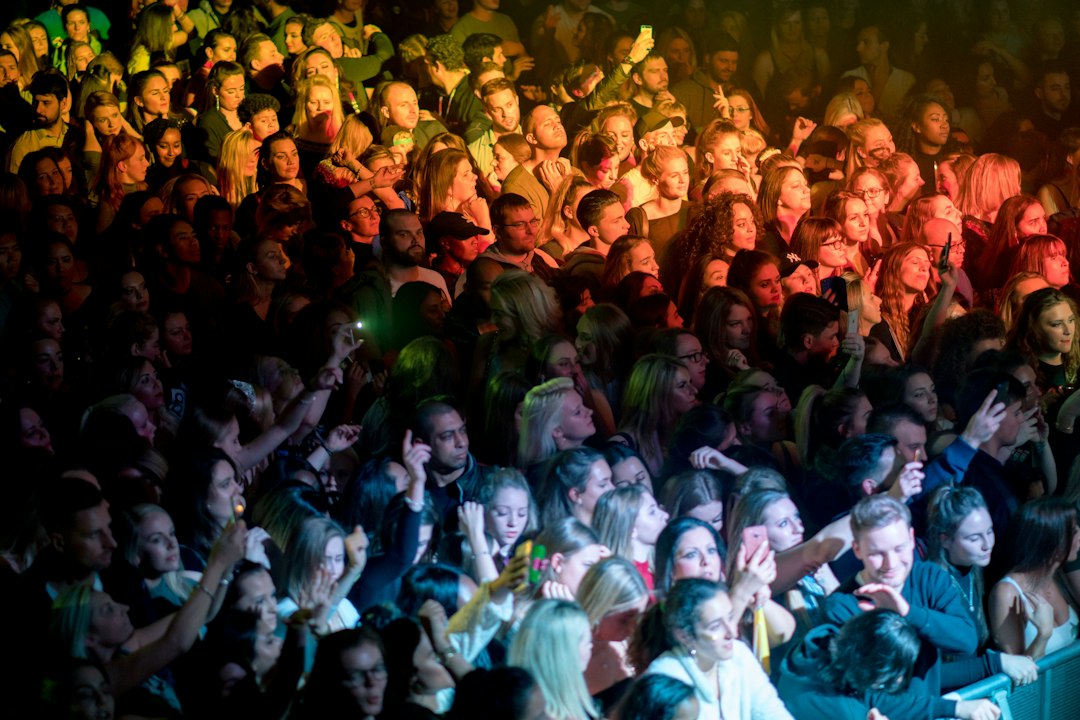
Photo by Craig Whitehead on Unsplash
Why Movie Actors Mouth "Watermelon" in Crowd Scenes
Watch the background of any courtroom drama, restaurant scene, or bustling street sequence and you’ll see dozens of extras apparently deep in conversation. Their mouths move, their hands gesture, but you won’t hear a word they’re saying. That’s because they’re not actually speaking at all—they’re mouthing silent words, and there’s a very specific technique behind it.
The Silent Conversation Problem
When filming dialogue scenes, the last thing a sound mixer wants is actual background chatter competing with the main actors’ lines. Real conversations would bleed into the microphones, making it nearly impossible to get clean dialogue. Even whispered speech creates sibilance and mouth sounds that muddy the recording.
The solution is simple: background actors mime their conversations in complete silence while the camera rolls. But random silent mouth movements look obviously fake on screen. Humans are remarkably good at detecting when lip movements don’t match natural speech patterns. Background actors need to mouth specific words that create the visual rhythms and lip shapes of real conversation without producing any sound.
Watermelon, Rhubarb, and Other Magic Words
Enter “watermelon” and its cousins. Background actors are often instructed to silently mouth words like “watermelon,” “rhubarb,” “peas and carrots,” or variations of these phrases. Why these particular words? They hit the key visual beats of natural speech.
“Watermelon” creates a wide range of lip positions—the pursed W, the open vowels, the lip closure on M, the tongue movement on L. When mouthed repeatedly with slight variations in rhythm and emphasis, it produces mouth shapes that read as genuine conversation from any camera distance. “Rhubarb” offers similar variety with the R’s lip rounding and B’s closure. “Peas and carrots” alternates between different consonant clusters and vowel shapes.
The technique works because viewers aren’t trying to lip-read extras. They’re registering the overall impression of a populated, active environment. The varied mouth movements signal “people talking” without drawing attention to themselves.
Regional and International Variations
Different film industries have their own silent phrases. British productions favor “rhubarb rhubarb” or “walla walla.” Some American sets use “bottle of beer” or simply have extras count numbers. The specific phrase matters less than the variety of mouth shapes it produces.
Experienced background actors develop their own systems, creating silent “conversations” with scene partners by alternating between different phrases, varying their speed and intensity to match the scene’s energy. A tense courtroom moment might call for sharp, clipped silent words. A romantic restaurant requires softer, more languid mouth movements.
When Background Goes Audible
Of course, this silent mouthing only applies when the camera is close enough to see faces but the background shouldn’t be heard. Wide shots often feature genuinely speaking extras since individual mouths aren’t visible. And when the scene calls for audible crowd noise, that’s added later by loop groups—voice actors who record layers of authentic conversation, laughter, and ambient human sounds in post-production.
The silent mouthing technique represents a small but crucial piece of filmmaking’s invisible craft. It’s the kind of detail that goes completely unnoticed when done well, yet would instantly shatter believability if handled poorly. Next time you watch a crowded scene, look past the main actors to the extras in the background. Somewhere in that silent crowd, someone is almost certainly saying “watermelon.”