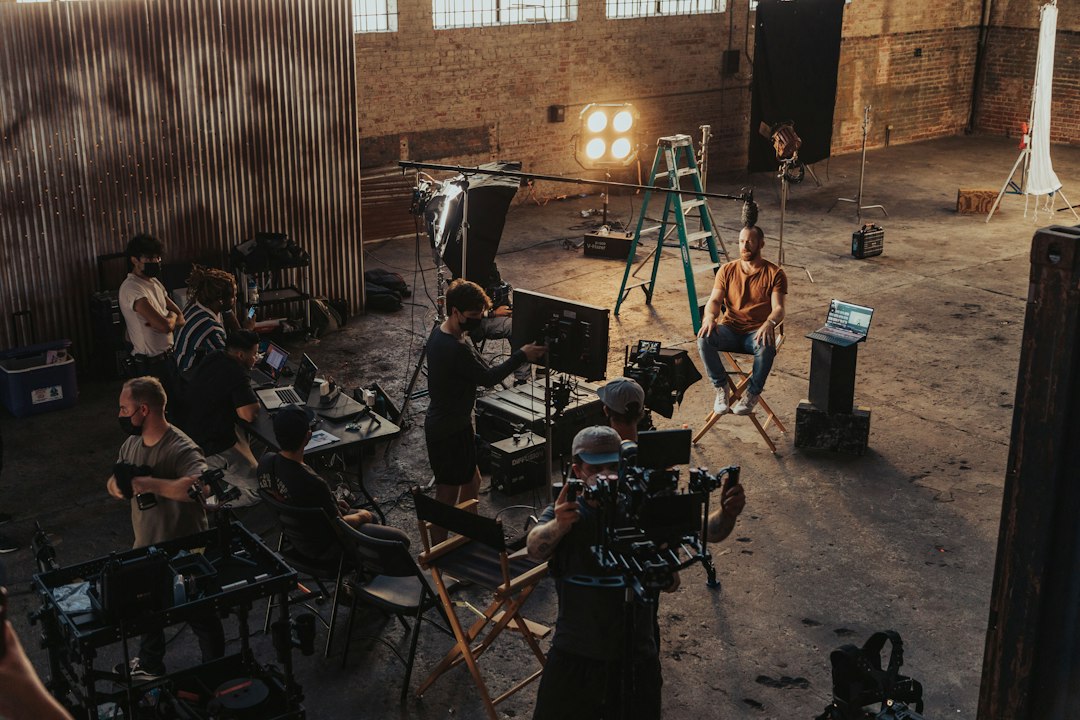
Photo by Jakob Owens on Unsplash
Why Movie Actors Hit Their Mark
Watch any behind-the-scenes footage and you’ll see film sets covered in tape marks on the floor. Actors glance down between takes, adjusting their stance by inches. Directors of photography pace with light meters, measuring distance. What looks like obsessive precision is actually the foundation of how cinema works.
The Physics of Focus
Film and digital cinema sensors have shallow depth of field when shooting with the wide apertures cinematographers prefer for their aesthetic qualities. At common settings, the zone of acceptable sharpness might be only a few inches deep. If an actor’s face needs to be in focus and they’re standing eight feet from the camera, being seven feet eleven inches away can make the difference between sharp and soft.
The focus puller—the crew member responsible for adjusting focus during a shot—measures the exact distance from the camera sensor to the actor’s face before each take. They mark that distance on their follow focus equipment. If the actor moves forward or back even slightly during the shot, they’ll drift out of focus. Hitting the mark isn’t about acting discipline. It’s about optical physics.
Light Falls Off Fast
Light intensity drops according to the inverse square law: double the distance, and the light becomes one-quarter as bright. When a scene is lit for an actor standing in a specific position, moving a foot forward or backward changes how much light hits their face dramatically.
Cinematographers build lighting setups around precise actor positions. A key light might be positioned to create a specific shadow on the nose and cheek. A backlight separates the actor from the background by creating a rim of light on their hair and shoulders. All of this falls apart if the actor drifts six inches to the left.
Composition Lives and Dies by Framing
The cinematographer composes the shot with the actor in a specific relationship to the frame edges, the background, and other actors. These compositions are deliberate. A character might be framed off-center to create visual tension, or positioned to align with architectural lines in the background, or placed to create a specific geometric relationship with a second actor.
When an actor misses their mark, the composition the cinematographer spent minutes fine-tuning no longer exists. The carefully arranged background might now be blocked. The visual metaphor might be lost. The shot that was balanced becomes lopsided.
Multiple Takes Need Consistency
Films shoot coverage: the same scene from multiple angles. A conversation might be shot as a wide two-shot, then individual close-ups of each actor. These pieces will be cut together in editing, often intercut line by line.
For the editing to feel seamless, the actors need to be in the same positions across all these setups. If an actor stands in a slightly different spot during their close-up than they did in the wide shot, the editor has fewer options for cutting between angles. The geography of the scene falls apart.
The Skill Is Making It Invisible
Watch a great film performance and you never think about the actor hitting marks. That’s the point. Professional actors develop an almost unconscious spatial awareness. They know how to drift to their mark during a movement, making it feel natural and unplanned while actually being choreographed to the inch.
Some actors count steps. Some feel for the mark with their foot. Some use furniture or props as reference points. The technique varies, but the goal is the same: be exactly where the cinematography needs you to be while appearing spontaneous.
The floor tape and the glances downward disappear in the final film. What remains is a performance that’s perfectly lit, razor-sharp in focus, and precisely composed—technical excellence that serves emotional truth.