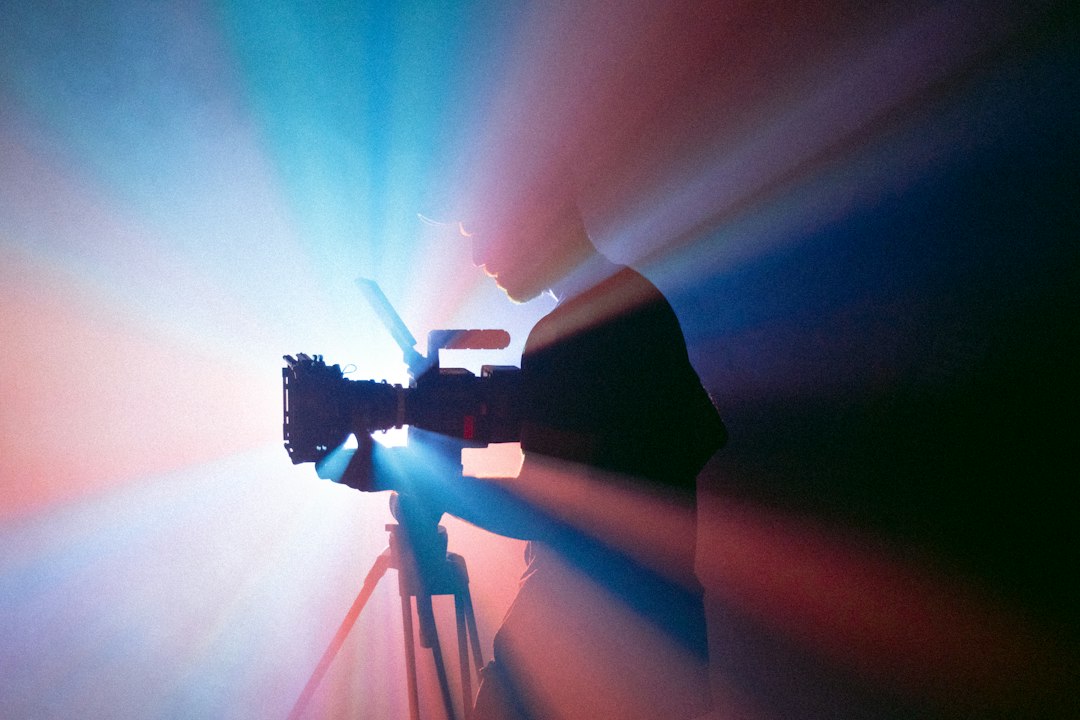
Photo by Jakob Owens on Unsplash
Why Movie Actors Turn Their Bodies Toward Camera
Watch any scene where two characters talk across a table or stand side by side, and you’ll notice something that would look strange in real life: the actors don’t fully face each other. Instead, they angle their bodies open toward the camera, creating a subtle but deliberate geometry that serves multiple purposes on screen.
This technique, sometimes called “opening up to camera,” means actors position themselves at roughly a three-quarter angle rather than directly facing their scene partner. In a restaurant conversation, characters sit slightly turned out from the table. In a walking dialogue scene, they angle their shoulders toward the lens even as they ostensibly move forward together. The effect is invisible to most viewers, but its absence would be immediately felt.
Lighting the Face
The most practical reason is illumination. When an actor turns their face toward camera, they simultaneously turn it toward the key light, which cinematographers typically place near the camera position. A profile shot captures only one side of the face, often leaving the visible side in shadow depending on the lighting setup. By opening up even fifteen or twenty degrees, actors ensure both their features and expressions read clearly on camera.
This becomes especially critical in medium and close-up shots where facial nuance carries the scene. Directors need to capture subtle reactions, and those reactions need light to register on film or digital sensors. An actor who plays too much in profile risks losing half their performance to shadow.
The Eyeline Compromise
Full profile also creates eyeline problems. When two actors face each other completely, they look past the camera rather than toward it. The audience sees the back of one head and the side profile of another, creating distance and obscuring emotion. By angling open, actors split the difference: they maintain the geography of addressing each other while keeping their faces visible and their eyelines closer to the lens.
This is why establishing shots often show characters in more natural positions, then tighter coverage shifts them open. The wide shot sells the spatial relationship; the close-ups prioritize emotional access.
Stage Training and Screen Adaptation
The technique has roots in theater, where actors traditionally “cheat out” toward the audience to project voice and expression to the back row. Film borrowed this concept but refined it. Theater actors often open their bodies dramatically, sometimes standing in exaggerated three-quarter positions. Screen acting requires more subtlety since the camera captures everything at close range.
A skilled film actor finds the minimum angle needed to serve the shot without breaking the reality of the interaction. Too much opening reads as artificial; too little hides the performance. The adjustment happens during blocking rehearsals when the director and cinematographer determine how each shot will be framed and lit.
Exceptions That Prove the Rule
Some directors deliberately break this convention for specific effects. A character shot entirely in profile can signal emotional distance, mystery, or withholding. Sustained profile shots create a formal, observational quality, as if we’re watching rather than engaging. But these choices work precisely because they violate the norm and feel different as a result.
Similarly, scenes lit from behind or from extreme angles might require actors to turn away from camera to catch the light source that serves the story. A character silhouetted against a window or facing a sunset plays toward that light, accepting profile as the necessary composition. These moments prioritize visual design over the standard practice of facial clarity.
The Invisible Craft
Like most film technique, successful body positioning is invisible. Actors and directors make these adjustments automatically during blocking, finding positions that feel natural enough to preserve the scene’s reality while serving the camera’s technical needs. The audience remains unaware they’re watching a carefully choreographed compromise between how people actually stand and how they need to stand for cinema to work.
Next time you watch a conversation scene, notice the geometry. Those bodies aren’t quite facing each other the way yours do across a real table. They’re angled just enough to let you in, a small calibration that makes the enormous difference between watching a performance and missing it entirely.