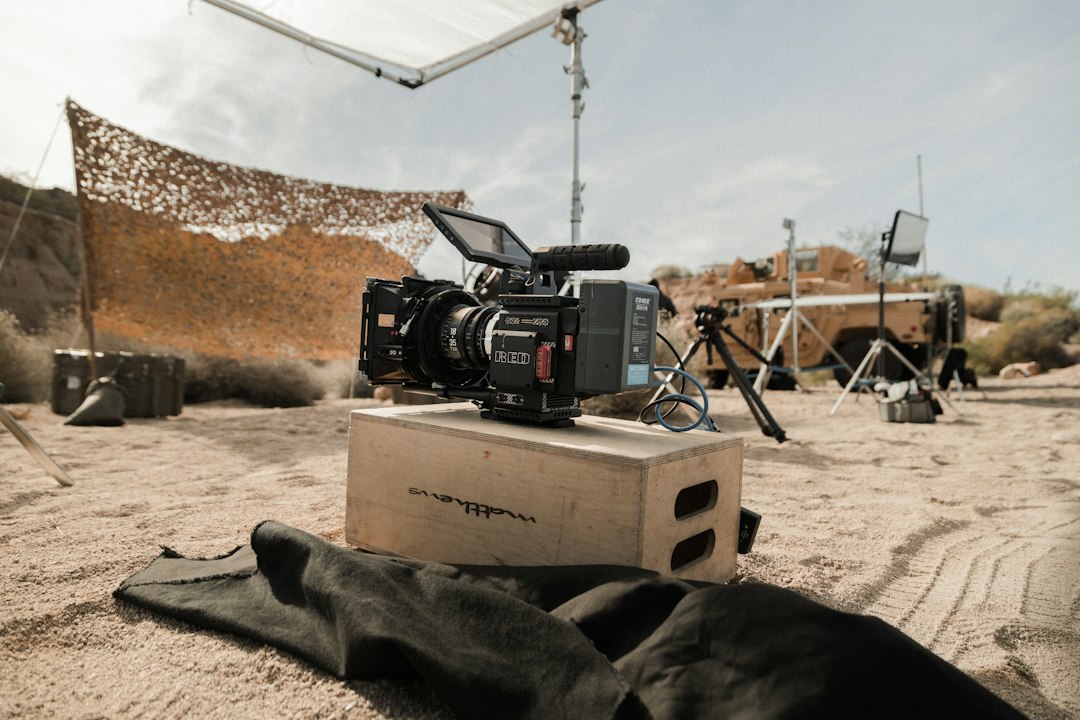
Photo by Jakob Owens on Unsplash
Why Film Sets Use Apple Boxes Instead of Regular Boxes
Walk onto any film set in the world and you’ll find apple boxes—sturdy wooden crates in specific sizes that serve as the film industry’s universal building blocks. They’re not literally for apples, and they’re not random scrap wood. They’re precision tools, and the industry’s insistence on standardization reveals something important about how professional filmmaking works.
The Standard Sizes
Apple boxes come in four standardized sizes, each with a name. A “full apple” measures 20 × 12 × 8 inches. Cut that in half and you get a “half apple” at 20 × 12 × 4 inches. A “quarter apple” is 20 × 12 × 2 inches, and a “pancake” is 20 × 12 × 1 inch. These dimensions aren’t arbitrary—they’re designed to nest together and stack efficiently on trucks, where space costs money.
The standardization matters because film crews work fast. A grip doesn’t want to measure whether a box will hold an actor’s weight or fit under a doorway. When someone calls for a half apple, everyone on set knows exactly what’s coming and what it can do. That shared vocabulary speeds up every setup.
Why Wood, Not Plastic
Apple boxes are built from solid pine with finger joints at the corners. The wood is strong enough to hold a full lighting stand or a 200-pound actor, yet light enough to carry quickly. The surface provides friction—gear placed on an apple box stays put, unlike smooth plastic that lets equipment slide.
Wood also accepts modification. Crews regularly screw fixtures into apple boxes, attach them to other rigging, or cut them down for custom needs. A plastic box can’t be adapted on the fly. And when wooden apple boxes finally break after years of abuse, they degrade without creating the waste stream of broken plastic crates.
The Invisible Height Adjustments
The most common use for apple boxes is adjusting actor height in two-shots. When two performers have a significant height difference, the shorter actor often stands on a half apple or full apple to balance the frame. This happens constantly, and it’s almost never visible because the camera frames from the waist up or the boxes stay just outside the shot.
Apple boxes also level furniture on uneven locations, lift props into better lighting, provide steps for actors entering vehicles, and create platforms for low-angle camera positions. They’re problem-solvers that adapt to whatever the scene requires.
Why Not Just Use Random Boxes
You might wonder why a crew can’t just grab whatever box is available. The answer is consistency and trust. When a camera operator sits on a full apple, they know it won’t collapse. When a gaffer stacks three half apples to position a light, they know the height and stability without testing. Random boxes introduce variables—unknown weight limits, inconsistent dimensions, and the risk of injury or damaged equipment.
Film sets run on speed and safety. Standardization removes guesswork. An apple box in Los Angeles works exactly like an apple box in Prague or Lagos. That universal reliability makes them essential infrastructure, the same way all outlets in a country share the same voltage and plug shape.
The Name’s Origin
The term “apple box” likely comes from the produce industry, where wooden crates of those approximate dimensions were once used to ship apples. Film crews repurposed sturdy boxes they found, and the name stuck even as the film industry began manufacturing its own specialized versions. Today’s apple boxes are built specifically for film production, but they honor the original crates that crews improvised decades ago.
The next time you watch behind-the-scenes footage, look for the stack of wooden boxes near the camera. They’re easy to overlook, but they’re doing more work than almost anything else on set.