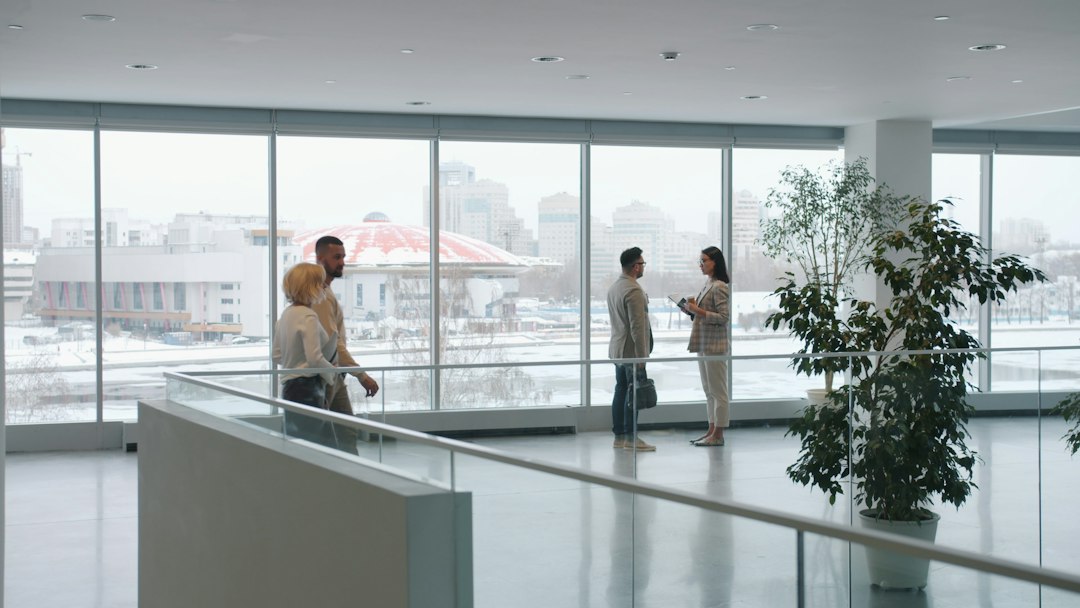
Photo by Vitaly Gariev on Unsplash
The Walk-and-Talk: Why Movies Put Conversations in Motion
Two characters need to exchange five pages of exposition. The easiest way to shoot it is to sit them down, cover the scene in shot-reverse-shot, and cut back and forth until the dialogue runs out. It works, but it’s flat. So a lot of filmmakers reach for a different tool instead: get the characters up and walking, and let the hallway do some of the work the editing would otherwise have to do.
That’s the walk-and-talk. It’s not a genre or a plot device, it’s a staging choice, and it solves a problem that’s older than sound film itself: how do you keep a conversation visually alive when nothing in the scene is physically at stake?
The Problem With Sitting Still
Dialogue is information, and information delivered by two people sitting across a table has nowhere to go but the words themselves. A director can vary shot size, lean on performance, or cut on rhythm, but the frame itself stays inert. Add motion, and suddenly the camera has a job again. A walk-and-talk gives you foreground and background changing constantly, other characters and set pieces drifting through frame, and a built-in reason to reframe or push in without it feeling like an arbitrary cut.
Television popularized the technique as much as film did, partly out of necessity. Long dialogue scenes are cheap to write and expensive to make visually interesting on a TV schedule. Walking a scene through a newsroom or a government building turns a budget constraint into a stylistic signature: the production design becomes part of the conversation, glimpsed in passing rather than sitting static behind the actors’ heads.
The Choreography Problem
What looks casual on screen is usually the opposite. A walk-and-talk demands that dialogue, footsteps, door openings, extras crossing frame, and camera movement all land in sync, every take. If an actor hits their line a half-second early, they might clear a doorway before the next actor enters it. If they’re a half-second late, the blocking falls apart and the shot has to reset.
This is why walk-and-talks are often rehearsed more like dance numbers than dialogue scenes. Marks get taped on the floor, extras are choreographed on precise paths, and the camera operator has to anticipate exactly when to widen or drift ahead of the actors. A Steadicam or handheld operator effectively becomes a third performer in the scene, matching pace and distance without the actors ever having to think about it.
Motion as Subtext
Beyond the practical appeal, movement changes what a scene means. Two characters walking side by side read as allies, working through something together. A character trailing slightly behind, or cutting across the other’s path, reads as friction or hesitation, without a line of dialogue saying so. Speeding up mid-conversation signals urgency; slowing to a stop is often used as a beat marker, the moment the real subject of the scene finally surfaces. Directors use the geography of a walk, hallways, stairwells, exits, as a kind of shorthand for power and momentum that a static two-shot can’t offer.
Why It Still Works
The walk-and-talk has become closely associated with specific genres, workplace dramas and political fiction especially, but the underlying logic applies anywhere writers need to move a lot of dialogue without losing the audience’s eye. It’s a reminder that staging is doing narrative work whether or not viewers consciously notice it. The words carry the plot, but the feet are doing quieter storytelling underneath, and that’s often what makes an ordinary conversation feel like it’s going somewhere.