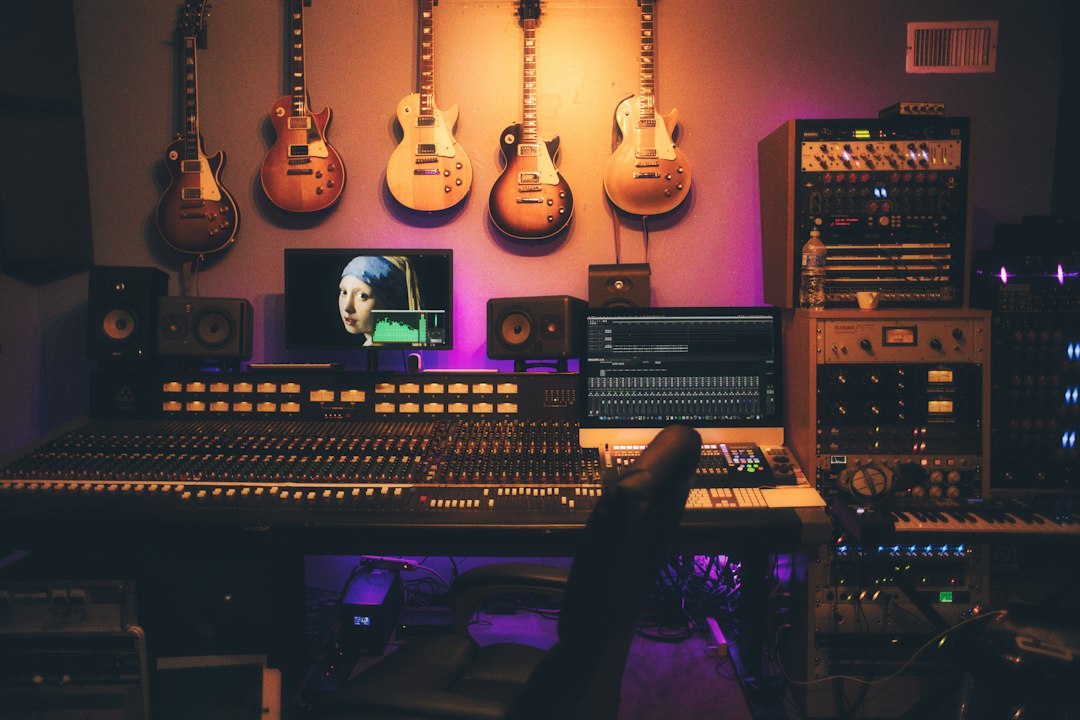
Photo by Caught In Joy on Unsplash
The Temp Track Problem: Why Film Scores Sound the Way They Do
The Temp Track Problem: Why Film Scores Sound the Way They Do
When a film editor assembles a rough cut, it sits in silence. Dialogue lands flat, scenes feel unfinished, and the emotional arc of the story is hard to feel without music cuing you how to respond. So editors do what editors have always done: they drop in placeholder music — existing recordings pulled from other films, classical pieces, or stock libraries. This is the temp track.
It’s a practical tool. It gets the cut to a watchable state so the director can work with it, so producers can screen it, so test audiences can actually respond to the film as a movie rather than an assembly of footage. No one intends for the temp track to stay.
But it often does — in spirit, if not in fact.
When the Placeholder Becomes the Benchmark
The problem is straightforward: the longer a director lives with a temp score, the harder it becomes to imagine the film without it. After weeks or months of editing to a particular piece of music, the emotional memory of a scene is fused to that specific cue. When a composer delivers original music, the director hears it against that locked-in expectation. The new score isn’t evaluated on its own terms — it’s measured against the temp.
This creates a peculiar brief for the composer: write something original that sounds like something that already exists. Write us a new version of that thing we already love. The result, predictably, is that composers often end up chasing the temp. And when many films are being scored simultaneously by a small number of composers under the same pressure, the overall sound of studio film music starts to converge.
Why It’s Hard to Escape
Directors aren’t wrong to want the emotional effect they experienced in the cutting room. The temp worked — that’s the whole problem. A piece of music from one film can be so perfect for a scene in another that it feels almost composed for it. The emotional logic is already proven.
The issue is that great film scores do more than provide emotion on demand. They build their own language across a film’s runtime — motifs that develop, instruments that carry character associations, silences that acquire meaning because of how the score has trained your ear. A temp track borrowed from another film carries that other film’s logic, not this one’s.
Composers working under temp track pressure often have little room to build that internal language. They’re asked to hit specific emotional marks at specific moments, matching a feel rather than inventing one. The score gets reactive rather than structural.
The Deeper Craft Question
Some of the most distinctive scores in cinema history came from composer-director relationships where the director gave the composer early access and genuine latitude — often before the picture was locked. When a composer can see the script, visit the set, or watch a rough cut before the temp track has calcified in everyone’s imagination, there’s space to develop something that grows from the film’s own logic.
This doesn’t mean temp tracks are inherently destructive. Used thoughtfully, they communicate a tonal direction without becoming a prison. The problem isn’t the practice itself — it’s what happens when a temp stops being a guide and becomes an audition rubric.
What You’re Hearing When You Watch
Next time a film score sounds eerily familiar — like you’ve heard it somewhere, even though it’s technically new — the temp track dynamic is often the explanation. The music is original in the legal sense. But it’s been shaped by the gravitational pull of an existing piece that the director couldn’t stop hearing in their head.
That gap between the score a film needed and the score it received is one of the least visible aspects of how movies get made. The temp track doesn’t appear in the credits. But it’s in the room throughout the entire process, quietly setting the terms.