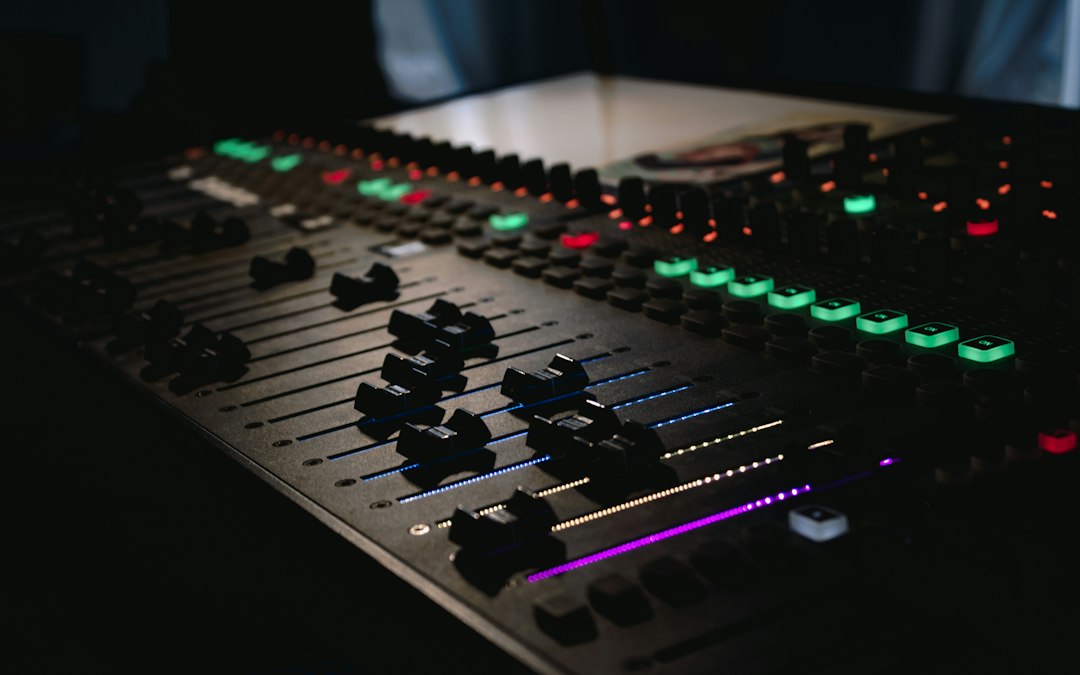
Photo by James Kovin on Unsplash
Why Movie Sirens Always Sound the Same: The Secret Life of Stock Sound Effects
If you’ve ever watched a police procedural and felt a strange déjà vu when the siren wailed in the background, you weren’t imagining it. Chances are you’ve heard that exact same siren in a dozen other movies and TV shows. The same goes for that particular car door slam, that specific crowd murmur, or the distinctive whoosh that plays under a fast camera pan. Film audio, it turns out, is far more communal than most viewers realize, and the reason traces back to a decades-old industry infrastructure most audiences never think about: sound effects libraries.
The Library Behind the Curtain
Long before a single word of dialogue is recorded on a film set, sound design has already begun accumulating a vast toolkit. Foley artists create custom footsteps and cloth rustles in post-production, and location recordists capture ambient sound during shooting, but a huge percentage of what audiences hear—background traffic, distant thunder, a specific gunshot, a door hinge, a phone ring—comes from pre-recorded sound effects libraries that have existed for generations.
These libraries function like stock photo services, except for audio. Companies and individual sound recordists build enormous catalogs of categorized effects: “Siren, Police, Distant, Urban 04.” “Door, Wood, Creak, Slow.” “Crowd, Restaurant, Murmur, Medium.” Sound editors working on a film can license and drop these clips directly into a scene rather than recording everything from scratch, which would be prohibitively expensive and time-consuming for every single ambient noise a film needs.
Some of these libraries date back to the analog era of tape and vinyl sound effects records, when studios like Hanna-Barbera, Warner Bros., and various BBC sound departments built extensive catalogs for cartoons, radio dramas, and television. Digitized and re-licensed over the decades, many of these original recordings have become the DNA running through an enormous swath of modern film and television, which is why a viewer with a sharp ear can sometimes “spot” the same laser blast or dog bark showing up in wildly different productions separated by years and genres.
Why Recognizable Repetition Doesn’t Break the Spell
You might assume that reusing the same siren or creak across hundreds of productions would shatter immersion, but in practice it rarely does—for a few overlapping reasons.
First, most viewers aren’t consciously cataloging sound effects the way obsessive sound designers or internet meme communities are. A siren simply registers as “siren,” doing its narrative job of signaling urgency without drawing attention to its own history.
Second, sound in film is almost always heavily processed and blended into a mix. A stock effect gets layered with room tone, reverb tuned to the space depicted on screen, EQ adjustments, and other sounds happening simultaneously. The raw library file rarely reaches the audience unaltered—it’s a raw ingredient, not the finished dish.
Third, and perhaps most importantly, certain effects have become so effective at signaling a specific feeling that reusing them is almost a feature rather than a bug. This is closely related to phenomena like the Wilhelm scream, where a sound effect becomes so functionally perfect for its purpose that industry insiders start reusing it partly as craft and partly as a wink to other professionals who’ll recognize it.
The Economics of Sound
There’s also a blunt economic reality underneath all of this. Sound budgets on most productions, even substantial ones, are a fraction of what’s spent on cinematography, production design, or visual effects. Licensing a well-recorded, professionally categorized library effect costs far less than sending a recordist out to capture a fresh version of an ordinary siren, and it sounds just as good—often better, since library recordings are typically captured in controlled conditions with high-quality equipment.
This isn’t laziness; it’s the same logic that governs why films share lighting setups, camera rigs, and editing rhythms. Filmmaking is an industrial art form built on shared tools and techniques, and sound effects libraries are simply the least visible—or rather, least audible—part of that shared toolkit. The next time a familiar-sounding car horn or bird chirp shows up in a film, you’re not just watching a movie; you’re hearing a small piece of cinema history that has quietly outlived multiple generations of the productions it helped bring to life.