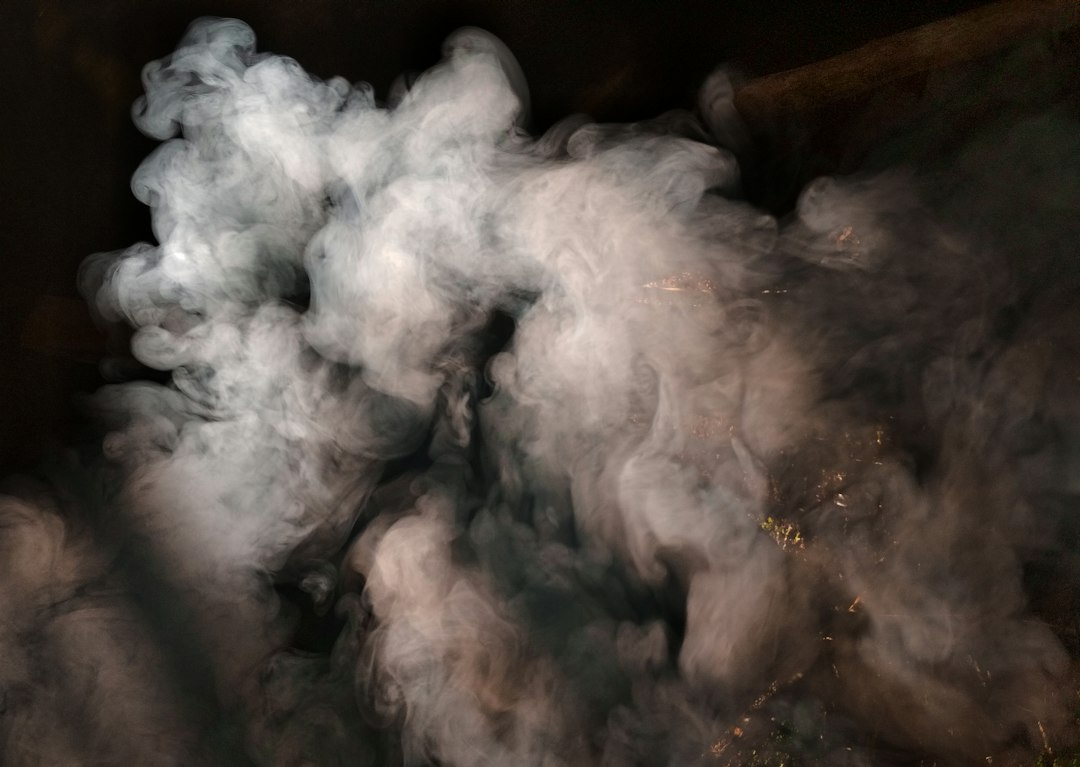
Photo by Viktor Talashuk on Unsplash
Why Film Sets Use Smoke Machines Constantly
If you’ve ever visited a professional film set, one of the first things you’ll notice is the air itself. There’s often a subtle haze hanging in the space, even in scenes set in ordinary living rooms or corporate offices. This isn’t accidental fog from weather or a technical malfunction—it’s carefully controlled atmospheric haze, and it’s doing far more work than most viewers realize.
Making Light Visible
The primary reason cinematographers use haze is simple: it makes light beams visible. Without particles in the air to scatter and reflect light, a beam from a spotlight or window simply travels invisibly from source to subject. The audience sees the result—an illuminated face or object—but not the light itself.
Haze changes that. When smoke particles or water vapor fill the air, light interacts with them, creating visible shafts, rays, and volume. A window becomes a defined column of sunlight. A practical lamp gains a soft glow that extends into the room. Backlight separates a character from the background with a luminous edge. The image gains depth, dimension, and a sense of three-dimensional space that a haze-free frame simply cannot achieve.
This is why haze is often referred to as “atmosphere” on set. It’s not about creating a spooky or mysterious effect—it’s about giving the cinematographer control over how light behaves in the frame.
Controlling Contrast and Mood
Beyond revealing light, haze also softens contrast and smooths out harsh transitions between bright and dark areas. In a completely clear environment, shadows can fall off abruptly, and highlights can blow out with clinical sharpness. A controlled amount of haze diffuses light slightly, wrapping shadows and creating a more cohesive, painterly image.
This is especially valuable in high-contrast lighting setups or when shooting with strong directional sources. Haze acts as a subtle fill, lifting shadow detail just enough to preserve information without requiring additional lights. It’s a way to shape the mood of a scene—making it dreamier, more romantic, or more oppressive—without changing the lighting instruments themselves.
Different genres and directors use haze differently. Period dramas and thrillers often employ heavier atmosphere to evoke texture and weight. Contemporary comedies might use very light haze just to give light beams definition without calling attention to the effect. The key is calibration: too much, and the image feels soupy or artificial; too little, and the lighting falls flat.
The Tools: Hazers vs. Foggers
On set, the terms “smoke,” “haze,” and “fog” refer to different tools with different characteristics. A hazer produces a fine, long-lasting mist that hangs evenly in the air and disperses slowly. It’s typically oil-based or water-based, and it’s the go-to for subtle atmospheric effects that need to stay consistent across long takes.
A fogger, by contrast, creates denser, heavier clouds that sink and dissipate more quickly. Foggers are used for specific dramatic effects—ground fog in a graveyard, thick smoke in a burning building—but they’re less common for general cinematography because they’re harder to control and can overwhelm a frame.
Cinematographers and gaffers work closely with the key grip or special effects team to dial in the right density. Too much haze and actors start coughing; too little and the light disappears. It’s a constant negotiation, with crew members stepping outside between takes to let their eyes reset and assess whether the level is right.
Why You Don’t Notice It
The best haze work is invisible to the audience. When done well, viewers don’t think “there’s smoke in this scene”—they simply feel that the image has depth, mood, and visual richness. The light feels motivated and sculpted, the frame feels three-dimensional, and the world feels tangible.
That’s the paradox of atmospheric haze: it’s everywhere in professional cinematography, yet it’s designed to disappear into the image. It’s one of the most powerful tools a cinematographer has, and one of the least discussed outside the craft itself.