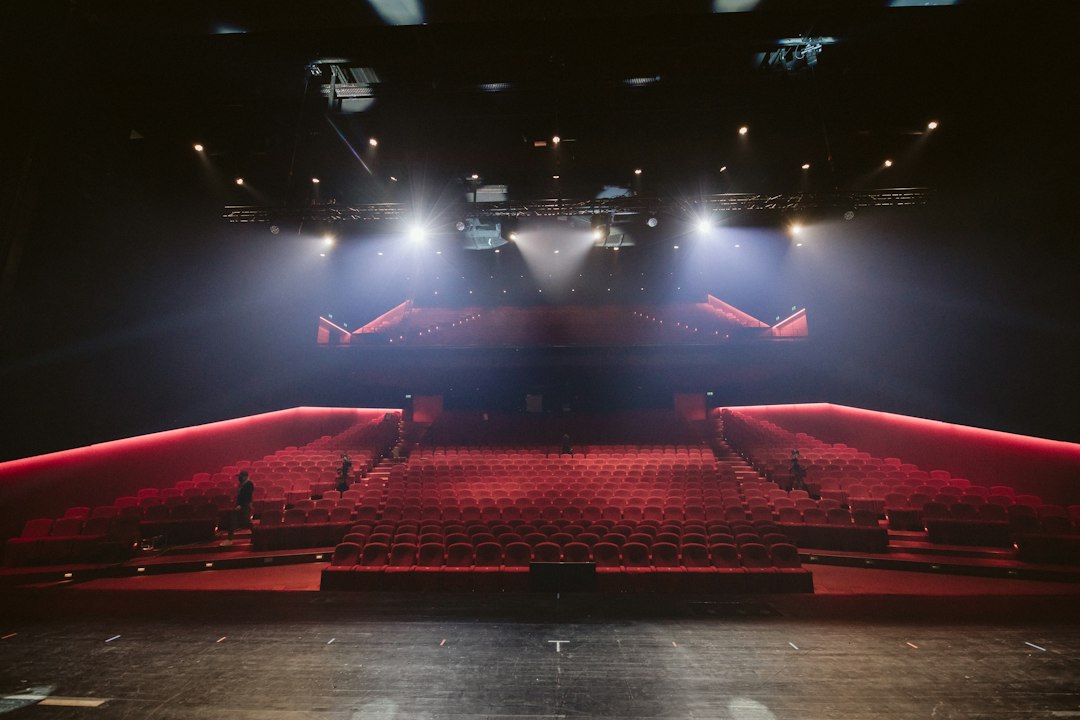
Photo by Kevin Schmid on Unsplash
The Loudest Thing in a Movie Can Be Silence
Sound design usually gets discussed in terms of what’s added: foley footsteps, ambient hums, swelling scores. But some of the most memorable moments in film history work because a filmmaker took something away. Silence isn’t the absence of a sound mix. It’s a choice made inside one, and it’s one of the hardest effects to pull off well.
Silence Is Never Actually Silent
True silence doesn’t really exist on a movie soundtrack, and it doesn’t exist in a theater either. What we call a “silent” scene is almost always a drastically reduced mix: maybe a faint room tone, a distant hum of traffic, the sound of someone’s own breathing pushed up in the mix until it becomes uncomfortably present. Sound editors sometimes call this “negative space” in the mix, borrowing a term from visual art. Just as a painter uses empty canvas to direct the eye, a sound editor uses near-silence to direct the ear toward one small, specific detail: a creaking floorboard, a ticking clock, a held breath.
That’s the real craft. Removing everything except one sound doesn’t just create quiet, it creates focus. The audience’s attention narrows to whatever is left, and that narrowing is what generates tension.
Why It Reads as Dread
Human hearing evolved to flag the unexpected. A sudden absence of ambient noise registers, physiologically, as a threat cue, the same way animals go quiet before a predator appears. Filmmakers exploit this instinct constantly in horror and thriller work: strip out the score and the room tone right before a jump or a reveal, and the audience’s nervous system reacts as if something is already wrong, even before anything happens on screen. It’s a cheaper trick than most people realize, but it works because it’s tapping into something older than cinema itself.
The technique also works in the opposite emotional register. In scenes of grief or shock, cutting the sound mix down to near-nothing can mimic the disorientation of the moment, the way a real emotional blow can make the world feel muffled and far away. Dialogue might drop out entirely while a character’s mouth keeps moving, or a loud environment might suddenly go dead quiet from a character’s point of view. This is sometimes called subjective sound, and it’s one of the few purely audio techniques that puts the audience directly inside a character’s internal state rather than just observing it.
The Contrast Is the Point
Silence only works in relation to what surrounds it. A film that’s quiet for two hours doesn’t have “silent” scenes, it just has a quiet baseline. The effect depends on contrast: a busy, loud sequence that suddenly cuts out, or a tense buildup that refuses to pay off with a musical sting. Composers and sound designers often talk about “earning” silence the way a joke earns a punchline. If the mix has been layered and active up to that point, pulling it away hits much harder than if there was nothing to take away in the first place.
This is also why silence is so often misused. Filmmakers who reach for it without building the contrast first end up with scenes that just feel flat or under-produced, rather than tense. It’s a technique that requires the loud parts to be doing their job too.
A Tool, Not a Trick
Silence gets treated like a gimmick in film discussion, something reserved for horror stings or awards-bait grief scenes. But it’s really just another instrument in the mix, one that happens to have zero volume. Like any other choice in sound design, it works when it’s motivated by what the scene needs the audience to feel, and it fails when it’s used just because a filmmaker knows the trick exists. The best use of silence in film history tends to be the kind you don’t consciously notice until afterward, when you realize the tension was building in a scene that, on paper, had almost nothing going on.