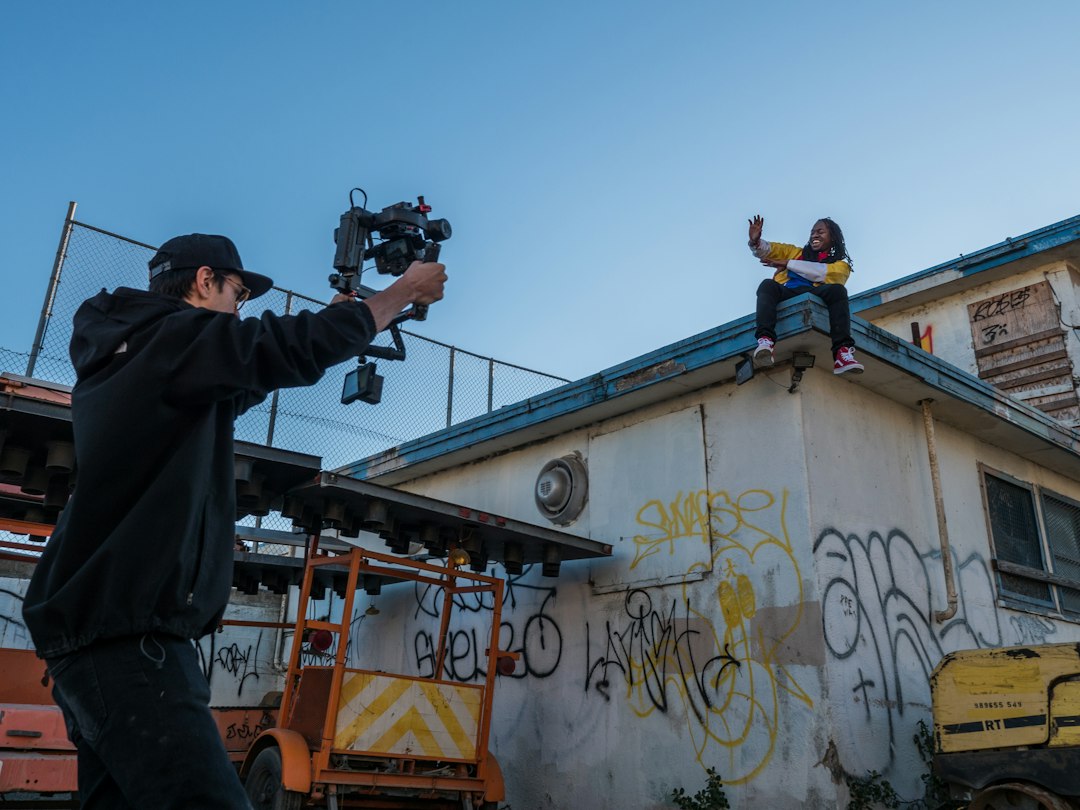
Photo by Tyler Casey on Unsplash
What a Second Unit Actually Does (and Why Every Big Movie Has One)
Watch the credits of almost any big-budget movie and you’ll spot a second unit director listed somewhere below the main director. It’s easy to skim past, but that credit represents an entire parallel production running alongside the one you’d normally think of as “the movie.” Second unit isn’t a lesser version of filmmaking. It’s how large productions get made on schedule at all.
The Basic Idea
A film set only has one main unit: the director, the lead actors, the primary camera and lighting crew, all working through the script scene by scene. That’s the unit responsible for performance and story beats, the stuff that requires the director’s direct hand and the actors’ full attention.
Second unit is a separate, smaller crew shooting simultaneously, often in a different location entirely, handling material that doesn’t need the director or lead actors physically present. While the main unit spends a full day getting a five-minute dialogue scene right, second unit might be capturing a car driving down a highway, a hand reaching for a doorknob, or a wide shot of a city skyline that will be cut in later.
Without this division of labor, a two-hour movie with any scale to it would take dramatically longer to shoot. Second unit is essentially a time-multiplier: it lets a production do two things at once.
What Second Unit Actually Shoots
The material varies by project, but it tends to fall into a few categories. Establishing shots and landscape footage, the kind that sets a scene’s location without needing any actor in frame. Inserts, like a close-up of a letter being opened or a phone screen lighting up, which can be shot with a hand double weeks after the main scene wrapped. Driving and vehicle footage, since a plate of a car on a road rarely needs the star behind the wheel in every frame. And action or stunt sequences, which is where second unit gets its reputation as the “action unit” on bigger productions.
Stunt-heavy sequences are often handed to second unit because they require a completely different rhythm and skill set than dialogue scenes. A stunt coordinator or second unit director who specializes in staging a fight or a chase can plan camera coverage, safety rigging, and editing points with a precision that’s hard to layer on top of a schedule already built around performance. It’s not that action is less important creatively, it’s that shooting it well is its own discipline.
Who’s in Charge
The second unit director isn’t a random assistant. On large productions it’s often an experienced filmmaker in their own right, sometimes a veteran stunt coordinator, sometimes a director being groomed for bigger projects. They work from the same script, storyboards, and shot lists as the main unit, coordinating closely with the primary director so that footage from both units matches in tone, lighting logic, and continuity. A mismatched second unit shot is instantly noticeable, so the job requires matching someone else’s visual language exactly, not imposing a new one.
Editors are often the ones who make the seams disappear. A second unit’s establishing shot, a main unit’s close-up, and a visual effects plate might all come from different days, different crews, and different corners of the world, cut together so seamlessly that the audience never suspects the movie was shot in pieces.
Why It Matters to How You Watch Movies
Once you know second unit exists, it changes how you read a big action sequence or a sweeping establishing shot. That car chase probably wasn’t shot by the same crew that filmed the actors arguing in the front seat five minutes earlier. That gorgeous skyline shot opening the film might have been captured months after principal photography wrapped, by a small crew who never met the lead actor.
None of this is a trick played on the audience. It’s simply how modern film production scales. A movie is rarely made by one continuous crew moving through the script in order. It’s assembled from multiple units working in parallel, all converging in the edit into something that feels like a single, unbroken act of filmmaking.