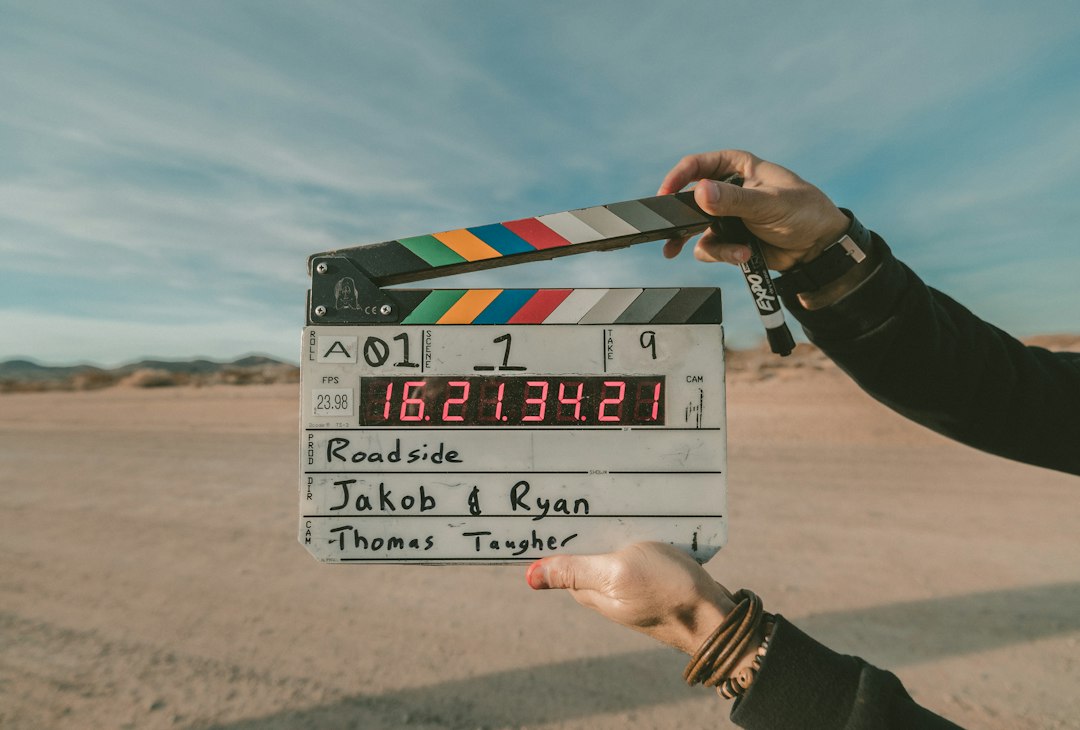
Photo by Jakob Owens on Unsplash
The Unsung Job That Keeps Movies From Falling Apart: What Script Supervisors Actually Do
Every film set has a person sitting near the monitor with a thick binder, a stopwatch, and a marked-up copy of the script, quietly logging everything that happens. They rarely appear in behind-the-scenes footage and almost never get asked about in interviews. But without them, movies would be unwatchable. That’s the script supervisor, and their job is to make sure a film shot wildly out of order, over weeks or months, cuts together as if it happened in one continuous flow.
The Problem Films Are Built Around
Movies are shot out of sequence, usually for reasons of location, actor availability, or budget. A scene that plays as one conversation on screen might actually be filmed across three different days, in different seasons, with the actor’s hair, wardrobe, and even weight subtly different each time. The editor will later cut between multiple camera angles of that same conversation, sometimes shot hours apart, and the audience needs to never notice the seams.
That’s only possible if someone is tracking, in obsessive detail, exactly what happened in every single take: which hand held the coffee cup, how many buttons were undone on the shirt, which way an actor turned their head on the last line, whether a prop was on the left or right side of the table. This is the script supervisor’s core job, and it’s why the position is sometimes called “continuity” on older productions.
What’s Actually in the Binder
A script supervisor’s marked-up script isn’t just notes in the margins. It typically includes:
- Line-by-line records of any dialogue changes actors made on set, since actors paraphrase constantly and the editor needs to know what was actually said versus what was written
- Shot and take numbers cross-referenced to what was covered in each one, so the editor knows which takes exist for which lines
- Continuity details for wardrobe, props, and physical action, often backed up with reference photos
- A running log of screen time, since productions need to track how the finished film’s runtime is shaping up against schedule
- Matching notes between masters, close-ups, and inserts, so a gesture that starts in a wide shot lands in the same place when picked up in a tighter one
On a long shooting day with many setups, this becomes an enormous amount of information to hold in your head, which is why script supervisors are constantly flipping back through prior pages, checking Polaroids or digital reference photos, and quietly stopping a take before it rolls to point out that a character’s tie was different in the previous shot.
Why the Editor Depends on Them
The editor almost never watches filming happen. They receive raw footage days or weeks later and have to reconstruct scenes from pieces shot out of order, often without having been on set for any of it. The script supervisor’s notes are effectively the map that tells the editor which takes are usable, where dialogue changed, and what matched between angles. Without that map, an editor would have to rewatch everything from scratch just to figure out what’s compatible, which on a feature with dozens of scene setups would add enormous time to postproduction.
This is also why continuity errors that do slip through films aren’t usually a sign of carelessness. They’re a sign of just how much has to be tracked by one person across a shoot that might span 40 or 50 days, jumping between scenes that are nowhere near each other in the finished story. Given the volume of detail involved, what’s remarkable isn’t that continuity errors exist. It’s that there aren’t far more of them.
A Job That Requires Total Story Fluency
Because they’re tracking dialogue, timing, and coverage simultaneously, script supervisors end up knowing the shooting script better than almost anyone else on set, often including the director in terms of granular detail. They’re frequently the person a director turns to mid-scene to confirm whether a line was said correctly, whether a beat has already been covered from another angle, or how long a take ran. It’s a role built entirely on precision and memory, executed in real time, under time pressure, without any of the glamour of the jobs happening in front of the camera. But it’s one of the reasons a finished film feels seamless instead of like the disjointed, piecemeal production it actually was.