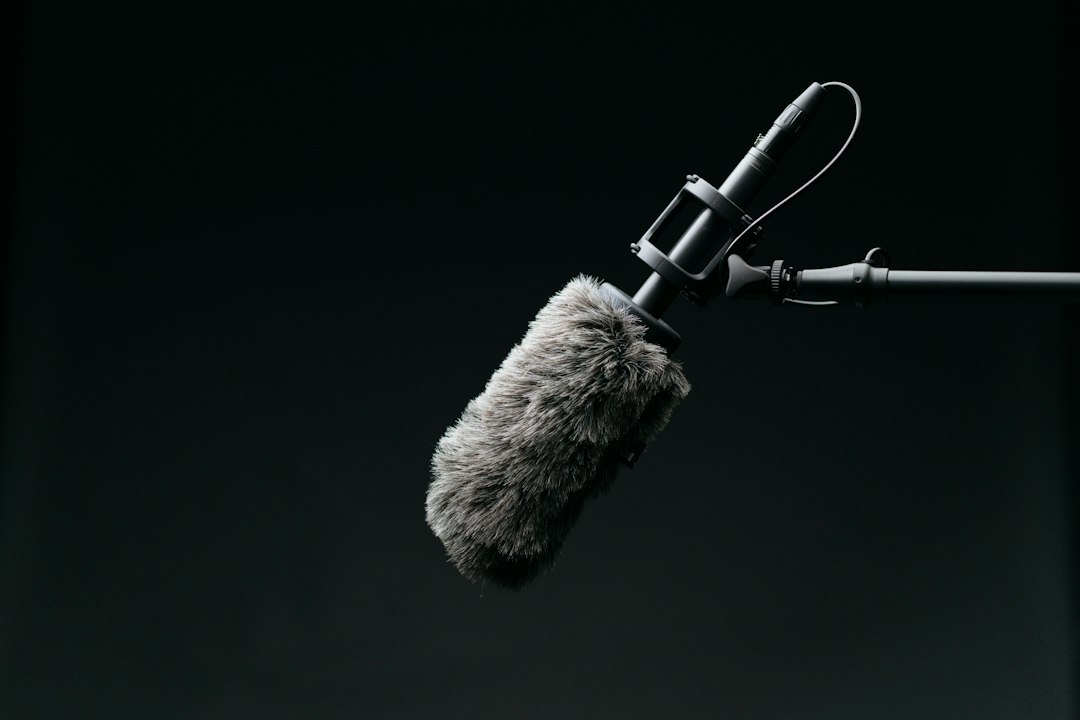
Photo by Keagan Henman on Unsplash
The Room Tone: Why Sets Must Record Silence
At the end of a shooting day, just before the crew breaks down the lights and moves on, the sound mixer will call for one more take. But this time, no one speaks. No one moves. The camera may not even be rolling. For sixty seconds, the entire cast and crew stands frozen while the boom operator holds the microphone in the air, recording what sounds like nothing at all.
This is room tone, and it’s one of the most important elements in post-production sound—despite being, by definition, silence.
Why Silence Isn’t Actually Silent
The paradox of room tone is that true silence doesn’t exist. Every location has an acoustic signature: the hum of air conditioning, the distant rumble of traffic, the subtle resonance of a room’s shape and materials. A warehouse sounds different from a bedroom, which sounds different from a forest clearing. Even “quiet” spaces produce a baseline layer of ambient sound that our ears register, even if we don’t consciously notice it.
When dialogue is recorded on set, it captures not just the actor’s voice but also this underlying ambient character. The problem arises in editing. Dialogue scenes are assembled from multiple takes, and each cut creates a potential gap—a moment where the background tone suddenly changes or drops out entirely. Without room tone to fill those gaps, the edit becomes jarring. The audience may not know why, but something feels wrong.
Filling the Gaps
Room tone serves as acoustic glue. When a dialogue editor cuts from one take to another, or removes a section of unwanted sound (a cough, a plane overhead, a crew member’s footstep), they’re left with a hole in the soundtrack. Dropping in room tone recorded on the same set, with the same microphone placement, allows them to bridge that gap invisibly. The ambient signature remains consistent, and the cut disappears.
This is especially critical in ADR sessions, where actors re-record dialogue in a sterile studio months after production. No matter how closely the performance matches, the studio’s dead acoustic won’t match the location. Layering in the original room tone underneath the new dialogue helps sell the illusion that the actor is still standing in that warehouse or bedroom.
Why It Can’t Be Faked
Post-production sound libraries are filled with thousands of ambient recordings—city streets, forest air, office hum. So why can’t editors just grab a generic track? Because every recording chain is unique. The microphone, the preamp, the placement, the specific resonance of the walls on that day—all of these variables combine to create a sonic fingerprint. A library track will be close, but not identical. In a quiet scene, that mismatch becomes audible.
Room tone also captures the specific perspective of the scene. If the boom mic was eight feet away from the actors, the room tone reflects that distance. If it was overhead in a tight close-up, the tone will be drier, more intimate. Matching that perspective is nearly impossible after the fact.
The Ritual of Standing Still
There’s something almost ceremonial about the room tone recording. After hours of movement, performance, and controlled chaos, the set goes still. It’s a moment of collective focus, a reminder that filmmaking is as much about what you don’t hear as what you do. And it’s a final insurance policy: no matter how messy the edit becomes, the sound team will have a clean minute of that location’s acoustic DNA to work with.
It’s easy to overlook room tone. It’s invisible in the finished film, never credited, rarely discussed outside of post-production. But without it, every cut would betray itself, every ADR line would float untethered, and the illusion of continuous space would collapse. In a medium built on manipulating reality, room tone is the thread that holds the auditory world together—one minute of recorded silence at a time.