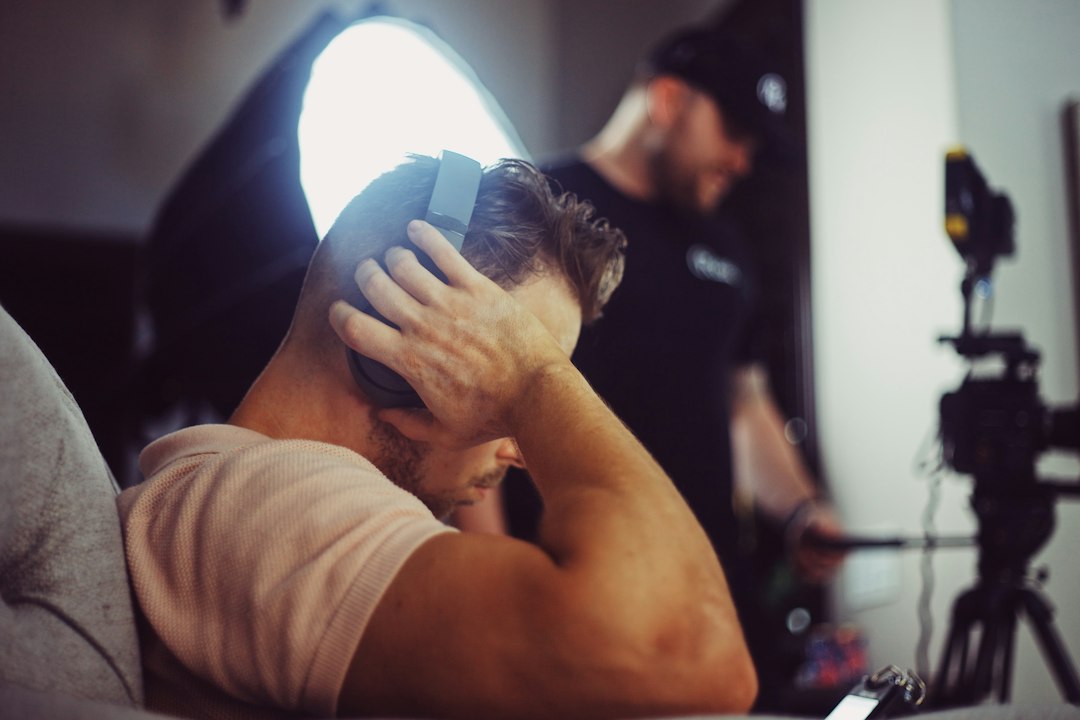
Photo by Gordon Cowie on Unsplash
The Reaction Shot: Cinema's Most Human Instrument
The Reaction Shot: Cinema’s Most Human Instrument
The action shot shows you what happens. The reaction shot tells you how to feel about it.
This distinction sounds simple, but it sits at the root of how cinema builds empathy, generates comedy, sustains tension, and makes audiences care. The reaction shot — a cut away from an event to the face or body of someone witnessing it — is one of the most reliable tools in film grammar, and one of the least discussed.
The Face as the Audience’s Mirror
When a character on screen reacts to something, audiences unconsciously take their cue. This is related to what people describe when they talk about the Kuleshov effect — meaning created by juxtaposing two images — but the reaction shot goes further. It isn’t just about generating meaning through contrast. It’s about establishing a point of identification.
A director chooses who to show reacting, and that choice determines whose emotional experience the audience inhabits. In a scene where a building explodes, cutting to a stranger staring in awe keeps the event impersonal. Cutting to the protagonist’s child, watching from a distance, makes it devastating. The event is the same. The reaction shot decides its weight.
Timing Is Everything
In comedy, the reaction shot is practically the whole joke. The structure of a gag on film often lives entirely in the cut: set up the absurdity, cut to the face, hold it one beat too long. Deadpan comedy depends entirely on what the reaction shot withholds — a face that refuses to respond, or responds with complete sincerity to something ridiculous, creates the gap where laughter lives. Change the length of that hold by a second in either direction, and the joke evaporates.
In drama, the timing is equally loaded but works differently. A quick cutaway signals that a character is suppressing something; a slow, held reaction lets the audience watch emotion arrive in real time. Editors spend enormous energy choosing not just which take of a reaction to use, but exactly when to cut to it and when to cut away. The same piece of footage can read as grief or stoicism depending on when the editor makes the move.
The Horror Exception: Reacting to Nothing
Horror filmmakers discovered early that the reaction shot works hardest when it’s responding to something the audience hasn’t yet seen — or won’t see at all.
Cutting to a face frozen in terror, then cutting back to an empty hallway, is more unsettling than most explicit threats. The imagination fills the gap. This technique places enormous weight on performance: an actor who can make fear legible and specific while staring at nothing is doing something genuinely difficult. The reaction shot in horror is essentially a wager — do you trust this face enough to be frightened alongside it?
When to Stay Wide
Not every scene cuts to a reaction. Sometimes the more powerful choice is to hold a wider framing and let action and reaction coexist in the same shot. This sacrifices directorial control for a kind of intimacy — you see both characters simultaneously, reading the dynamic between them rather than being guided through it one face at a time.
The choice between cutting to reactions and staying wide is fundamentally a question of how much you want to steer the audience. Cutting is directive; staying wide is observational. Classical Hollywood grammar cuts relentlessly to reactions. Directors drawn to long-take aesthetics often resist the impulse, trusting actors and the frame to hold attention without the editor’s intervention.
The Invisible Infrastructure
Most viewers never consciously register a reaction shot. They notice only the feeling it produces — the laugh, the dread, the unexpected tightening in the chest. That invisibility is the craft working correctly. A reaction shot that calls attention to itself has already failed.
What reaction shots reveal, once you start watching for them, is how deliberately emotional experience is constructed in the editing room. Every feeling you’ve had watching a film was, at least partly, a choice made in post-production: an editor scanning through footage, finding the exact frame where a face shifts from composed to broken, and deciding that’s the moment the audience needs to see.