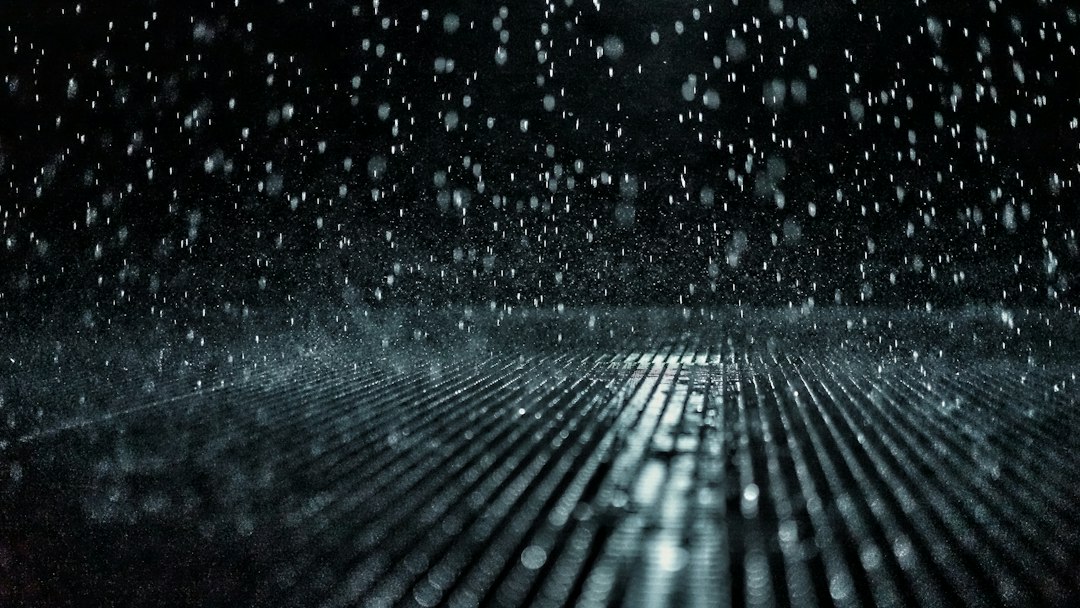
Photo by PAN XIAOZHEN on Unsplash
Why Films Use Rain in Emotional Scenes
Rain appears in so many pivotal film moments—confessions, breakups, deaths, kisses—that it risks becoming a cliché. Yet filmmakers keep returning to it because rain delivers a unique combination of visual, auditory, and symbolic tools that few other production elements can match. When used with intention, rain doesn’t just set a mood. It transforms how we read a scene.
Visual Texture and Separation
Rain gives the cinematographer something most clear-weather shots lack: constant motion in every layer of the frame. Droplets streak through the foreground, mid-ground figures blur through sheets of water, and backgrounds soften into impressionistic washes. This layering creates depth and separates the subject from their environment, focusing attention even in wide shots.
Rain also justifies lighting choices that would otherwise feel unmotivated. Wet surfaces reflect practicals, streetlights, and neon, turning ordinary locations into high-contrast, emotionally charged spaces. A character standing under a sodium vapor lamp in the rain reads as isolated and vulnerable. The same lamp in dry weather is just a lamp.
Skin and clothing take on different textures when soaked. Hair clings, fabric darkens and weighs down, faces glisten. These small physical changes make actors look stripped of their usual composure, which registers subconsciously as honesty or emotional exposure.
Sound Design and Auditory Isolation
Rain creates a natural sound blanket—a soft, chaotic layer that sits behind dialogue and score. This ambient noise has two effects. First, it makes intimate dialogue feel more private, as if the world has receded and only the conversation matters. Second, it gives the sound designer flexibility to emphasize or bury specific elements. A door slam, a car pulling away, or a phone vibrating can cut through the rain with startling clarity, or disappear into it entirely.
The rhythm of rain also varies. A light drizzle suggests melancholy or introspection. A downpour implies chaos, urgency, or catharsis. Filmmakers can modulate intensity within a scene to match emotional beats without cutting away or changing location.
Symbolic Weight and Genre Memory
Rain carries cultural and narrative associations that audiences recognize instantly. It signals cleansing, rebirth, or washing away the past. It evokes vulnerability—characters can’t stay composed when they’re soaked. It suggests pathetic fallacy, the idea that the weather mirrors internal states, which gives filmmakers a shorthand for externalizing emotion.
Genre conventions reinforce these associations. Noir uses rain to underscore moral ambiguity and urban decay. Romance uses it to strip away pretense and force intimacy. Thrillers use it to obscure visibility and heighten paranoia. These patterns mean that rain arrives in a scene with a set of expectations already attached, which a skilled filmmaker can either fulfill or subvert.
The Production Trade-Off
Rain is expensive and difficult to control. Rain towers, water trucks, and drainage systems add time and cost to any shoot. Continuity becomes a challenge—actors need to stay wet between takes, and natural light shifts constantly under cloud cover. Yet productions keep choosing rain because the emotional and aesthetic return justifies the logistics.
Digital rain, added in post, can replicate some visual effects but rarely delivers the same auditory presence or physical interaction with actors. Practical rain forces real reactions—squinting, shivering, wiping water from the face—that feel immediate in a way composited elements often don’t.
Rain isn’t a magic bullet for manufacturing emotion, but it is one of the most reliable tools for amplifying what’s already present in a scene. It rewards careful integration with cinematography, sound, and performance, and when those elements align, rain becomes more than weather. It becomes punctuation.