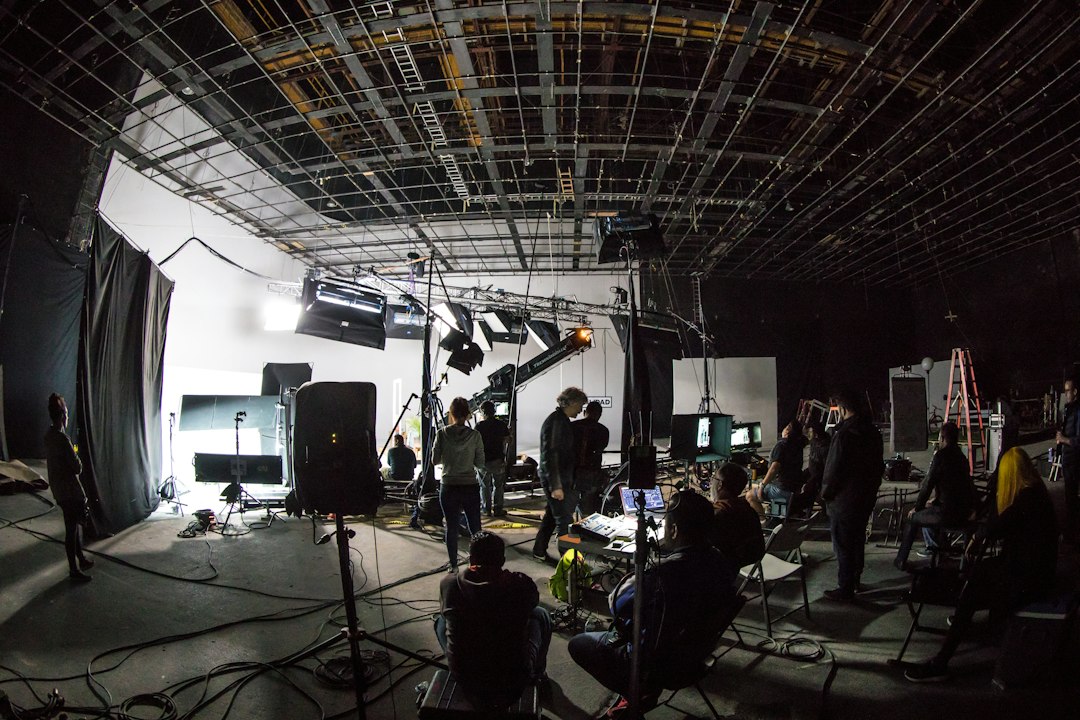
Photo by Brands&People on Unsplash
What a Room Reveals: The Hidden Language of Production Design
What a Room Reveals: The Hidden Language of Production Design
Every film exists inside a physical world someone had to build — or find, or transform. Before an actor delivers a line or a camera moves, the walls, furniture, textures, and colors of that world are already speaking. That’s production design, and it’s one of cinema’s most persistently undervalued crafts.
A production designer, working alongside an art director and set decorator, is responsible for the entire visual environment: the architecture, the props, the color palette, the way spaces feel at a gut level. The best ones aren’t just building believable rooms — they’re constructing arguments about the characters who live inside them.
A Character’s Space Is a Character
The most efficient thing production design can do is tell you who someone is before they speak. A meticulous person’s apartment organized into rigid geometry. A grieving character surrounded by objects they haven’t touched in years. A villain whose aesthetic taste is genuinely refined — because menace is more unsettling when it comes with good furniture.
This isn’t decoration. It’s characterization delivered through accumulated visual detail. The production designer, working from the script, makes hundreds of decisions — what’s on the walls, what’s broken and hasn’t been fixed, what’s conspicuously absent — and each one is a small piece of exposition the audience absorbs without registering it as information.
Designers talk about building “lived-in” spaces: environments that feel inhabited by specific people with specific histories. The opposite is immediately legible as false — the “showroom” set, too clean and generic, telling you nothing about who lives there. Great production design replaces the showroom with the story.
Color and Texture as Emotional Registers
Production designers work closely with cinematographers to establish the emotional register of different spaces. Color is one of their most precise tools.
A palette can shift across a film to track a character’s psychological state — desaturated interiors at the lowest points, warmer tones as the story opens up. Contrasting spaces can define opposing worlds: a cramped, warm apartment against the cold institutional geometry of wherever the threat originates. The audience feels these shifts before they consciously identify them.
Texture matters just as much. Worn surfaces versus polished ones, organic materials versus industrial ones — these distinctions land at a sensory level before interpretation kicks in. A room full of soft, layered fabric feels different from one all glass and steel, and a good designer chooses between them deliberately, not by default.
The Practical and the Expressive
One of the production designer’s core challenges is managing the tension between two demands: a space has to work photographically (it needs clearance for lenses, lighting rigs, and camera movement), and it has to feel real and meaningful to the people inside it. These goals don’t always point in the same direction.
On location, designers transform existing buildings to fit the film’s visual logic — adding, subtracting, repainting, repopulating. On a stage, they build from nothing, which grants total control and introduces a different set of pressures: the freedom to construct anything is also the burden of justifying every choice. Either way, the guiding question is the same: what do we want the audience to feel in this space, and how do we engineer that feeling architecturally?
What to Watch For
The best way to start noticing production design is to look at a scene before the actors do anything. Pause on an establishing shot of a new space and ask: what does this room tell me? Who lives here — and what does the room suggest they’re avoiding, or holding onto, or performing for themselves?
You’ll find that most of the work is already done before the first line of dialogue. The story doesn’t simply happen inside the room. In the best films, the room was always part of the story.