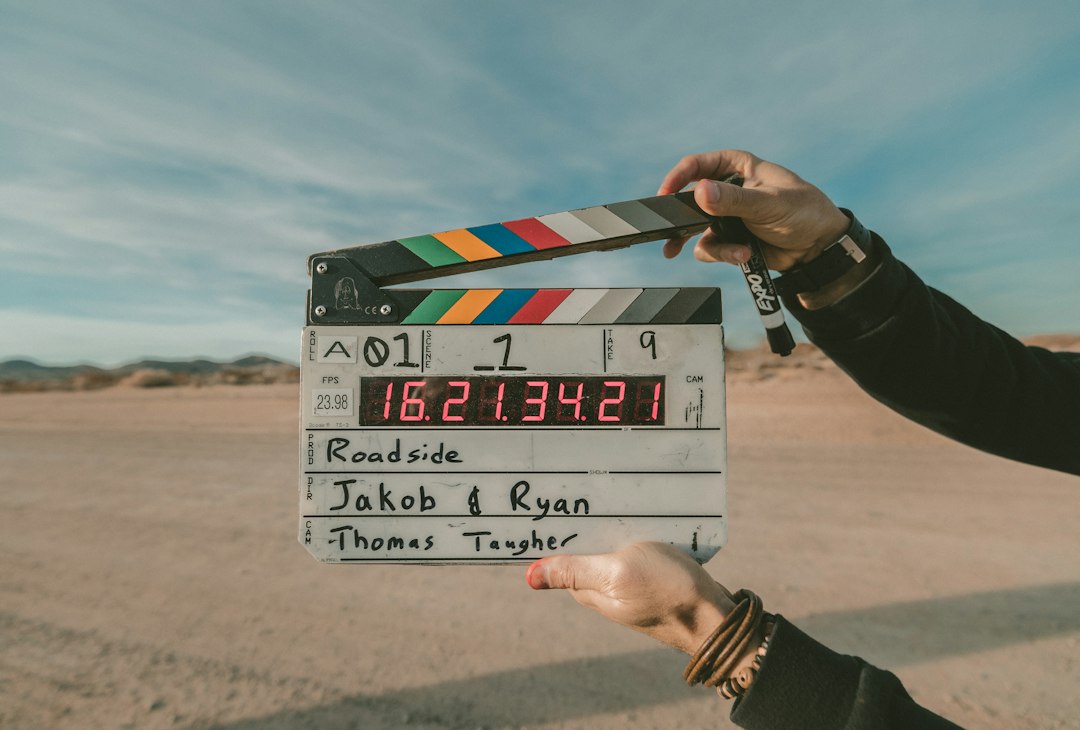
Photo by Jakob Owens on Unsplash
Why Film Cameras Start Before "Action" and Keep Rolling After "Cut"
If you’ve ever been on a film set, you’ve noticed a peculiar rhythm. The camera operator announces “Rolling,” the sound mixer confirms “Speed,” the assistant camera claps the slate, and then—nothing. Several seconds of silence pass before the director finally calls “Action!” The same thing happens at the end: the director yells “Cut!” but the camera keeps recording for a few more seconds before the operator actually stops.
This isn’t inefficiency or hesitation. It’s deliberate craft, and it solves several practical problems that have plagued filmmakers since the silent era.
The Technical Insurance Policy
The primary reason for pre-roll is mechanical reliability. Film cameras need a moment to reach full speed after the motor engages, and even digital cameras benefit from a buffer to ensure recording has stabilized. Sound recording equipment similarly needs time to lock into proper sync. Starting the camera before calling action ensures that when the performance begins, everything is running at the correct speed with clean audio.
Post-roll serves a similar insurance function. Actors sometimes continue a gesture or hold an expression for a beat after “Cut,” and that extra moment can be invaluable in the editing room. More importantly, if the director immediately changes their mind—“Actually, keep going!” or “One more line!”—the camera is still capturing usable footage.
Capturing the Unguarded Moment
But the real magic of pre-roll and post-roll lives in those unscripted seconds. Actors often drop into character most naturally in the moments just before “Action,” when they’re settling into the scene rather than consciously beginning a performance. A glance, a breath, a micro-adjustment of posture—these authentic moments frequently get used in the final cut because they feel more real than anything that happens on cue.
The same applies after “Cut!” As actors relax out of character, they sometimes produce an unguarded reaction that perfectly caps a scene. A smile breaking through after an intense take, or tension genuinely draining from someone’s shoulders, can tell the truth of a moment better than scripted action.
The Editor’s Safety Net
Editors rely on handles—extra footage before and after the usable action—to finesse their cuts. A scene might need to start slightly earlier than the director anticipated, or an actor’s line reading might improve if the cut happens a fraction of a second later. Without pre-roll and post-roll, every cut would be locked to the exact moment between “Action!” and “Cut!” with no room to adjust.
This becomes especially critical with sound editing. Dialogue often needs to be shifted slightly in the timeline to match the rhythm of a scene, and having clean pre-roll audio allows editors to extend a word or breath naturally without creating an abrupt start.
How Much Is Enough?
The standard is three to five seconds on either end, though this varies by format and budget. Film stock was expensive, so film shoots tended toward minimal pre-roll and post-roll. Digital recording costs nearly nothing, so modern productions are more generous, sometimes letting scenes breathe for ten seconds before action.
Commercial shoots and high-stakes single-take scenes often use even longer buffers. If you’re filming a dangerous stunt or an unrepeatable practical effect, you want the camera rolling well before anything happens and continuing until you’re absolutely certain the moment is over.
The Psychology of the Set
There’s also a psychological dimension. The gap between “Rolling” and “Action!” gives everyone on set a moment to settle. Background actors find their marks, the focus puller takes a breath, and the lead actor sheds the previous take. It’s a tiny meditation built into the workflow, a pause that paradoxically helps everything run more smoothly.
When directors call “Action!” immediately after the camera starts, it often produces rushed, slightly artificial performances. The pre-roll buffer creates space for genuine presence.
The next time you’re watching behind-the-scenes footage, pay attention to that quiet pocket between “Speed” and “Action!” In those few seconds of apparent inactivity, the machinery of filmmaking is actually working exactly as designed—capturing more than what was planned, protecting against what might go wrong, and leaving room for the unexpected moments that make movies feel alive.