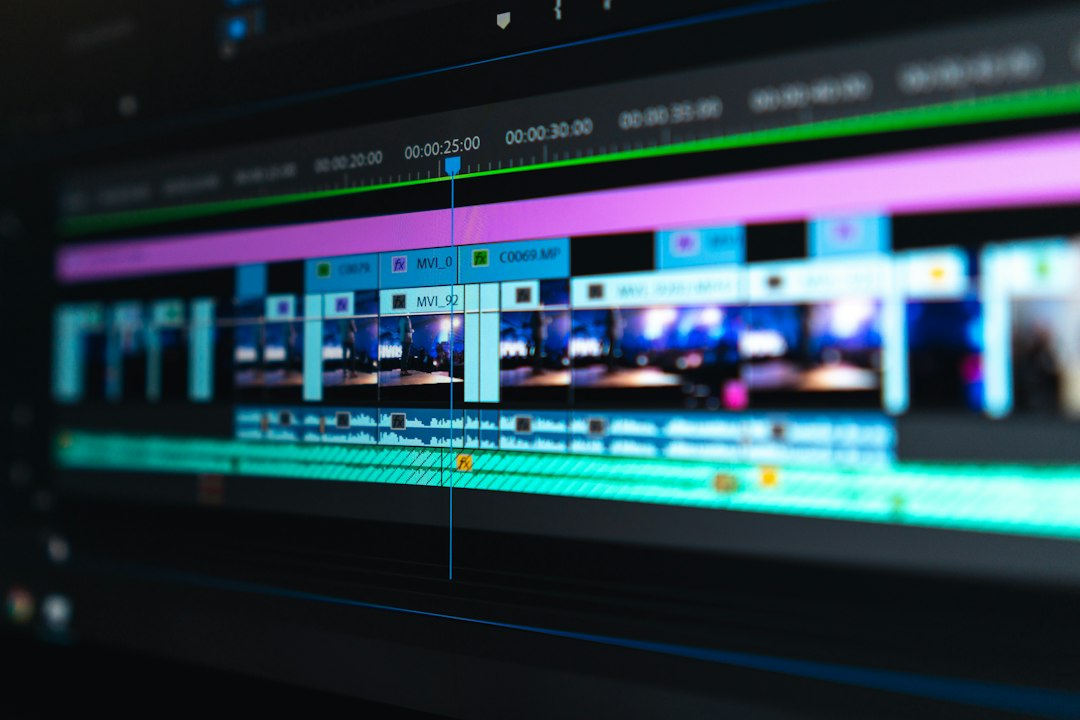
Photo by Peter Stumpf on Unsplash
Pre-Lap Dialogue: When Characters Speak Before We See Them
You’re watching a tense conversation in a darkened office. A character delivers their final line, and before the image changes, you hear a new voice—bright, casual, maybe asking a question. Then the picture cuts to match: a sunny café, someone mid-sentence. You’ve just experienced pre-lap dialogue, one of the most common yet invisible techniques in film editing.
Pre-lap dialogue occurs when audio from the next scene begins before the visual cut. The audience hears a character speak while still seeing the previous scene, then the image catches up a moment later. It’s the auditory equivalent of a head start, and editors use it constantly to control pacing, smooth transitions, and guide viewer attention.
Why Editors Pre-Lap Dialogue
The most practical reason is smoothness. A straight cut from one scene to the next—both picture and sound changing simultaneously—can feel abrupt, especially when moving between contrasting locations or emotional tones. By letting the next scene’s audio arrive first, editors create a brief overlap that softens the transition. The viewer’s brain begins processing the new context while still anchored to the familiar image, making the shift feel less jarring.
Pre-lap dialogue also builds anticipation. When you hear a voice before seeing its source, you’re immediately curious: who’s speaking, where are they, what’s happening? This micro-suspense pulls you forward into the next scene with momentum already building. The technique turns a passive transition into an active question that gets answered the moment the picture cuts.
Spatially, pre-lapping can suggest proximity or connection between locations. If we hear a character’s voice while still seeing another room, it implies they’re nearby—perhaps just beyond a door or around a corner. Even when the locations aren’t physically connected, the overlapping audio creates a psychological bridge, making the story world feel more continuous and lived-in rather than a series of isolated vignettes.
The Rhythm of Conversation
Pre-lap dialogue excels at maintaining conversational rhythm across cuts. In real life, people often start talking before they’ve fully entered a space or while someone else is still processing what was just said. By letting dialogue begin before the visual change, editors can replicate that natural flow. The result feels less like “Scene A, then Scene B” and more like one continuous flow of action that we’re sampling at different points.
This technique also manages pacing during exposition-heavy sequences. When a script requires multiple short scenes to convey information—checking in with different characters or locations—pre-lapping keeps momentum high. Instead of each scene starting cold and needing to build energy, the audio overlap carries forward the rhythm, preventing the edit from feeling choppy or episodic.
When Not to Pre-Lap
Like any technique, pre-lap dialogue works best when deployed selectively. Overuse creates a sameness where every transition feels identical, and the overlap loses its smoothing effect. Some cuts demand the impact of simultaneity—picture and sound changing together for emphasis, surprise, or tonal shock. A horror film might avoid pre-lapping to preserve the jolt of sudden scene changes. A meditative drama might use silence and hard cuts to create breathing room between moments.
Pre-lap also requires careful calibration of timing. Start the dialogue too early, and the overlap feels awkward, pulling focus away from the outgoing scene before it’s finished. Start it too close to the cut, and you lose the smoothing benefit entirely. The sweet spot is usually just a word or two—enough to create the overlap effect without making the audience consciously notice the technique.
The Editor’s Invisible Craft
Pre-lap dialogue represents the kind of micro-decision that separates competent editing from exceptional editing. Most viewers will never consciously notice it, but they’ll feel its effect in how effortlessly the film moves from moment to moment. It’s the difference between a story that stutters forward in discrete chunks and one that flows with the rhythm of thought itself—always one step ahead, pulling you deeper into the world on screen.