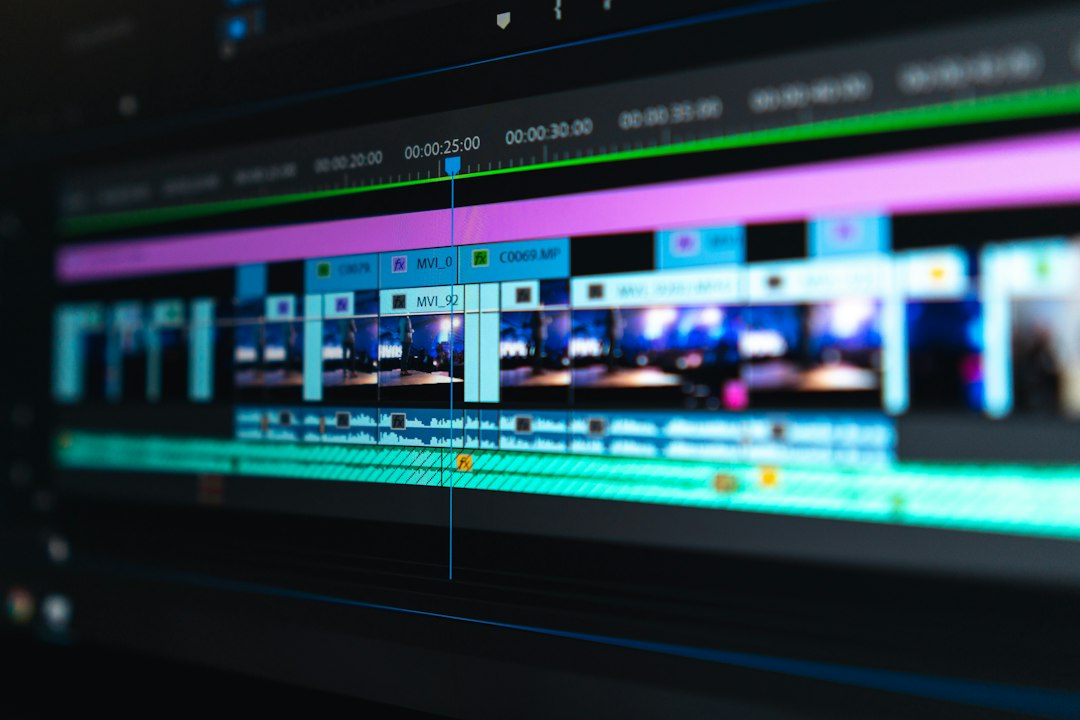
Photo by Peter Stumpf on Unsplash
Meanwhile, Elsewhere: How Parallel Editing Builds Suspense
Picture two scenes cutting back and forth: a bomb ticking down in one location, a character racing through traffic in another. Neither scene alone is especially tense. Cut together, they become almost unbearable. That’s parallel editing, sometimes called cross-cutting, and it’s one of the oldest tricks in film grammar that still reliably works on an audience.
What It Actually Does
Parallel editing intercuts two or more lines of action that are happening at the same time, or that the film wants us to believe are happening at the same time. The technique doesn’t just juggle plotlines for efficiency. It manufactures a specific feeling: the dread of simultaneity. We know rescue is coming. We know disaster is coming. The only question is which arrives first, and the editing controls that answer by controlling how much of each scene we see before jumping to the other.
This is different from a simple scene transition. A transition moves a story forward in sequence. Cross-cutting freezes narrative time and forces two clocks to run against each other in the viewer’s head. The suspense isn’t really in either scene. It’s in the gap between them, in the anxiety of not knowing what happened in scene A while we were watching scene B.
A Trick as Old as Editing Itself
The technique is closely associated with D.W. Griffith, who used it extensively in the 1910s for his last-minute rescue sequences, cutting between a villain’s advance and a hero racing to intervene. Griffith didn’t invent every element of it, but he’s credited with popularizing cross-cutting as a structural tool rather than an occasional flourish, and it became a foundational piece of narrative film language almost immediately. Within a decade, it had spread everywhere, from adventure serials to more character-driven dramas, because it solved a problem theater never had to solve: how do you dramatize two things happening at once when your storytelling medium can only show one image at a time.
That constraint is really the whole trick. Cinema can’t show simultaneity directly, so it fakes it through rhythm. The faster the cuts, the more urgent the sense of convergence. Slow the cutting down, linger in each location a little longer, and the same structure reads as dread rather than adrenaline.
Beyond the Chase Scene
Parallel editing outgrew its rescue-scene origins a long time ago. Heist films use it to show a team executing different jobs simultaneously, letting the audience assemble the full plan themselves in real time. Ensemble dramas use it to draw thematic connections between characters who never meet, implying that their separate struggles are somehow the same struggle. War films use it to contrast the experience of soldiers with civilians back home, letting the cut itself make an argument about distance and consequence that dialogue never states outright.
What all these uses share is that the cutting pattern is doing interpretive work, not just logistical work. The editor is telling you these threads belong together, even before the plot explicitly connects them.
Why It Still Lands
It would be reasonable to assume a century-old trick would lose its power through overuse, but cross-cutting keeps working because it exploits something structural about how attention operates, not something specific to any era’s visual style. Holding two open questions in your head at once is inherently more stressful than holding one. The technique doesn’t need novelty to succeed. It needs timing.
That’s also why it’s a favorite testing ground for editors learning pace and rhythm. Cross-cutting has no dialogue trick or performance nuance to hide behind. The suspense is built entirely from where the cuts land, which makes it one of the purest demonstrations of editing as an act of storytelling in its own right, independent of what’s actually happening in front of the camera.