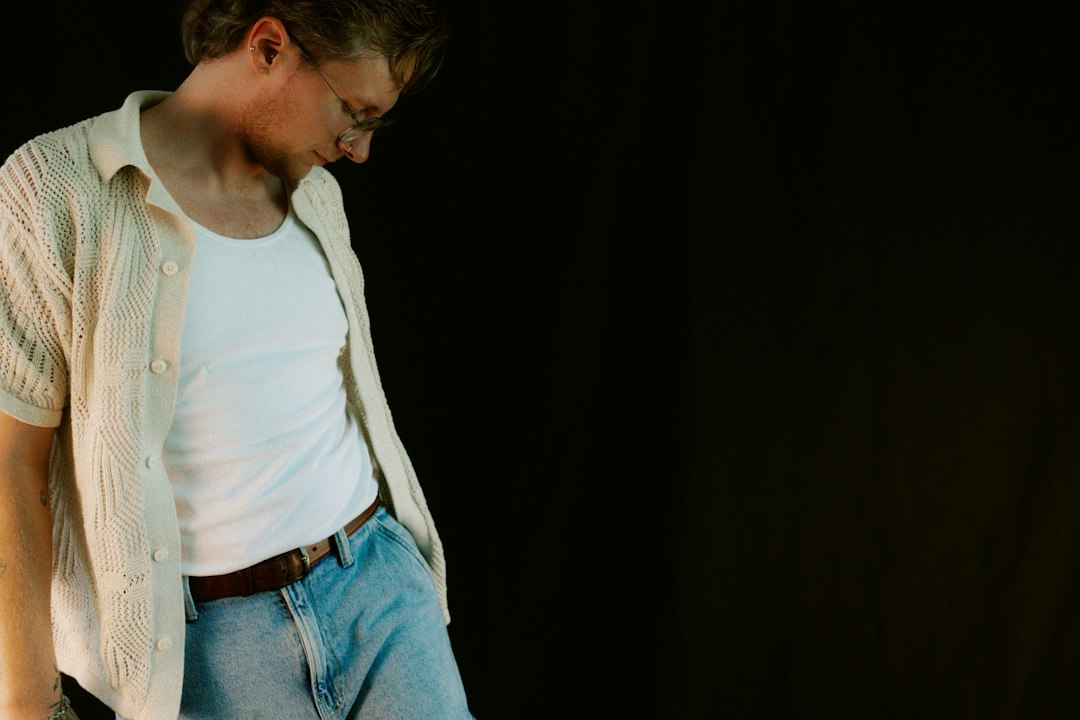
Photo by Brooke Balentine on Unsplash
Negative Action: When Stillness Becomes Cinematic Movement
In a medium built on movement—actors crossing frames, cameras tracking through space, cuts propelling stories forward—some of the most powerful moments happen when everything stops. Filmmakers call this principle negative action: the deliberate use of stillness to create emphasis, tension, or contrast against the motion around it.
The technique works because cinema trains audiences to follow movement. Our eyes naturally track anything that shifts in the frame. When a character becomes perfectly still while chaos erupts around them, or when a film suddenly freezes its kinetic energy, that absence of expected motion becomes louder than any action could be.
The Physics of Film Attention
Negative action exploits a fundamental aspect of visual perception. In a busy frame, the human eye gravitates toward motion. But introduce a single static element amid that motion, and it becomes a magnetic anchor. The still figure gains weight, presence, authority.
This principle appears in blocking decisions throughout film history. A character standing motionless while others rush past them reads as confident, shell-shocked, or threatening depending on context. The lack of movement itself communicates emotional state without requiring dialogue or even facial expression.
Directors use this technique at multiple scales. At the micro level, an actor might hold perfectly still for a beat longer than feels natural, creating unease or forcing the audience to study their face for micro-expressions. At the macro level, an entire scene might drain its energy after sustained action, leaving characters frozen in tableau as the weight of what just happened settles.
Stillness as Power Dynamic
One of the most common applications of negative action is establishing dominance or control. When one character moves nervously—pacing, fidgeting, adjusting their clothing—while another remains utterly still, the power dynamic becomes instantly clear without a word spoken.
This works because stillness suggests certainty. Someone who doesn’t need to adjust, reposition, or react appears to have already calculated every outcome. Their physical confidence translates to narrative authority. The technique appears constantly in interrogation scenes, standoffs, and confrontations where one party wants to project control.
The reverse also holds power. A character who has been kinetic throughout a film suddenly going still signals a fundamental shift. The energy has changed. Something has broken or crystallized. That absence of their established movement pattern communicates transformation more efficiently than exposition could.
The Held Frame
Negative action extends beyond character blocking to camera and editing choices. A held frame—where the camera simply stays locked on a static composition—creates negative action in cinematic language itself. After a sequence of cuts and camera moves, a long, still shot feels weighty and deliberate.
This technique appears frequently at emotional peaks. A revelation lands, and rather than cutting to reactions or pushing in for emphasis, the camera simply holds. The audience sits with the moment. The stillness forces contemplation rather than immediate emotional reaction. It’s the visual equivalent of a rest in musical notation—the silence that gives the notes around it shape.
Modern filmmakers sometimes hold frames for uncomfortable lengths, pushing past the point where audiences expect a cut. That extended stillness creates mounting tension purely through the violation of expected rhythm. We’re waiting for the release that doesn’t come, and that waiting becomes the point.
Contrast and Release
Negative action derives much of its power from context. Stillness only reads as still when measured against motion. The technique works best when deployed strategically rather than constantly. A film that maintains low energy throughout has no baseline against which stillness can register as meaningful.
This is why action films often make the most effective use of negative action. After twenty minutes of kinetic chase sequences and rapid cutting, a single locked shot of a character standing motionless in the aftermath carries enormous weight. The contrast amplifies both the action that preceded it and the stillness that follows.
The release from stillness back into motion also creates impact. When a character who has been holding perfectly still suddenly explodes into action, that movement hits harder because we’ve been forced to store up anticipation during the static moment. The negative action was loading the spring that the motion releases.
Trusting the Absence
Using negative action requires confidence from filmmakers. It asks them to trust that the absence of something will read as strongly as its presence. In an industry that often defaults to more—more coverage, more movement, more cuts—choosing to simply hold on stillness can feel counterintuitive.
But that restraint is precisely what gives the technique power. Negative action respects the audience’s ability to feel the weight of a moment without having it emphasized through camera trickery or editorial manipulation. The stillness says: this moment is important enough that we don’t need to dress it up. Just watch. Just feel the absence of motion, and understand what it means.