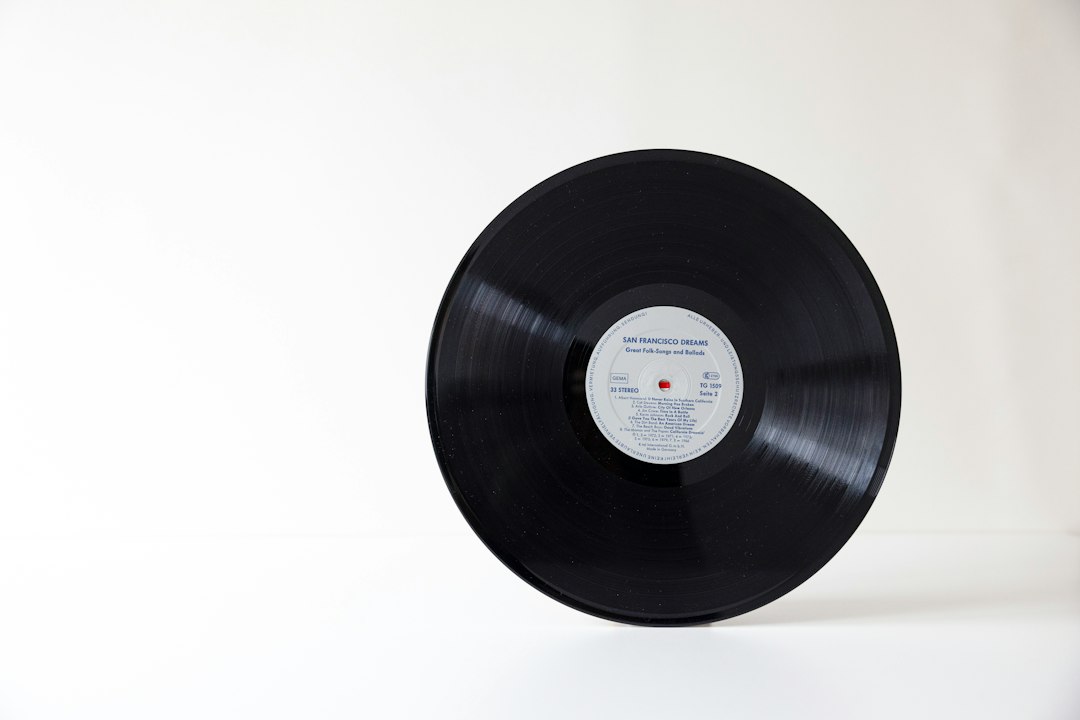
Photo by Markus Spiske on Unsplash
The Needle Drop: Why Filmmakers Reach for a Song Instead of a Score
Every film composer works from a blank page. A needle drop starts somewhere else entirely: with a song the audience may have heard a hundred times before, carrying its own history into the scene. When a director cuts to a familiar track instead of calling in a composer, they’re not just picking music. They’re borrowing a piece of the culture and asking it to do narrative work.
The term comes from the literal act of dropping a phonograph needle onto a record, but in industry use it means any moment a filmmaker inserts a pre-existing recording rather than an original score cue. It’s a different tool with different rules than the underscore, and understanding why directors reach for it clarifies a lot about how music actually functions in a movie.
Borrowed Meaning, Instant Context
An original score has to build its emotional vocabulary from nothing. A needle drop skips that work because the song arrives pre-loaded with associations. A specific era, a subculture, a mood the audience already has feelings about. Drop in a song from a particular decade and you’ve told the audience when and where they are without a single line of dialogue or a production design cue.
That borrowed meaning cuts both ways. A song can also be used against type, playing something upbeat over violence or tragedy over triumph, and the friction between the music’s original context and its new one becomes the point. This is one of the oldest tricks of ironic needle drops: the gap between what a song usually means and what’s happening onscreen generates a jolt that a custom score, built to match the scene, generally can’t.
What a Score Can’t Buy
An original score is written to serve one film. It can be tailored precisely, built to swell exactly when the character breaks, to sit under dialogue without competing with it, to develop themes that pay off across two hours. A needle drop can’t be reshaped that way. The song is a fixed object, verse and chorus and bridge already locked in, and the filmmaker has to build the scene around it rather than the other way around, trimming, timing cuts to the beat, sometimes cutting an entire sequence to a song’s structure rather than a script’s.
That constraint is also the appeal. A well-chosen song brings a personality, a specific voice and performance, that an orchestral cue often can’t. It can signal a character’s taste, place a story in a particular subculture, or simply hit harder because it’s a piece of music the audience has an actual relationship with, memories attached, rather than something composed to be neutral and serve the picture.
The Price of a Good Song
None of this is free. Needle drops require music licensing, which means negotiating with rights holders for both the composition and the specific recording, and popular songs by well-known artists can be expensive, sometimes costing far more than an original score cue would. Budget often decides how many needle drops a film can afford, which is part of why lower-budget films lean on original scores or public domain and independent music, while films with the budget for it can build entire sequences around a famous track.
There’s also a risk of the technique becoming a crutch. A needle drop can substitute for character work that hasn’t been earned, using a beloved song to manufacture feeling the scene hasn’t built on its own. Audiences can feel the difference between a song that’s doing real narrative work and one that’s just there to sound good in a trailer.
Score and needle drop aren’t rivals so much as different instruments for different jobs. A score can grow with a story over its full runtime. A needle drop is a single, loaded object dropped into a scene, and its power comes from the fact that it already meant something before the movie ever used it.