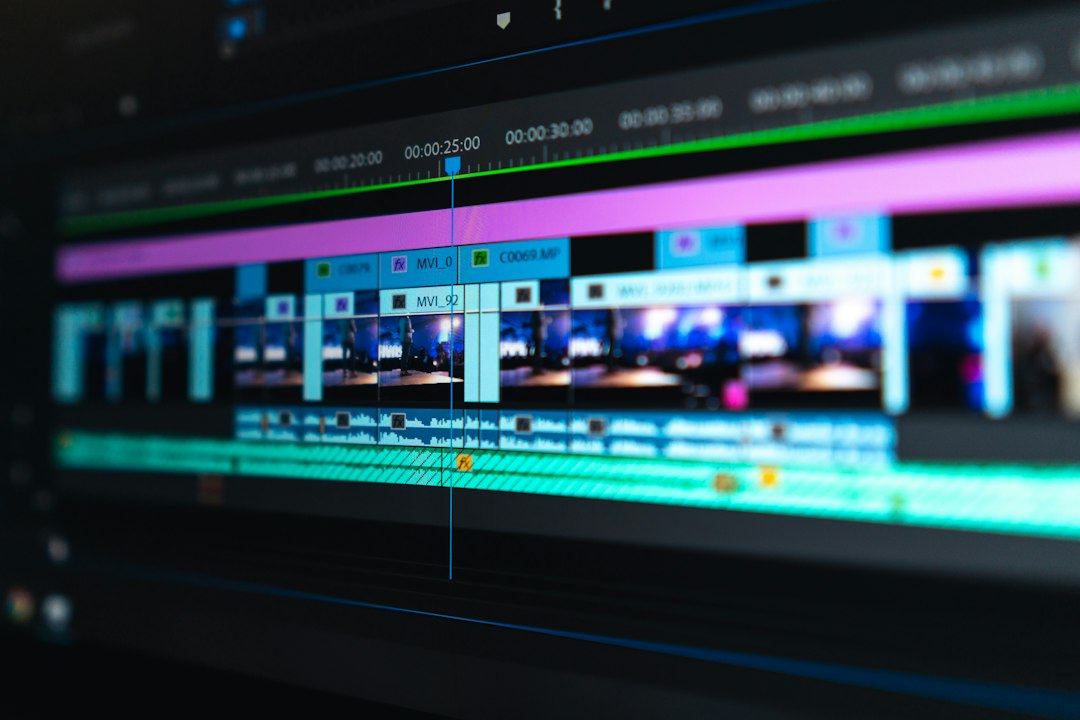
Photo by Peter Stumpf on Unsplash
The Montage Sequence: How Movies Compress Time
A boxer runs up a set of stairs. Cut to him hitting a heavy bag. Cut to him sparring, sweating, collapsing, getting back up. Ninety seconds later, he’s ready for the big fight. No film could show months of training in real time, so it doesn’t try. It compresses.
That’s the montage sequence at work: a string of short shots, usually set to music, that condenses time and effort into something an audience can feel in under two minutes. It’s one of the most efficient storytelling tools cinema has, and one of the most misunderstood, since “montage” technically just means “editing” in French and gets used loosely to describe very different things.
Two Different Meanings of Montage
Film theorists use “montage” to describe the entire art of editing, the idea that meaning comes from juxtaposing shots rather than from any single image. Soviet filmmakers and theorists in the 1920s, including Sergei Eisenstein, built whole theories of cinema around this: put two unrelated images next to each other and the viewer’s mind constructs a third meaning that neither shot has alone.
What most people mean when they say “the montage” in a movie is narrower: a sequence, usually music-driven, that shows a process unfolding over compressed time. Training, falling in love, building something, a road trip, a slow descent into crisis. The Soviet theorists gave editing its intellectual foundation. The training-montage version popularized by American cinema in the 1970s and 80s is the practical descendant, stripped down for entertainment rather than ideology.
Why It Works
A montage succeeds because it trades information for feeling. If a script needs the audience to understand that a character trained hard for six months, there are two ways to do it: tell them in dialogue, or show a compressed sequence of physical effort set to music that mimics the emotional shape of a training arc, struggle building to triumph. The second option is almost always more effective, because it lets rhythm and music do the emotional work that exposition can’t.
Music matters as much as the images here, maybe more. A montage is essentially a music video with narrative stakes attached. The song’s structure, its build, its tempo, often dictates the cutting pattern more than the plot does. That’s part of why a good training montage can make you feel like real progress happened even when the actual shots are repetitive: three seconds of running, three seconds of lifting, three seconds of the character looking exhausted. The song sells continuity that the footage doesn’t actually contain.
The Risk of Relying on It
Montage is a shortcut, and shortcuts have a cost. If a film leans on montage to skip over a character’s actual internal change, the audience can sense the difference between shown growth and asserted growth. A training montage that ends with a character suddenly capable of things they weren’t ten minutes of screen time earlier works because we accept the convention. A montage used to resolve a relationship, a moral conflict, or a character’s grief can feel hollow, because those changes are supposed to be earned through scenes, not summarized through a song.
This is also why montage became an easy target for parody. Once audiences recognize the pattern, quickly, since it’s such a compact and recognizable structure, it becomes vulnerable to being read as a cheat rather than a technique. Comedies have mined this for decades, cutting to the exact beats an audience expects and undercutting them for laughs.
An Old Tool, Still Working
Despite the skepticism it invites, montage hasn’t gone away, because the underlying problem it solves hasn’t gone away. Movies still need to compress time, and audiences still respond to the emotional logic of music-driven editing even when they can name the trick. The best montages don’t try to hide that they’re a shortcut. They just make sure the shortcut earns its place, compressing time an audience doesn’t need to sit through, rather than compressing change an audience actually needed to see.