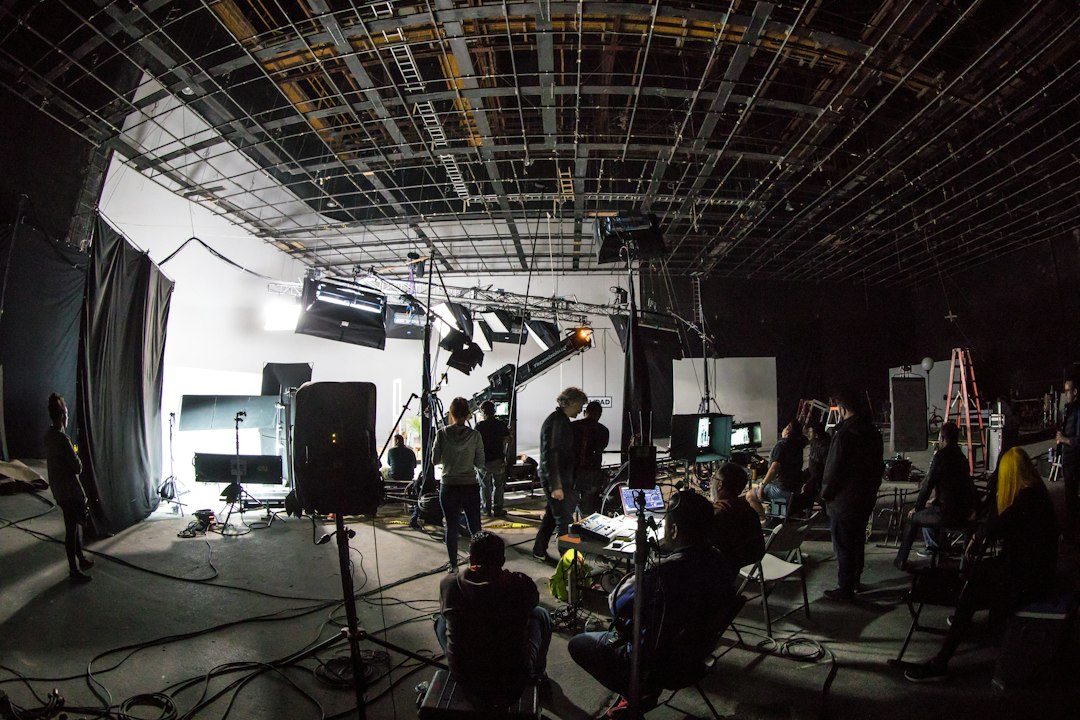
Photo by Brands&People on Unsplash
What Mise-en-Scène Actually Means — And Why Every Frame Is an Argument
“Mise-en-scène” gets thrown around in film criticism as a vague signal of sophistication — the word that means a reviewer has seen a lot of movies. But it describes something precise and genuinely useful for understanding how films work. Once you know what it actually covers, you’ll watch differently.
What the Term Means
The phrase is French for “putting into the scene.” It originated in theater, referring to a stage director’s decisions about how to present a scene: where actors stand, what surrounds them, how the space is lit. Cinema borrowed the term and expanded it to mean everything that exists in front of the camera before the camera records it.
That’s the key distinction. Mise-en-scène is not editing, not music, not camera movement — those are separate elements. It’s the content of the frame itself: the staging of bodies, the design of the space, the lighting scheme, and the costumes and makeup on the performers. When a director sets up a shot, they are first composing reality before they compose the image.
The Four Elements
Staging and blocking is where bodies are placed relative to one another and to the camera. A character positioned in the foreground and in focus while another character lingers small in the background communicates a power relationship without any dialogue. Two characters speaking at the same height and proximity suggests equality or intimacy; one standing over a seated other suggests dominance. These spatial relationships are readable before anyone opens their mouth.
Set and production design builds the world the characters inhabit. A cluttered apartment full of old newspapers tells you something about its occupant. A sterile, empty office tells you something about the corporation that built it. The objects in a frame — a photograph on a wall, a weapon on a table, a dying plant on a windowsill — are not decoration. A skilled production designer and director choose them because they do work, extending what the script establishes into the texture of the visible world.
Lighting is perhaps the most expressive element of mise-en-scène. Where light falls and where shadow is allowed to sit shapes mood and meaning in ways that go straight past conscious thought. Hard, high-contrast lighting with deep shadows reads as threat or moral ambiguity. Soft, diffused light reads as safety or nostalgia. A character lit from below looks sinister; lit from above, they look diminished. These conventions are partly cultural and partly physiological — they map onto how humans have understood fire, sun, and darkness for thousands of years.
Costume and makeup tells you who someone is before they act. What a character wears communicates class, era, personality, and often their arc — a character who begins the story in muted colors and ends in bright ones has changed, and so has their wardrobe. Makeup does similar work, aging a character, marking them as ill, or signaling a transformation the story is tracking.
Why It Matters
The reason mise-en-scène is a useful concept — not just academic vocabulary — is that it frames film as a visual language with grammar. A director who understands it thinks about every element in the frame as a carrier of meaning, not just a backdrop for dialogue. Two films can have identical scripts and performances and feel completely different based on how they stage and light their scenes.
It also explains why some films feel visually incoherent even when the camera moves beautifully. Graceful camera work over a chaotic, uncontrolled frame produces nothing. Mise-en-scène is the foundation; everything the camera does is built on top of it.
The practical takeaway for viewers: when something in a frame catches your attention — a color that seems off, a prop that appears in multiple scenes, a character standing slightly apart from everyone else — trust that instinct. You’re not imagining it. Films that are working at the level of mise-en-scène put things in the frame because those things mean something. The frame is always an argument. The job of a curious viewer is to read it.