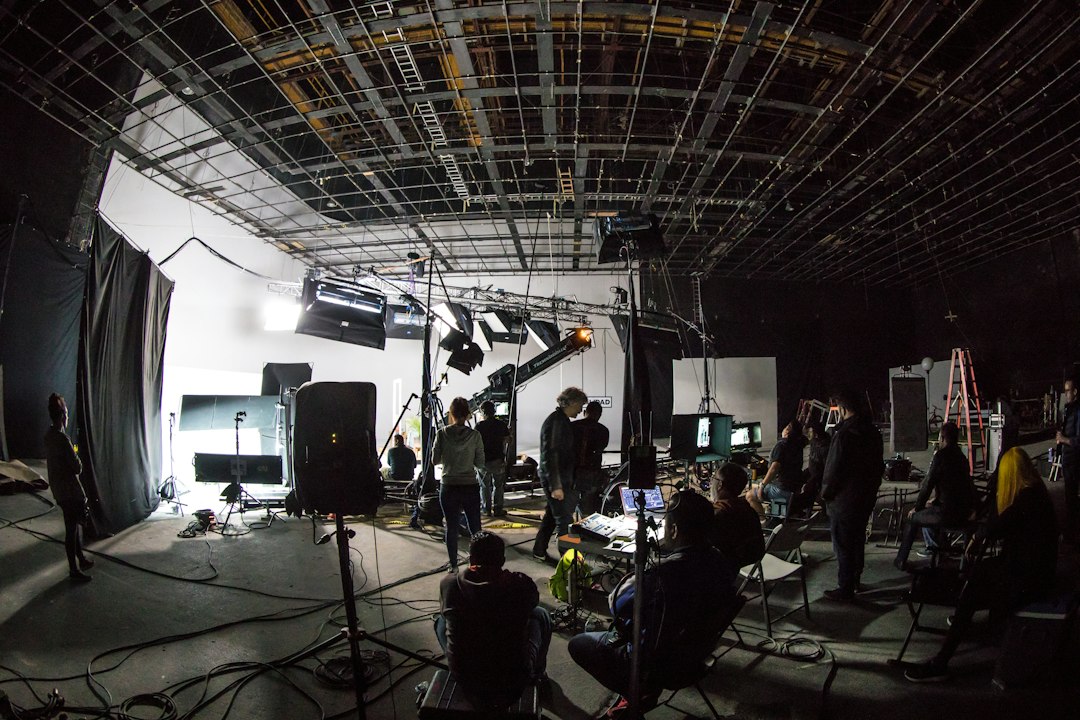
Photo by Brands&People on Unsplash
Why Film Sets Use "Martini Shot" and "Abby Singer"
Every creative industry develops its own language, but film production vocabulary includes terms that sound like inside jokes: the “martini shot” and the “Abby Singer.” These phrases appear on call sheets, in scheduling software, and in casual crew conversation across virtually every English-language production. They describe specific moments in the shooting day, and their persistence reveals something about how film sets actually operate.
What They Mean
The “Abby Singer” refers to the second-to-last shot of the day. The “martini shot” is the final shot before wrap. Both serve as scheduling landmarks that help crews anticipate the end of their workday and prepare accordingly.
The terms emerged from practical necessity. A film set involves dozens of people, trucks full of equipment, and intricate coordination. Knowing when the day is about to end allows the grip and electric departments to start pre-rigging for the next location, wardrobe to begin packing, and production assistants to coordinate transportation. The Abby Singer functions as a warning: one more after this. The martini shot signals completion and, traditionally, the celebratory drink waiting afterward.
The Origins
Abby Singer was a real person—a production manager and assistant director who worked in Hollywood from the 1950s through the 1980s. His reputation for efficiency led to a habit: he would call out the second-to-last shot so departments could begin wrapping non-essential equipment without losing time. Crews appreciated the heads-up, and the phrase stuck. Singer himself acknowledged the term with good humor, and it became industry standard.
The martini shot is harder to trace to a single source, but the logic is transparent. The final shot meant the workday was over and cast and crew could relax—often literally over a drink. Some claim it originated in the studio era when production schedules were strict and wrap meant heading straight to the bar. Others attribute it to directors who treated the last shot as a cause for celebration. Either way, it entered the lexicon as shorthand for “we’re done.”
Why the Terms Endure
Part of their staying power is purely functional. Film production thrives on clear communication under pressure, and these terms convey precise information efficiently. Saying “this is the Abby Singer” is faster and clearer than “we have two shots left today,” and it carries an implicit instruction: start your wrap prep.
But there’s also a cultural dimension. Film sets operate with rituals and hierarchy, and shared language reinforces the sense of belonging to a specific craft tradition. Using terms like “martini shot” signals insider knowledge. It connects today’s crew members to decades of production history, and it distinguishes film work from other industries. The phrases become part of the social fabric of the set.
Variations and Misuse
Some productions add their own spin. The “window shot” occasionally appears, referring to the very last shot of an entire production—the moment everyone can “see out the window” to their next job. A few crews jokingly refer to an unplanned additional shot after the supposed martini as a “Texas switch” or simply call it what it is: overtime no one wanted.
Misuse happens when inexperienced crew members call the wrong moment. Announcing a martini shot prematurely, only to discover another setup is required, damages trust and disrupts workflow. It’s a small reminder that language on set isn’t just colorful—it’s operational.
The Bigger Picture
These terms reflect how film production balances creativity with industrial logistics. A set is both an artistic space and a tightly scheduled workplace where time literally equals money. The Abby Singer and martini shot acknowledge that duality. They help crews manage fatigue, maintain morale, and finish the day cleanly.
They also reveal how much of filmmaking is invisible to audiences. The martini shot doesn’t appear in the final cut, but it shapes the rhythm of production and the experience of everyone involved. It’s a small piece of the machinery that turns scripts into finished films, and it’s been working quietly for decades.