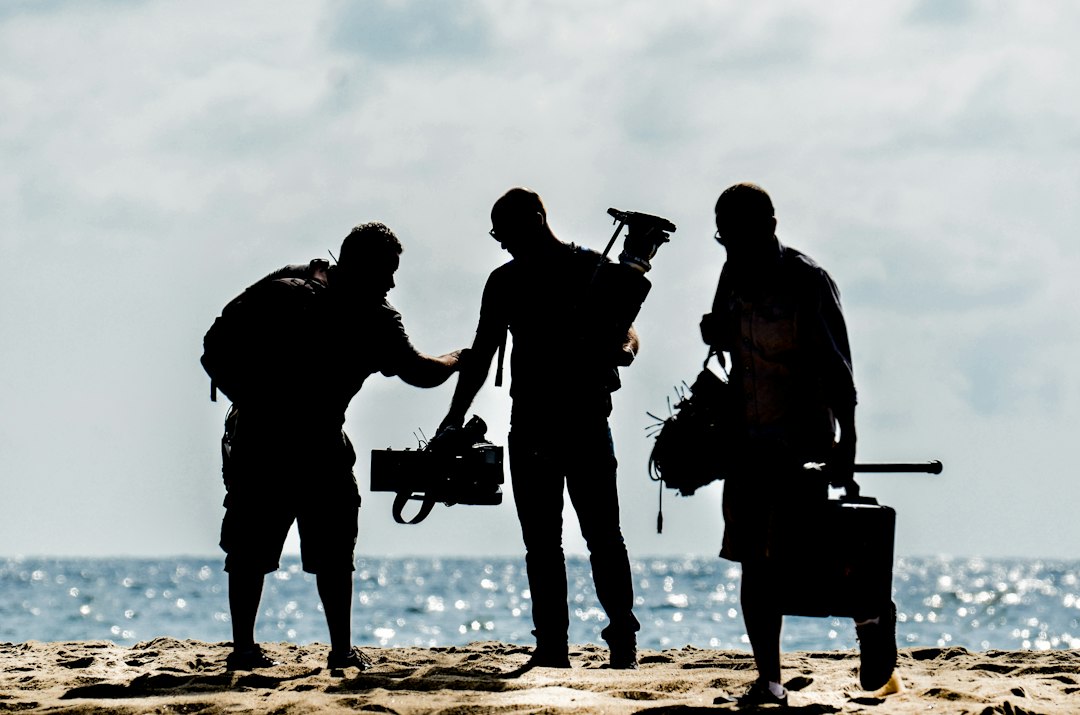
Photo by Stephane YAICH on Unsplash
Why Film Crews Rush to Shoot During Magic Hour
Every cinematographer loves magic hour—that brief window when the sun hovers near the horizon and bathes everything in warm, diffused light. But on set, magic hour isn’t just a creative choice. It’s a logistical gauntlet that transforms calm shooting days into high-pressure sprints.
The reason is simple: you get roughly twenty to forty minutes of usable light, depending on latitude and weather. Once the sun drops below a certain angle, the quality changes fast. What looked golden and soft at 7:15 PM might turn blue and dim by 7:35 PM. If you need matching shots—say, a conversation that cuts between two actors—you need to capture everything while the light holds. There’s no second take an hour later.
Pre-Lighting and Rehearsal Before the Window
Professional crews don’t improvise during magic hour. They pre-light the scene earlier in the day, setting up flags, reflectors, and any supplemental sources while harsh sunlight still floods the location. Actors rehearse blocking and camera moves are finalized. By the time the golden light arrives, everyone knows exactly what to do.
The director and DP will often shoot a “timing pass” with stand-ins to confirm exposure, framing, and actor positions. Script supervisors note continuity details obsessively because there won’t be time to check costumes or props once the clock starts. Every department is locked and loaded before the light turns magic.
Shooting Out of Sequence for the Light
If a script calls for a magic hour scene, production schedules the entire day around it. Crews might shoot interiors or coverage from other scenes all afternoon, then pause everything to capture the exterior magic hour moment. Call sheets will explicitly block out the window, sometimes listing the exact minute the light is expected to peak.
This also means shooting out of emotional sequence. An actor might film a tense confrontation at 3 PM, take a break, then shoot a tender reunion at 7:20 PM when the light is right. Maintaining performance continuity across that gap is part of the job, but it’s not easy—especially when the crew is moving at double speed.
The Expensive Gamble
Magic hour shoots are expensive. If clouds roll in, or the director isn’t happy with a take, you can’t just add another hour of shooting. You either accept what you got or come back another day—which means reassembling cast, crew, and location access, often at significant cost.
Some productions hedge by scheduling multiple magic hour days in a row, knowing weather might sabotage one. Others shoot with the understanding that they’ll augment the light in post, using color grading to extend or simulate the effect if they didn’t capture it perfectly in camera.
Why Not Fake It?
Filmmakers can simulate magic hour with gels, diffusion, and controlled lighting, and sometimes they do. But natural magic hour light has a quality that’s hard to replicate: the way it wraps around faces, the gradient in the sky, the ambient bounce from the landscape. Audiences may not consciously notice, but the authenticity registers.
Digital tools have made post-production enhancement easier, but most DPs still prefer to start with the real thing. You can enhance golden light in the grade; you can’t create it from nothing without the image looking artificially processed.
The Controlled Chaos
On set during magic hour, the pace is frantic but controlled. ADs call out time checks—“Fifteen minutes of good light left”—and departments coordinate without wasted movement. Camera teams swap lenses fast, actors hit marks on the first try, and the director makes quick decisions about which takes are good enough.
It’s stressful, but many crew members love it. Magic hour shooting has a focused energy that’s different from the rest of the day. Everyone knows the stakes, and when it works, you walk away with footage that’s worth the scramble.
The light may only last twenty minutes, but the images can define the entire film.