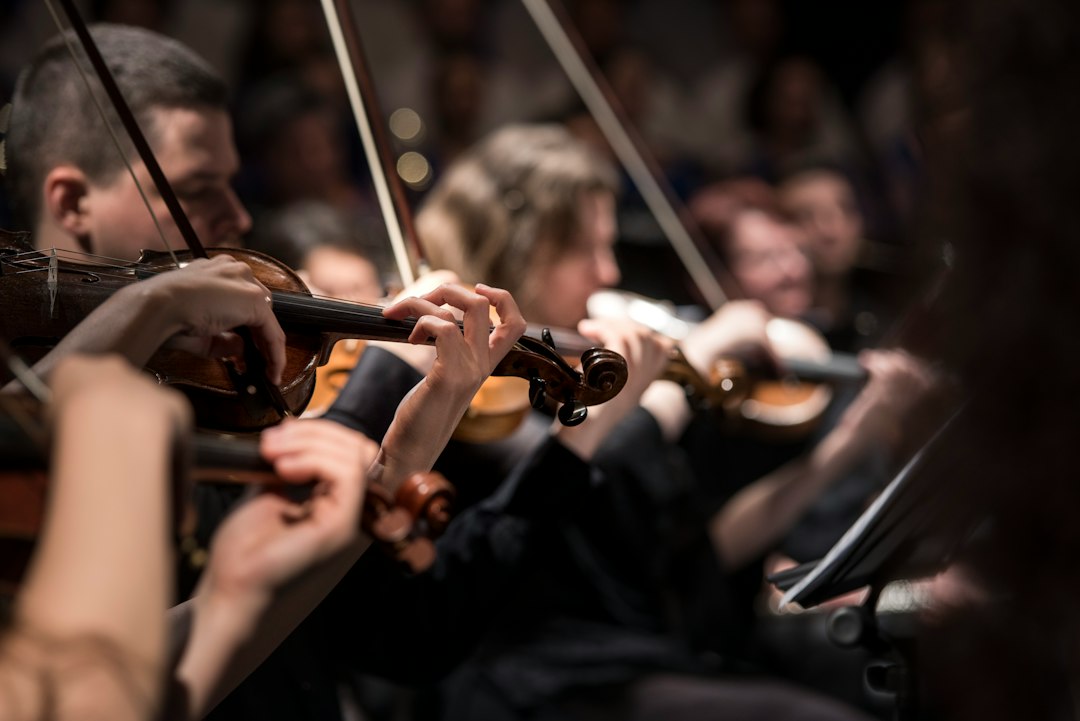
Photo by Larisa Birta on Unsplash
The Leitmotif: How a Few Notes Can Carry a Whole Character
Borrowed From the Opera House
The term “leitmotif” comes from 19th century German opera, most associated with Richard Wagner, who assigned recurring musical phrases to specific characters, objects, and ideas in his Ring cycle. Hear that phrase again four hours later and your ear does the work of memory for you. Film composers inherited the technique wholesale, because movies have the same problem opera does: how do you remind an audience of something emotionally, without a character stopping to explain it out loud.
A leitmotif is not just “the theme song.” It’s a musical idea, sometimes only a handful of notes, that gets attached to a person, a place, a relationship, or a feeling, and then reappears, transformed, whenever that thing resurfaces in the story. The transformation is the whole point. The same melody played slow and minor versus fast and major can carry two completely different emotional verdicts on the same character.
Why Music Can Say What Dialogue Can’t
Dialogue is sequential and literal. Music is simultaneous and associative. A composer can layer a hero’s theme underneath a scene where that hero isn’t even present, and the audience will feel their absence or influence without anyone naming it. That’s a kind of narration dialogue can’t easily pull off without sounding clumsy.
This is also why leitmotifs are so effective for tracking change over time. If a character’s theme first appears bright and simple, then returns two hours later distorted, played in a minor key, or fragmented into dissonant pieces, the audience registers that something has broken, often before the plot has caught up. Composers use this constantly for corruption arcs, grief, and love stories that sour. The melody is the same; the harmony and orchestration tell you what’s happened to the person underneath it.
The Difference Between a Theme and a Motif
It’s worth separating two related ideas. A “theme” is usually a fuller melodic statement, something you could hum. A “motif” can be much smaller: a rhythmic pattern, an interval, even just a specific instrument’s timbre tied to a concept. Some of the most famous examples in film scoring aren’t hummable tunes at all, they’re just a few repeated notes or a distinctive rhythmic cell. The advantage of a small motif is flexibility. A composer can drop a three-note cell into the bottom of a string section under an otherwise unrelated scene, and attentive listeners will register the connection almost subliminally, without it ever overpowering the moment.
Combining and Colliding Themes
Once a film has established two or more character motifs, the score can start doing structural work that dialogue and editing can’t. When two characters’ themes are woven together in counterpoint, that’s the music telling you their fates are entangled before the story confirms it. When one character’s motif is quoted in a hostile key, played by a jarring instrument, or interrupted before it resolves, it can signal betrayal or danger long before it happens on screen. This kind of thematic collision is one of the more sophisticated tools in a composer’s kit, because it requires the audience to have already internalized the individual pieces.
Why It Still Matters in an Era of Song-Driven Scores
Needle drops and song-based soundtracks have become more common in modern filmmaking, and there’s real craft in that approach too. But leitmotif-driven scoring offers something a licensed track generally can’t: a piece of music written specifically to bend and mutate alongside a character across an entire film. It’s a slower, more architectural kind of storytelling, built for repeat viewings, where you start noticing on a second watch that the villain’s theme was hiding inside the hero’s theme all along.