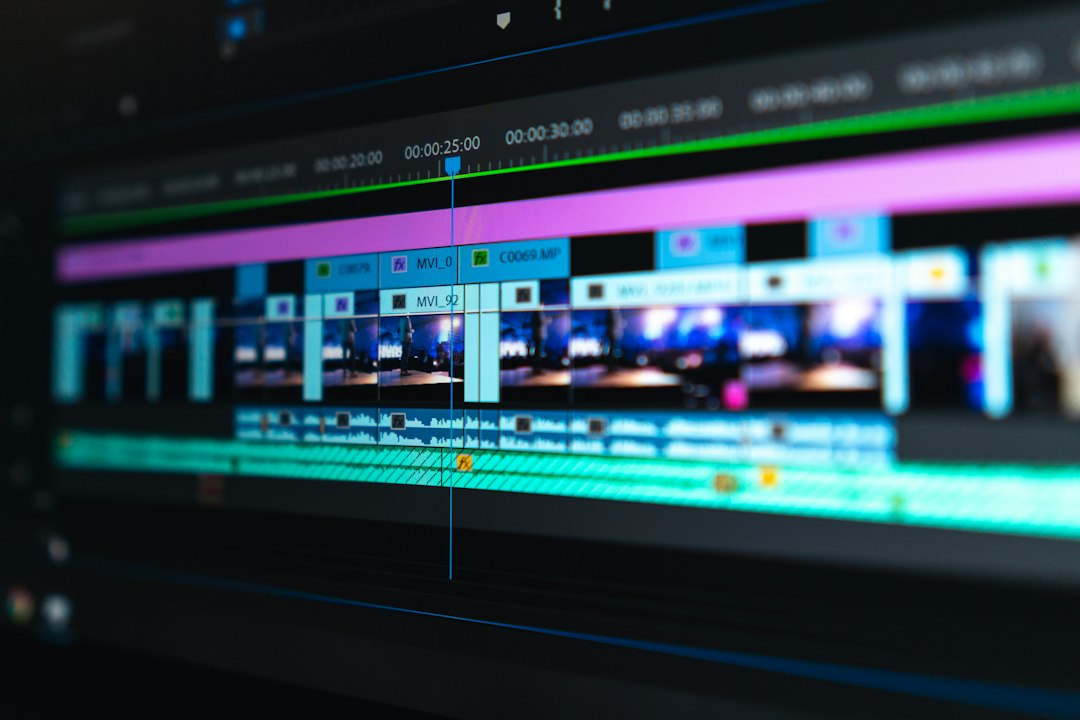
Photo by Peter Stumpf on Unsplash
The Jump Cut: Filmmaking's Most Deliberate Mistake
A jump cut is exactly what it sounds like — a cut that jumps. Two shots of the same subject, taken from roughly the same angle but at different moments in time, placed back to back without a bridging cutaway. The subject lurches forward in the frame. The image hiccups. For decades, editors treated this as an error to be fixed in the cutting room. Then some filmmakers decided to use it on purpose, and cinema changed.
The Continuity Rule It Breaks
Classical Hollywood editing is built around a concept called continuity — the goal of making cuts invisible. When an editor cuts from one shot to the next, the eyeline should match, the action should flow, the spatial geography should stay consistent. The viewer shouldn’t feel the cut at all; they should feel like they’re simply watching events unfold.
The jump cut violates this deliberately. Instead of a smooth transition, it creates a visible rupture. A character sitting at a table snaps to a slightly different position. A conversation lurches ahead. The effect is jarring precisely because audiences have learned to expect seamlessness.
To prevent accidental jump cuts, cinematographers often follow the “30-degree rule”: if you’re cutting between two shots of the same subject, change the angle by at least 30 degrees or shift focal length significantly. Anything less and you’ll get a jump. This rule is still taught in film schools today — not because the jump cut is inherently bad, but because an unintentional one usually is.
The New Wave Turned an Error Into a Statement
French New Wave directors in the late 1950s and early 1960s didn’t just allow jump cuts — they celebrated them. Jean-Luc Godard made the technique a signature device in his early work. The breaks in continuity felt spontaneous, alive, like the film was thinking in real time rather than assembled with clinical precision.
This wasn’t carelessness. It was a philosophical position. Continuity editing carries an implicit promise: we’ve smoothed reality into a seamless experience for you. The jump cut refuses that promise. It says: you are watching a film, time has passed, something has been omitted. It pulls the audience into active engagement rather than passive absorption.
New Wave movements in other countries picked up the technique and ran with it. Within a generation, the jump cut was no longer a mark of technical failure but a recognizable stylistic choice with specific emotional associations — a piece of film grammar where no grammar had existed before.
What It Actually Communicates
Different contexts load the jump cut with different meaning.
Anxiety and dissociation. In psychological dramas, a series of jump cuts on a single character can externalize their mental state — fragmented, unable to hold a continuous thought. The viewer experiences an instability that dialogue alone couldn’t produce.
The honest passage of time. Documentary and observational filmmaking often uses jump cuts to compress time truthfully. Rather than masking an ellipsis with a cutaway, the jump cut admits that something was skipped. It can feel more honest than classical editing’s sleight of hand.
Energy and momentum. In action sequences and music videos, rapid jump cuts generate kinetic charge. The hiccup in continuity reads as aggression and overload — which is exactly why music video directors adopted the technique so heavily through the 1980s and 90s.
Wry self-awareness. Comedy can use the jump cut to puncture pomposity or signal irony. The rupture breaks a mood in a way that feels deliberate and knowing, almost like a wink.
How Familiarity Tamed It
Here’s the irony: the jump cut has become so common in certain formats that it no longer registers as disruptive at all. Vlog-style video and interview-driven online content routinely use it to trim silences and stumbles from a continuous take. Viewers conditioned by years of this convention don’t experience the jump as a jolt anymore — they’ve simply learned a new visual grammar.
This is how film language has always evolved. What starts as a rule violation eventually becomes a rule of its own. The jump cut arrived as an error, was repurposed as a provocation, and in some contexts has nearly normalized back into invisibility. Filmmakers who want it to still feel like a rupture now have to earn that effect — typically by setting up conventional editing first, so the break actually lands.
In this sense, the jump cut is a precise mirror of how cinema changes: always in conversation with what audiences have already learned to expect.