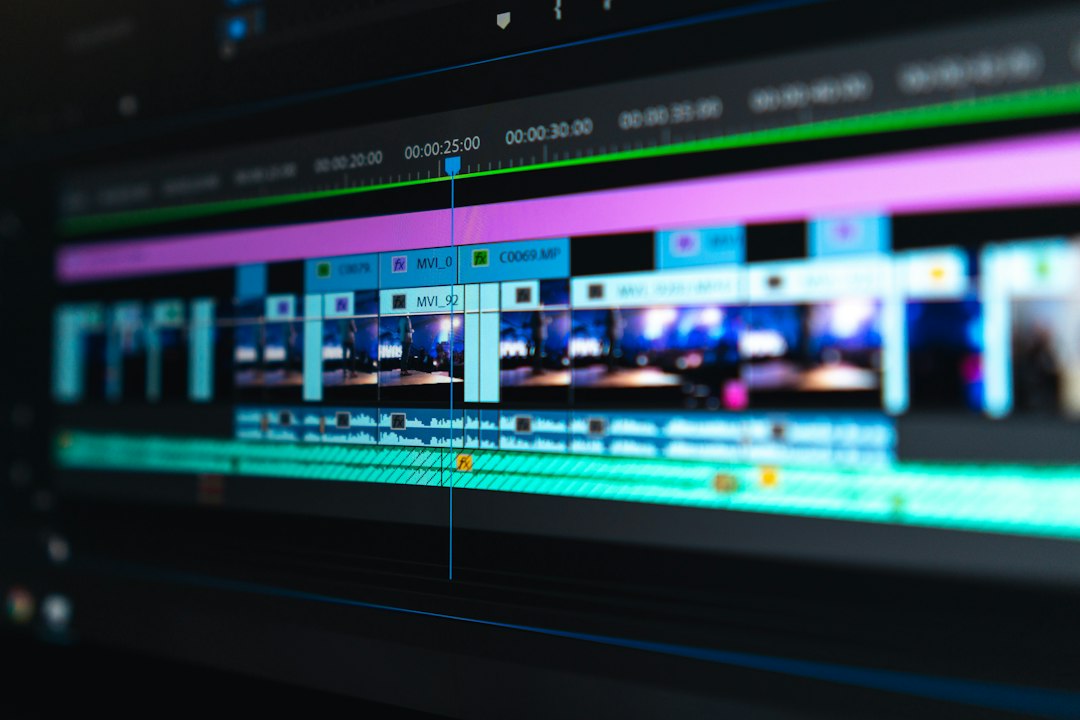
Photo by Peter Stumpf on Unsplash
The Invisible Cut: Why We Don't Notice Most Film Edits
Every feature film contains thousands of individual shots stitched together into a continuous experience. Yet when a film is working, you never consciously register the moment one shot ends and another begins. This disappearing act is the foundation of film editing: the invisible cut.
The Psychology of Continuity
Our brains are wired to construct continuous experience from fragmented input. Film editors exploit this tendency by cutting at moments when our attention is naturally in motion. When a character turns their head, reaches for an object, or stands from a chair, our eyes follow the movement. The cut happens in the middle of that motion, and our visual system smooths over the seam.
This is why editors prefer to cut on action rather than during stillness. A cut that lands mid-gesture feels continuous because we’re already anticipating where the movement will go. A cut during a static moment draws attention to itself because there’s nothing to distract from the sudden shift in perspective.
Matching Screen Direction and Eyelines
Invisible cuts depend on spatial coherence. If a character exits frame left, we expect them to enter the next shot from frame right. If someone looks screen-right in one shot, the person they’re addressing should appear screen-left in the reverse. These conventions—screen direction and eyeline match—create the impression of a unified space even when the shots were filmed hours or days apart.
When these rules are broken, the cut becomes visible. The viewer experiences a brief moment of confusion as their mental model of the space collapses and rebuilds. Sometimes this is intentional, a way to signal disorientation or a shift in reality. Most of the time, it’s simply a mistake.
Audio Carries the Seam
Sound is the invisible glue that holds cuts together. A line of dialogue that begins in one shot and continues into the next—a J-cut or L-cut—gives the edit a reason to exist beyond mere coverage. The continuous audio stream tells our brain that time is flowing forward even as the image changes angle or distance.
Background ambience works the same way. If the room tone, the hum of traffic, or the rustle of leaves continues across the cut, the two shots feel like part of the same moment. Editors often spend as much time smoothing audio transitions as they do choosing where to place the cut itself.
The Editor’s Invisible Hand
The goal of most narrative editing is to disappear entirely. When an editor has done their job well, viewers don’t think about editing at all—they think about character, story, and emotion. The craft reveals itself only in its absence, in the rare moments when a cut lands badly and pulls you out of the film.
This invisibility is a paradox. Editing is one of the most powerful tools a filmmaker has, shaping pace, emphasis, and meaning with every decision. Yet the better the editing, the less anyone notices it was there at all. The invisible cut is not a single technique but a philosophy: every choice in service of an unbroken experience, every seam hidden in motion and sound and the viewer’s own expectation of what comes next.