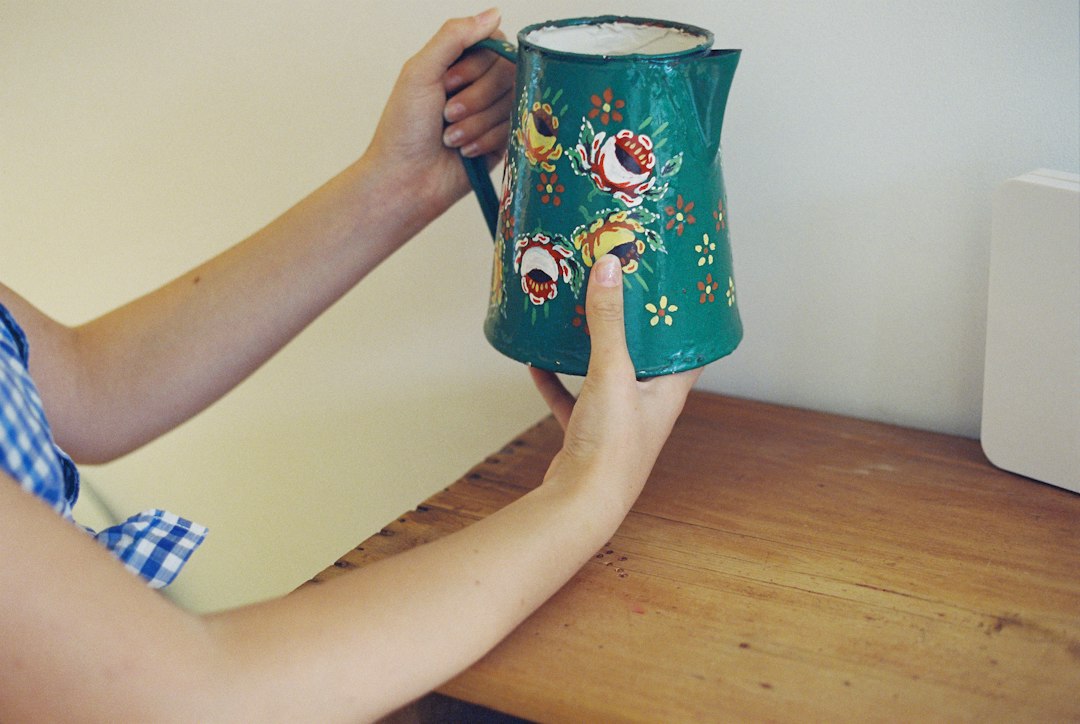
Photo by Barney Goodman on Unsplash
The Insert Shot: Why Movies Zoom In On Objects
You’ve seen this shot a thousand times without naming it. A character’s hand hovers over a doorknob, and the film cuts to a tight, isolated shot of the knob turning. A text message lights up a phone screen, and suddenly you’re staring at just the screen, filling the frame. A key slides into a lock. A syringe fills with liquid. A note gets slipped under a door.
These are insert shots, and they’re one of the most quietly essential tools in a filmmaker’s kit. An insert shot is a close-up of an object, detail, or action that’s inserted into a scene, usually filmed separately from the main coverage, to clarify something the wider shots can’t show clearly enough.
What Makes It an Insert, Specifically
An insert shot is different from a cutaway. A cutaway takes you somewhere else, another location, another character’s reaction, something happening outside the immediate action. An insert stays inside the same action but gets closer to a specific detail within it. If two actors are at a table and the camera cuts to a close-up of a hand slipping a poison pill into a wine glass, that’s an insert. The object exists within the scene’s geography, but the shot isolates it so the audience can’t miss it.
This distinction matters on set. Inserts are frequently shot without the principal actors present at all. A hand double, sometimes a crew member, stands in to perform the specific action, whether that’s typing on a keyboard, dialing a phone, or opening a letter. Because the shot is so tightly framed, nobody watching the final film can tell it wasn’t the lead actor’s actual hand. This is why insert units exist as a distinct part of production, sometimes filmed weeks after the main unit has wrapped, in a studio far from the original location, with none of the original cast required.
Why the Camera Needs to Get Closer
The core job of an insert is legibility. Wide and medium shots are built for staging and performance, they show where people are and how they’re relating to each other in space. But a story often hinges on a detail too small for that wider frame to sell: the specific playing card, the amount showing on a price tag, the crack forming in a windshield, the name printed on an envelope.
Without the insert, the audience might miss the detail entirely, or worse, misread it. A wide shot of someone reading a letter tells you they’re reading. An insert of the letter’s contents tells you what they’re reading, and by extension, what the audience now knows that other characters in the scene might not. That gap between what the audience sees and what the characters know is often exactly the point. Insert shots are one of the most efficient tools available for controlling that gap.
The MacGuffin’s Best Friend
Objects that drive plots, keys, letters, weapons, documents, photographs, often get an insert dedicated to them the moment they become significant. This is deliberate. If an object is going to matter later, the film usually gives it a clean, deliberate close-up early on, planting it in the audience’s memory so that when it resurfaces, the connection registers instantly.
This is a version of the storytelling principle that a detail introduced early should pay off later. The insert is the visual mechanism that makes the plant register. A gun shown only in a wide shot, glimpsed among other objects on a table, doesn’t lodge in memory the same way a two-second insert of that same gun does. Directors and editors use inserts to control what the audience notices and remembers, which is a form of narrative shorthand that a scene description alone can’t achieve.
A Tool for Pace, Not Just Clarity
Inserts also serve editing rhythm. A scene that’s dragging in wide and medium shots can pick up energy from a well-placed insert, a quick cut to hands moving fast, a countdown timer, a speedometer climbing. Action and heist sequences lean on this heavily, cutting between the bigger picture and small mechanical details, like a lock being picked or a wire being cut, to build tension through fragmentation. The audience assembles the full picture from pieces, which naturally speeds up the sense of urgency compared to one continuous wide shot of the same action.
Because inserts are usually silent, tightly framed, and shot in controlled conditions, they’re also relatively cheap to produce compared to full scene setups. That efficiency is part of why they’ve become such a standard part of the visual vocabulary of filmmaking. They’re unglamorous, rarely discussed, and almost never the shot anyone remembers by name. But take them out of a film and you’d notice immediately how much clarity and rhythm disappears with them.