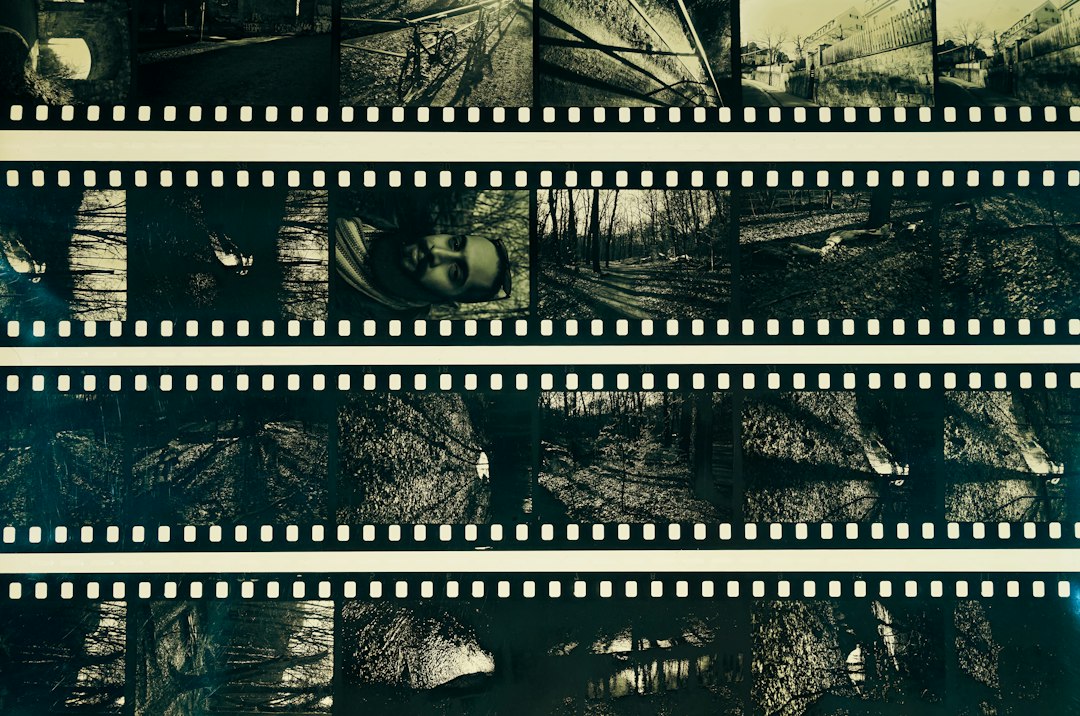
Photo by Hossein Nasr on Unsplash
Frozen in Time: Why Filmmakers End on a Freeze Frame
Every movie eventually has to stop moving. Most do it quietly, with a fade to black or a slow pull-back that lets the scene breathe itself out. But some films end by seizing up entirely: the picture locks on a single frame, the motion halts mid-gesture, and the story is over before your eyes have caught up. That’s the freeze frame ending, and it’s one of the oldest tricks in editing that still lands like something new.
What a Freeze Frame Actually Is
Mechanically, it’s simple. The editor selects one frame from a shot and holds it on screen for an extended duration, instead of letting the next frame play. In the era of physical film, this meant optically printing a single frame multiple times in a row so the projector displayed it repeatedly. Digitally, it’s just a duration change on a still. The technique itself isn’t complicated. What’s complicated is what it does to an audience.
Cinema trains viewers to expect continuous motion. Even a static shot implies that time is passing and that something could move at any moment. A freeze frame breaks that implicit promise. It’s the visual equivalent of a sentence that stops without a period, or a piece of music that cuts off on the downbeat instead of resolving. The abruptness is the point.
Why It Works as an Ending
Endings are where a film makes its last argument about what the story means. A freeze frame ending refuses to let that argument keep unfolding. It takes a moment of unresolved emotion and stops it from developing further, which forces the audience to sit with ambiguity instead of getting closure.
Consider the ending of François Truffaut’s “The 400 Blows,” where the young protagonist runs to the sea and the final shot freezes on his face in close-up. The film has been building toward some kind of decision, escape, or reckoning, and instead of answering the question, it locks the boy’s expression in place, unreadable and permanent. Or the ending of “Butch Cassidy and the Kid,” where the two outlaws charge out into a hail of gunfire and the image freezes before the outcome plays out. We know, historically and narratively, what almost certainly happens next. The freeze frame lets the film end on defiance rather than death, preserving the characters in a moment of motion rather than showing their stillness.
That’s the mechanism at the heart of most freeze frame endings: they interrupt an action rather than complete it. The audience supplies the ending mentally, which is often more affecting than watching it play out on screen.
The Difference Between a Freeze and a Fade
A fade to black is a form of closure. It tells the audience the story has finished breathing and the lights are going down. A freeze frame is closure’s opposite: it’s a refusal to let the moment resolve, dress rehearsal for an ending the film won’t actually stage. This is why freeze frames so often land on faces, on a character mid-run, mid-turn, mid-leap. The energy of the shot is still live. Nothing has settled.
That unresolved energy is also why the technique can misfire. Used on a moment that doesn’t carry tension, a freeze frame just looks like a projector jam. It only works when the frame chosen has forward momentum baked into it, something the audience can feel getting cut off. Comedies exploited this in a different register during the 1970s and 80s, using a freeze frame as a punchline device, essentially a visual exclamation point that says “that’s the joke, stop laughing and leave.” The device is the same; the emotional register it’s borrowed for is completely different.
A Technique That Refuses to Age Out
Freeze frames show up less often now than they did in the New Wave era or the ensemble comedies of decades past, partly because the device is so recognizable that it risks feeling like a formal flourish rather than an earned choice. But it hasn’t disappeared, because nothing else quite replicates its effect. A slow-motion ending still resolves; a match cut still moves forward; a fade still lets go gently. Only a freeze frame stops the clock entirely and leaves the audience holding the last beat of motion in their heads, which is exactly why filmmakers keep reaching for it when they want a story to end on a question rather than an answer.