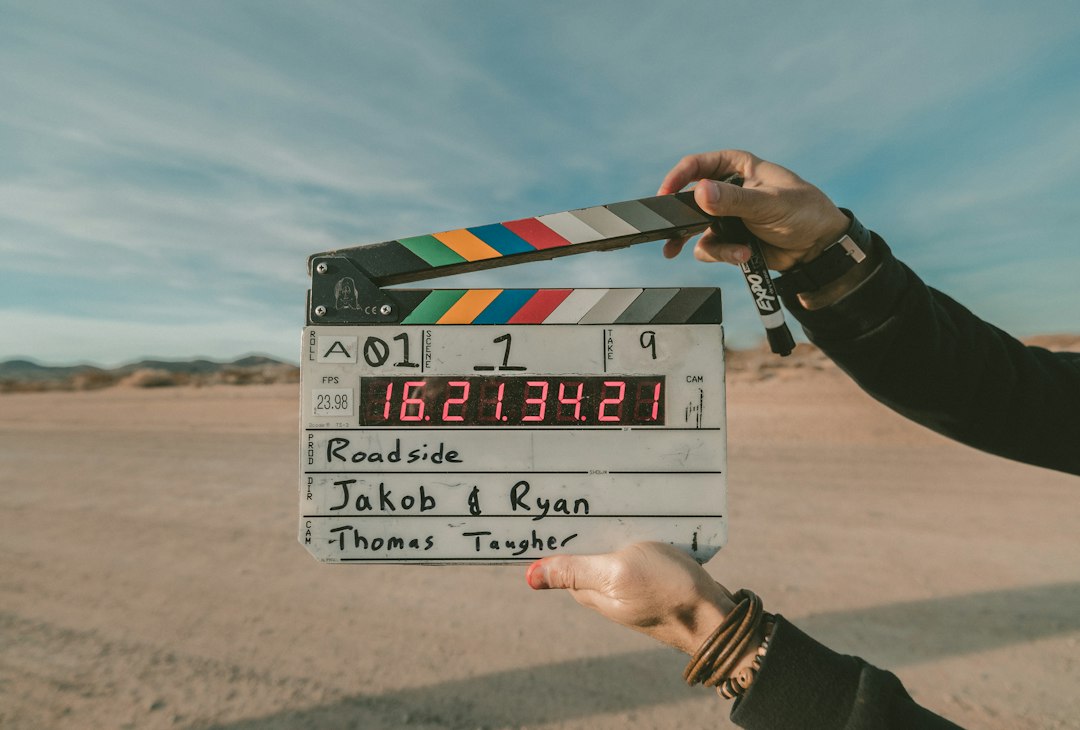
Photo by Jakob Owens on Unsplash
Why Movie Scenes Feel Different at Different Speeds: Frame Rate and Emotional Perception
Most viewers never consciously notice when a film switches frame rates mid-scene, but they feel it. A sudden shift from 24 frames per second to 48 or 60 creates a visceral change in how we process motion and emotion. Filmmakers exploit this perceptual quirk to guide audience response, making some moments feel dreamlike while others feel uncomfortably immediate.
The Baseline: Why 24fps Feels Cinematic
Standard theatrical frame rate sits at 24fps not because it perfectly mirrors human vision, but because it occupies a sweet spot between technical economy and perceptual smoothness. At this rate, motion displays just enough blur between frames to feel fluid without feeling hyperreal. We’ve internalized this cadence as the grammar of cinema itself—24fps carries decades of association with narrative filmmaking, with crafted stories rather than raw documentation.
When a film jumps to a higher frame rate, that learned association breaks. The increased temporal resolution reduces motion blur and sharpens every micro-movement. Suddenly the image feels less like a movie and more like live television, like sports broadcasts or video shot on consumer camcorders. The illusion of constructed narrative weakens. Reality floods in.
High Frame Rates: Clarity That Disturbs
Shooting at 48fps or higher delivers undeniable technical benefits. Fast camera movements stay crisp. Action choreography reads clearly without smearing into illegibility. But this clarity comes with psychological cost. Higher frame rates reveal too much—the slight hesitation before an actor commits to a line, the texture of prosthetic makeup, the fact that a set is a set rather than a place.
Some filmmakers embrace this deliberate discomfort. When a film switches to high frame rate for a specific sequence, it can signal altered consciousness, heightened awareness, or the intrusion of harsh truth into a character’s constructed reality. The technique doesn’t ask for the audience’s permission—it simply changes the texture of time itself.
Lower Frame Rates: Stutter as Style
Dropping below 24fps introduces visible judder, each frame holding slightly too long before the next arrives. This stutter evokes early cinema, hand-cranked cameras, the aesthetic of memory degraded by time. Flashbacks and dream sequences sometimes employ reduced frame rates precisely for this archaism, for the way stuttering motion suggests unstable recollection.
Animation has explored this territory most thoroughly. Shooting “on twos” or “on threes”—holding each drawing for two or three frames instead of one—creates a stylized choppiness that emphasizes the hand-crafted nature of the image. Some live-action films borrow this technique for sequences meant to feel artificial or heightened, deliberately breaking the smooth temporal flow audiences expect.
The Perception Problem
Human visual processing doesn’t simply record frame rates like a sensor. Our brains construct continuity from discontinuous information, filling gaps and smoothing motion based on prediction and context. When frame rate shifts, this predictive machinery stumbles. The brain registers that something has changed about the temporal fabric of what we’re watching, even if we can’t articulate what.
This subliminal awareness makes frame rate a powerful emotional tool. A subtle increase can make a scene feel more present, more urgent, more invasive. A decrease can create distance, turning a moment into something half-remembered or imagined. The technique bypasses rational interpretation and speaks directly to the perceptual systems that construct our sense of lived time.
Variable Frame Rate as Storytelling
Modern digital workflows make within-scene frame rate changes technically trivial. A single shot can ramp from 24fps to 120fps and back, compressing or expanding time perception without a cut. This fluidity opens narrative possibilities that photochemical film couldn’t easily accommodate.
But the technique demands restraint. Frame rate shifts work best when they serve a specific dramatic purpose—when the change in temporal texture aligns with a change in character perspective, emotional state, or narrative reality. Used carelessly, variable frame rates simply call attention to themselves, pulling viewers out of the story to puzzle over the technical choice. Used with intention, they become invisible manipulations of how we experience duration itself, one more tool for shaping what an audience feels frame by frame.