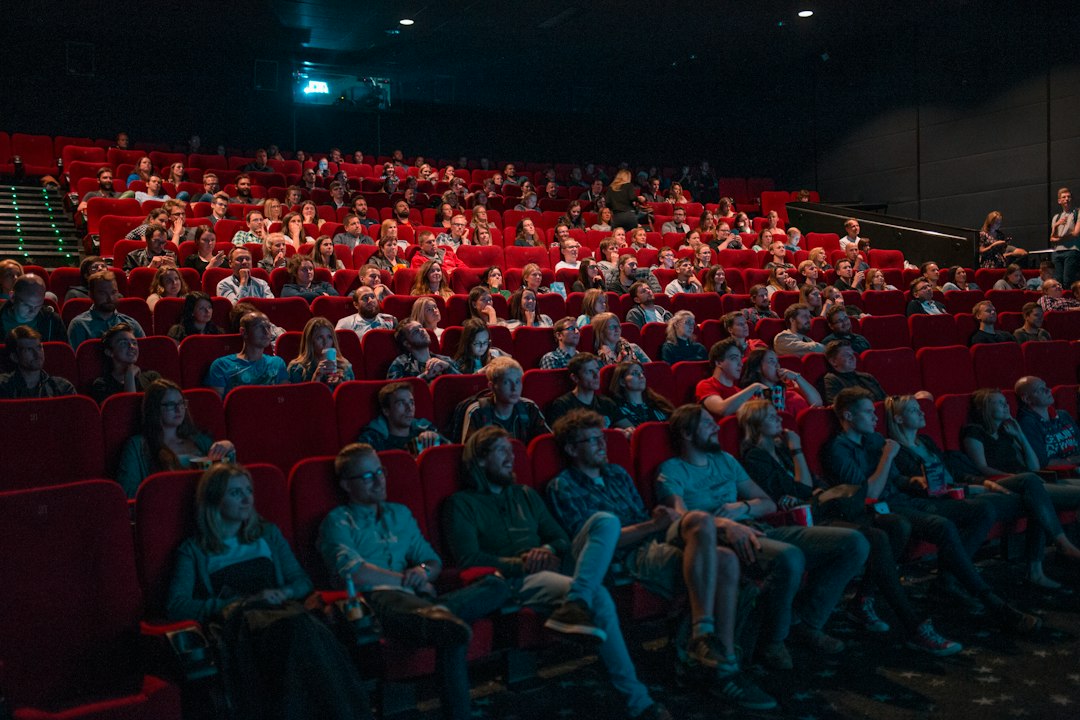
Photo by Krists Luhaers on Unsplash
The Fourth Wall Break: Cinema's Most Dangerous Trick
There’s a moment in certain films when a character stops mid-scene, turns to face the camera, and speaks directly to you. No other technique in cinema is quite so blunt about what it’s doing: it destroys the illusion, collapses the distance between screen and seat, and makes the audience suddenly, uncomfortably aware that they are watching a film. This is the fourth wall break — and when it lands, it’s one of the most powerful tools a director has.
What the Fourth Wall Actually Is
The term comes from theater. A stage has three physical walls; the fourth, invisible one faces the audience. Drama traditionally pretends this wall exists — performers inhabit their world, and audiences observe from outside it. Cinema inherited that convention. The camera is never acknowledged. Characters do not react to being watched.
Breaking that convention is a declaration. It says: the frame around this story is as much a part of the story as anything inside it.
The Two Modes: Invitation and Aggression
Most fourth wall breaks fall into one of two emotional registers, and they produce almost opposite effects.
The first is invitation. The character turns to the camera warmly, conspiratorially, as if letting you in on a secret. Woody Allen deployed this constantly — characters would address the audience to editorialize, seek validation, or haul in an offscreen expert to win an argument. The effect is comic and intimate. It positions the viewer as a confidant rather than a passive observer, and it works because the film is playing with the convention rather than pretending the convention doesn’t exist.
The second mode is aggression. Here the direct address is confrontational — a character staring into the lens not to charm you but to implicate you. Michael Haneke used this in Funny Games to deeply uncomfortable effect, essentially accusing the audience of enjoying the violence they’d paid to watch. The break doesn’t release tension; it tightens it. The viewer is no longer safe in their anonymity.
These two modes share a mechanism but produce radically different meaning. Tone and context determine everything.
Why It’s Risky
The fourth wall break is dangerous precisely because it requires the audience to hold two contradictory states at once: absorbed in the story and aware it’s a construction. Get that balance wrong and the whole film deflates. A misplaced direct address can make a dramatic scene feel silly, or make a comedic one feel smug.
It also can’t be a reflex. Films that break the fourth wall repeatedly, without escalating stakes or building a consistent logic around it, train audiences to expect it — and then the surprise that gives the technique its charge is gone. The best uses of direct address are deliberate and selective. Even a film built entirely around talking to the camera, like a mockumentary, succeeds by establishing a clear internal grammar: here is the world, here is the camera, here is the relationship between them.
What the Break Actually Does to the Viewer
When a character looks into the lens, something neurologically interesting happens. The human brain is wired to respond to eye contact as a social signal — it triggers attentiveness, even mild threat-response. Film theorists call the conventional camera position the “absent gaze,” meaning we watch without being watched. Direct address annihilates that safety.
The result, depending on execution, can be delight, unease, or a sharp feeling of being caught. That last response is the most interesting. Audiences at a film are in a strange ethical position — observing fictional events, often dark ones, from a position of total comfort. The fourth wall break drags that position into the light. It asks: what does it mean that you’re here, watching this?
Not every film needs to ask that question. But the ones that do, and ask it well, tend to stick around in the mind long after the credits roll. The technique works because cinema is never really a window — it’s always also a mirror.