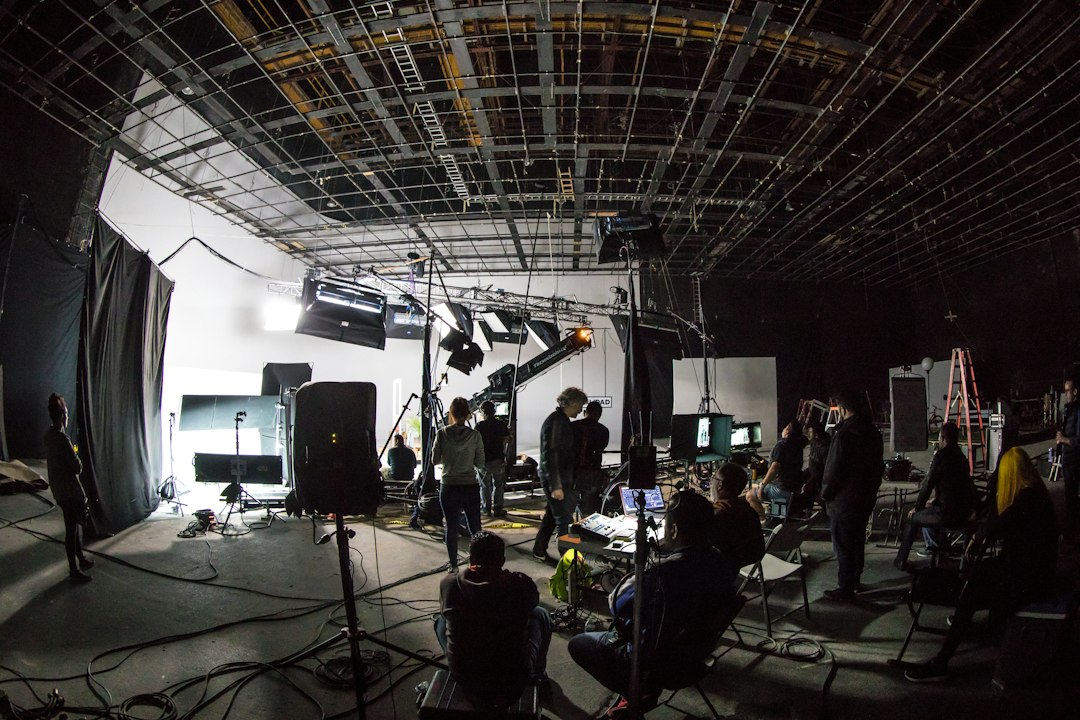
Photo by Brands&People on Unsplash
Why Film Sets Use "First Team" and "Second Team"
Walk onto any professional film set and you’ll hear the assistant director call out “first team” or “second team” dozens of times a day. It sounds like sports jargon, but it’s actually one of the most efficient systems in production—a way to keep expensive shooting days moving without exhausting the people whose faces will be on screen.
What First Team and Second Team Mean
First team refers to the principal actors—the cast members whose performances will appear in the final film. Second team refers to their stand-ins, crew members hired to match each actor’s height, build, coloring, and general silhouette. Stand-ins aren’t body doubles brought in for specific stunts or shots; they’re full-time crew who spend the entire production standing where the actors will eventually stand.
When the director and DP need to block a scene, adjust lighting, set focus marks, or rehearse camera movement, second team steps in. They hit the marks, stand in the key light, and let the gaffer see how shadows fall across a face. The camera team uses them to check framing and pull focus. The dolly grip runs the move while second team walks the path. Only when everything is dialed in does the AD call “first team to set” and bring in the actors.
Why This System Exists
The stand-in system emerged because film production is full of waiting. Lighting a scene can take thirty minutes or more. Camera adjustments, lens changes, and blocking tweaks add up. If actors spent all that time standing under hot lights while grips moved sandbags and gaffers swapped diffusion, they’d be drained before the camera rolled.
Actors are hired to perform, not to stand still. Their energy, focus, and presence are finite resources, and directors need them sharp when it’s time to capture a take. By keeping first team in a holding area—often a climate-controlled trailer with seating, wifi, and catering—until the shot is truly ready, productions protect that resource. Stand-ins absorb the tedium so actors can arrive on set fresh, run the scene a few times, and deliver.
How Stand-Ins Are Chosen
Stand-ins are cast with surprising precision. A good match isn’t just about height—it’s about shoulder width, hair color, skin tone, and the way light reads on a face. If the actor has dark hair and pale skin, the stand-in should too, because that contrast affects how the DP lights the shot. If the actor is six-foot-three, the stand-in needs to be tall enough that the framing holds.
Some stand-ins work with the same actor across multiple projects. They learn how that actor moves, how they hold their head, even their usual blocking choices. On long-running productions, experienced stand-ins become part of the fabric of the shoot—silent collaborators who know the rhythm of the set as well as anyone.
When the Lines Blur
Occasionally, second team does more than stand. If the scene involves complex choreography—a fight, a dance, a tricky camera move through a crowd—stand-ins might walk through the action so the crew can time it. They’re not performing; they’re mapping space. But their presence lets the production solve technical problems before first team ever sees the setup.
In low-budget or indie shoots, the stand-in system often disappears. There’s no money for a second team, so actors do double duty. It works when the crew is small and setups are fast, but as productions scale, the efficiency gain becomes undeniable. Keeping first team off set until the shot is ready isn’t about ego—it’s about not burning through twelve hours of a performer’s day before you’ve captured a single usable frame.
A Hidden Efficiency
The next time you watch behind-the-scenes footage and see someone who looks almost like the lead standing silently in frame while crew swarms around them, that’s second team. They’re the reason actors can do take after take without wilting, the reason a director can tweak a setup without apology, and the reason a shooting day doesn’t bleed into overtime because someone’s too tired to remember their lines. First team gets the applause. Second team keeps the engine running.