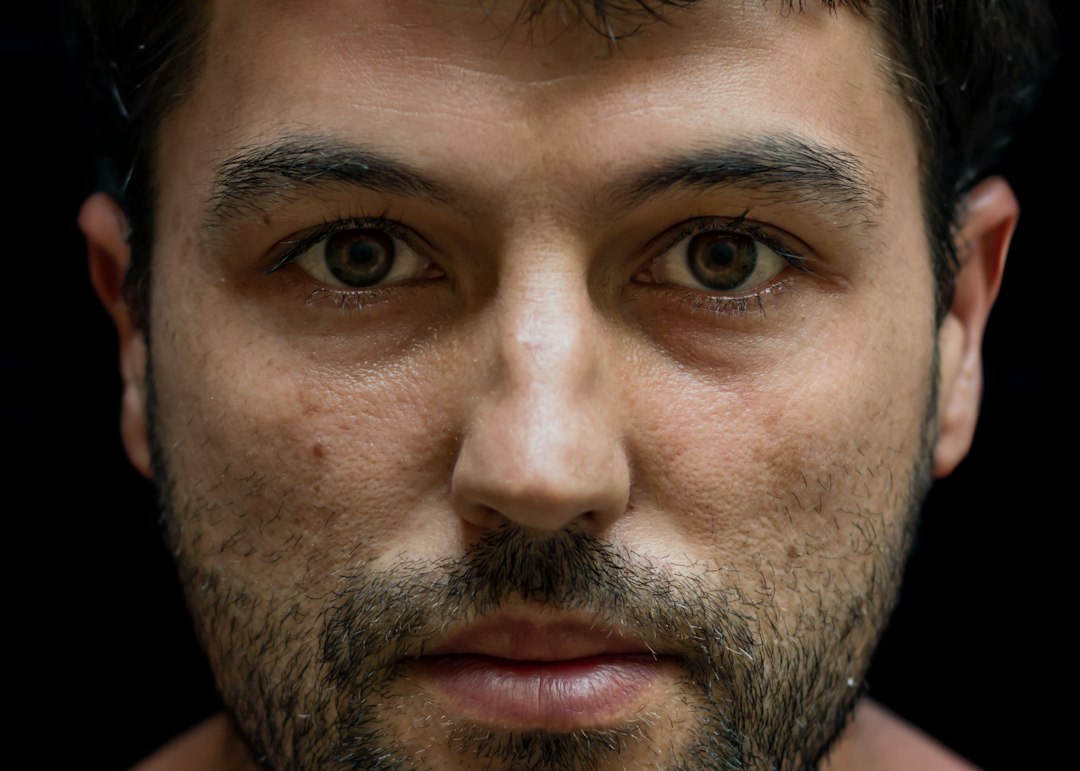
Photo by Jaime Lopes on Unsplash
The Eyebrow Game: Why Actors Rehearse Micro-Expressions
Watch any great film performance and you’ll notice something peculiar: actors can communicate volumes with the tiniest shift of an eyebrow, the slightest tightening around the eyes, or a barely perceptible jaw clench. These micro-expressions aren’t accidents. They’re rehearsed, refined, and calibrated specifically for the camera in ways that stage actors never need to consider.
The Camera Magnifies Everything
On stage, an actor projects to the back row. Subtle facial work gets lost beyond the tenth row, so theater performers rely on voice, posture, and broad gesture. Film reverses this hierarchy entirely. The close-up is cinema’s signature tool, and a 40-foot screen magnifies every flicker of doubt, every suppressed smile, every micro-moment of recognition. What reads as neutral to the naked eye becomes legible emotion when the lens is eighteen inches from your face.
This magnification means film actors must develop extraordinary control over muscles most people never think about. The corrugator supercilii, which draws the eyebrows together. The orbicularis oculi, which creates crow’s feet when you smile genuinely versus fakely. The levator labii superioris, which lifts the upper lip in disgust. Casting directors and acting coaches often talk about faces that “work” on camera—they mean faces with mobile, expressive musculature and actors who know how to use it.
Rehearsing the Invisible
Professional film actors practice micro-expressions the way musicians practice scales. They study their own faces in mirrors and on playback, learning which internal thoughts produce which external signals. They rehearse listening—the hardest and most important part of screen acting—because the camera catches everything you’re actually thinking during another actor’s line.
Some directors give actors specific facial choreography: “Give me confusion, then recognition, then dread, all in two seconds, without moving your head.” Others want something less deliberate, more intuitive, but even that requires technique. Method actors talk about “living truthfully under imaginary circumstances,” but the micro-expression work is what makes that inner truth visible to a lens.
Why It Matters Across Multiple Takes
Films shoot scenes dozens of times from different angles and distances. An actor might play the same emotional beat in a wide shot, a medium shot, an over-the-shoulder, and a tight close-up. The eyebrow raise that’s necessary in the wide shot will look cartoonish in the close-up. Great screen actors modulate their physical expression based on lens and distance, dialing up for wider frames and stripping down to almost nothing when the camera’s tight.
This is one reason why some excellent theater actors struggle on screen—they’re used to sustaining a single performance level for two hours. Film acting is more like being a precision instrument that recalibrates shot by shot, take by take, often shooting the emotional climax at 7 AM on a Tuesday after fifteen takes of walking through a door.
The Editor’s Cut
Editors are the final collaborators in this process. They select which take, which moment, which frame of an eyebrow lift best serves the story. A performance exists as much in the edit as it does on set. That’s why experienced film actors know the coverage plan and play moments slightly differently depending on which angle they expect will be used. The close-up might get the subtle version; the wide shot gets a little more.
The result is a kind of physical storytelling that’s unique to cinema. It’s not theatrical, not literary, not even quite naturalistic—it’s a heightened realism calibrated for the camera’s gaze, where a twitch can be a turning point and an eyebrow can carry a scene.