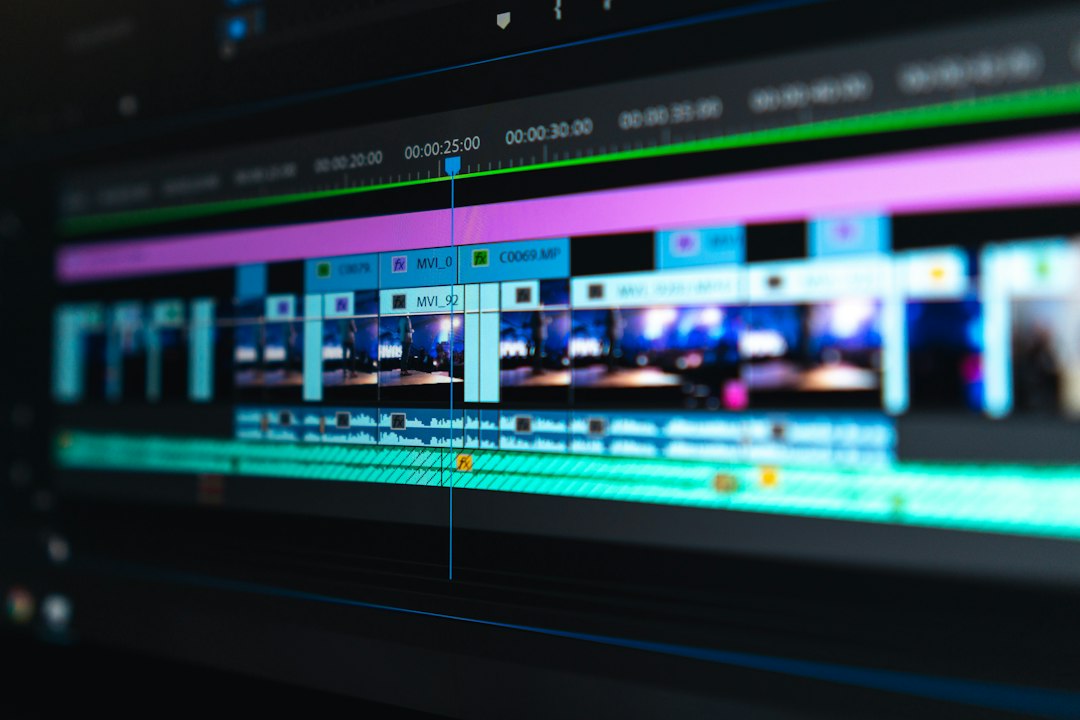
Photo by Peter Stumpf on Unsplash
The Cut Is the Music: How Editing Rhythm Shapes What You Feel
The Cut Is the Music: How Editing Rhythm Shapes What You Feel
Most people experience editing without knowing it. When a scene feels unbearable tense, when a joke lands perfectly, when a montage leaves you unexpectedly gutted — editing is usually doing the work. The craft is designed to be invisible, which is exactly what makes it powerful. Once you understand how editors use rhythm, you can’t stop noticing it.
Faster Cuts Don’t Always Mean More Energy
The common assumption is that rapid cutting creates excitement. Sometimes it does. But fast cutting in a well-choreographed action sequence and fast cutting in a chaotic, poorly constructed one produce completely different responses. The first reads as kinetic and controlled; the second is simply exhausting. Rhythm without intention is noise.
Sergei Eisenstein, the Soviet filmmaker and theorist, built a whole philosophy around this: the collision of two images creates a third meaning that neither image contains alone. A close-up of a face followed by a shot of a child produces tenderness. The same face followed by a shot of a rotting corpse produces horror. The cut itself generates meaning. Hollywood took a different path — toward the “invisible” edit that maintains continuity and keeps you inside the story — but the underlying principle holds. Every cut is an argument about what the audience should think and feel next.
The Editor Is Timing the Performance
In a dialogue scene, each cut is a musical decision. An editor chooses when to leave an actor’s face — before they finish their reaction, during it, or a beat after. That fraction of a second changes everything. Comedy is almost entirely timing: a cut one frame too late kills the joke. Drama depends on the same precision in the other direction, holding just long enough for weight to accumulate.
Two tools every editor uses constantly, and almost no viewer consciously notices: the J-cut and the L-cut. A J-cut lets you hear the audio of the next scene before you see it — the sound pulls you forward, creating momentum and anticipation. An L-cut carries audio from the previous scene into the new one, creating emotional continuity across an otherwise hard break. These are among the most expressive devices in the whole craft, and they work precisely because they operate below conscious awareness.
Slow Editing Builds Intimacy and Dread
Holding on a face longer than feels comfortable creates unease. A beat of silence between cuts invites the audience to supply their own meaning — and audiences, given the space, tend to supply something more resonant than anything on screen. Horror and psychological drama both exploit this. So does intimacy. A long held close-up is an instruction: stay here, feel this.
When an editor cuts away from an emotional moment too quickly, what it communicates is that the film doesn’t trust its own scene. Audiences feel that distrust without being able to name it. The scene feels thin. Speed, here, is a form of evasion.
Rhythm Is Architecture, Not Just Local Texture
The pacing of a whole film — when it accelerates, when it breathes — is a structure as deliberate as the screenplay’s three acts. If every scene is cut fast, the film becomes numbing; the brain habituates and stops registering tension. If every scene is slow, the film becomes inert. The best-edited films vary their rhythm deliberately, so that the fast sections feel fast because the slow sections existed.
This is why re-cuts and director’s cuts sometimes transform a film’s reception. Adding ten minutes of slower, quieter scenes in the first half can make the back half feel like a different movie — not because the action changed, but because the audience has been taught a new baseline.
Cinema’s Most Underrated Craft
Directors receive auteur credit. Cinematographers get their images on magazine covers. Editors mostly get recognized by other editors. But editing is where films are genuinely assembled — actors give dozens of takes, scenes are reordered, entire subplots are excised, and the emotional logic of the whole is constructed after the fact. Films have been salvaged from weak material in the editing room; others have been flattened despite extraordinary footage.
The editor is, in the most practical sense, the last writer on the film. The rhythm they choose is the rhythm you live inside for two hours. You feel it without hearing it, which is exactly the point.