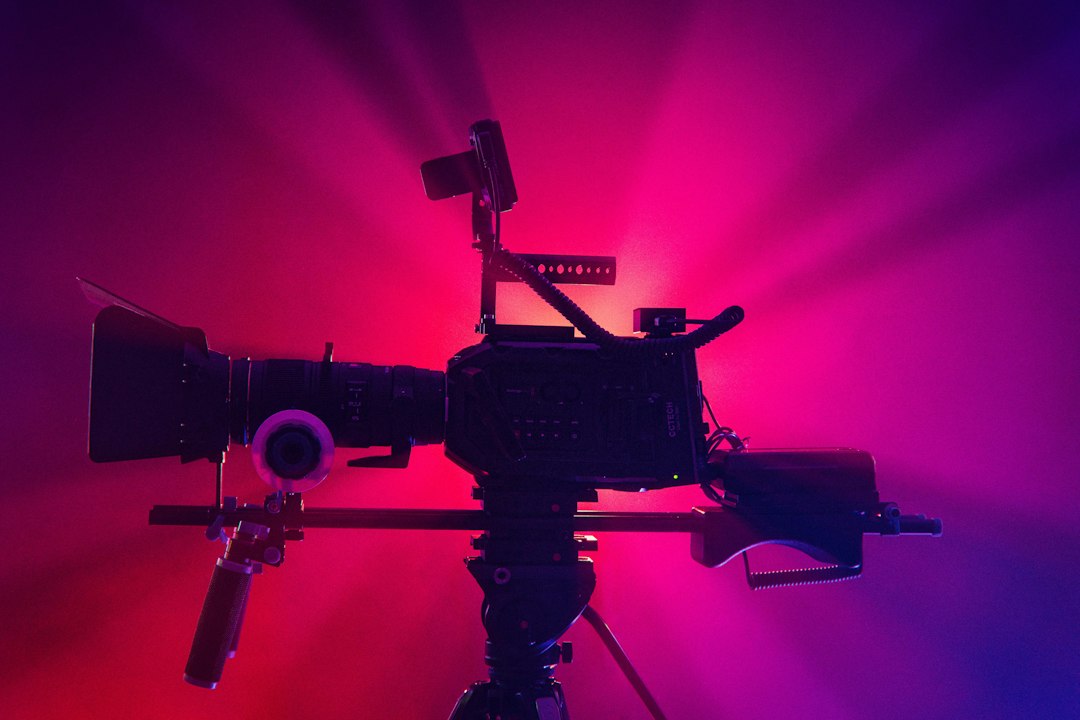
Photo by TheRegisti on Unsplash
The Dutch Angle: Why a Tilted Frame Makes Us Uneasy
Most of the time, a film frame sits level with the horizon. It’s such a basic assumption that we don’t even register it as a choice. So when a director tilts the camera and the horizon line cuts across the frame at an angle instead of running straight, our eye catches it immediately, even if we can’t always say why. That tilt has a name: the Dutch angle, sometimes called a Dutch tilt or oblique angle. It’s one of the simplest tools in the visual grammar of unease.
Where the Name Comes From
Despite the name, the technique has nothing to do with the Netherlands. Most film historians trace it to German Expressionist cinema of the 1920s, films like The Cabinet of Dr. Caligari, which used distorted sets, harsh shadows, and skewed compositions to put the audience in an off-balance psychological state. “Dutch” here is likely a corruption of “Deutsch,” meaning German. The label stuck even as the technique traveled far beyond its origins, showing up in film noir, superhero movies, horror, and just about any genre that wants to tell you something is wrong before a character says a word.
Why Tilting the Camera Works on Us
The effect isn’t just a stylistic flourish, it plugs into something physical. Human beings orient themselves partly through the vestibular system, the inner-ear mechanism that tells us which way is up. Our visual system is calibrated to expect a stable horizon, and it uses that horizon as a reference point for balance. When a film frame breaks that expectation, it creates a small, involuntary flicker of disorientation, the same low-grade unease you might feel on a boat or in an elevator that starts too fast.
A director doesn’t need the audience to consciously notice the horizon is off. The unease registers before the analysis does. That’s what makes the Dutch angle useful: it can plant a feeling of wrongness in a scene that otherwise reads as calm on the surface, which is a more efficient way to build dread than dialogue or music alone.
What It Signals
Filmmakers reach for the Dutch angle in a few recurring situations. It shows up when a character’s mental state is fraying, suggesting that their perception of the world has come unmoored. It appears in moments of physical danger or violence, where the skewed frame mirrors a loss of control. It’s a staple of villain introductions, especially in comic book adaptations, where the tilt marks a character as operating outside the moral order of the rest of the film. And it turns up in stylized genres like noir and giallo, where a persistently off-kilter visual world reinforces a story about corruption, paranoia, or moral rot.
The angle of the tilt matters too. A slight tilt, just a few degrees, reads as subtle unease, something’s not quite right. A steep tilt, approaching 45 degrees, reads as more overtly chaotic or theatrical, closer to the expressionist roots of the technique. Cinematographers calibrate the degree of tilt the same way they’d calibrate lighting contrast or lens choice, matching the intensity of the device to the intensity of the moment.
The Risk of Overuse
Because the effect works partly through novelty and contrast, it loses power fast if it’s used constantly. A film that tilts its camera in every other scene trains the audience to expect it, and the vestibular jolt stops registering as meaningful, it just becomes house style. That’s why the Dutch angle tends to work best as a punctuation mark rather than a default setting, reserved for the scenes where a filmmaker specifically wants the audience’s body, not just their brain, to register that something has tipped off balance.
It’s a reminder that some of the most effective tools in visual storytelling aren’t narrative devices at all. They’re aimed squarely at the nervous system, using the audience’s own physiology as part of the craft.