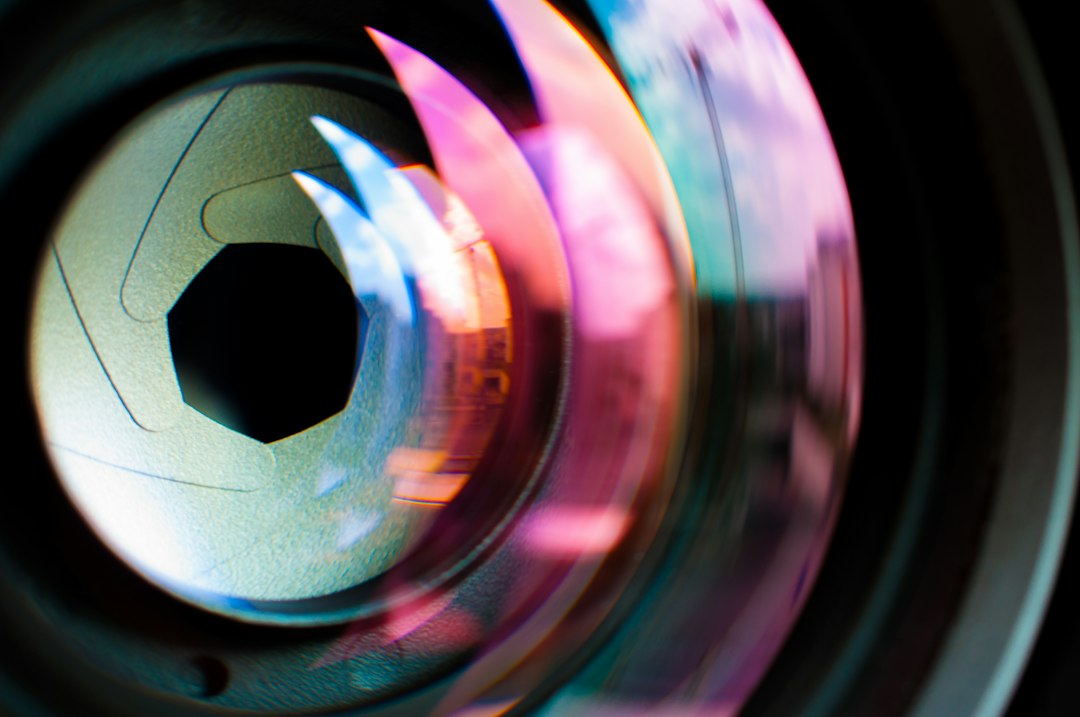
Photo by Agence Olloweb on Unsplash
Depth of Field and the Grammar of Attention
Depth of Field and the Grammar of Attention
Every time a camera focuses on something, it makes an argument. The object in sharp detail says: this matters. Everything dissolving into blur says: this doesn’t — at least not right now. Depth of field is one of the most basic properties of any lens, but in the hands of a cinematographer, it functions as a precise storytelling tool, one that operates below the level of conscious thought for most viewers.
What Depth of Field Actually Is
Depth of field refers to how much of the image — measured along the axis from camera to subject — appears acceptably sharp. A shallow depth of field keeps only a narrow slice in focus; a deep depth of field renders most of the scene, foreground to background, in crisp detail.
Several variables control this: the size of the lens’s aperture (a wide-open aperture produces shallower focus), the focal length of the lens (longer telephoto lenses compress depth and isolate subjects more easily), and the physical distance between camera and subject. These are technical parameters, but every choice among them carries visual consequence.
The Democratic Frame vs. the Directed Eye
Deep focus — keeping an entire scene sharp regardless of depth — creates what you might call a democratic frame. The viewer’s eye can move freely across the image, reading foreground action against background action simultaneously. This approach was central to the work of cinematographers like Gregg Toland, whose collaboration with Orson Welles on Citizen Kane pushed deep focus toward an expressive extreme: rooms that seem to extend infinitely, characters looming large while others recede in sharp miniature behind them. Deep focus insists that space itself is meaningful; the environment doesn’t disappear behind the subject, it frames and contextualizes them.
Shallow focus inverts that logic entirely. By throwing the background into blur, the cinematographer removes context and collapses the world down to a face, a hand, an object. This is control as much as aesthetics. The director isn’t trusting the viewer to find the right thing — they’re pointing directly at it. Shallow focus is intimate and insistent. It also tends to feel modern, partly because digital cameras and fast prime lenses have made very shallow depth of field increasingly easy to achieve and fashionable to deploy.
The Rack Focus: Focus as Punctuation
If static depth of field is a compositional stance, the rack focus is an event. A rack focus shifts the plane of sharpness mid-shot — typically from a foreground subject to a background one, or vice versa — without cutting. It’s a reveal, a transition, and an argument all at once.
A character in the background coming into focus as the foreground figure blurs out can signal a shift in narrative power, a revelation, or simply that attention needs to move. Done well, a rack focus feels inevitable. Done clumsily, it feels like the camera reminding you it’s there. The discipline is to make the shift feel motivated — tied to something happening in the story, not just to the mechanics of the lens.
What the Choice Communicates
Beyond technique, the deeper question is what each choice signals emotionally and narratively.
Shallow focus with a telephoto lens tends to flatten space and isolate — it’s the grammar of surveillance, of obsession, of a character cut off from their surroundings. Deep focus with a wide lens opens the world up, puts the character in conversation with their environment. It’s harder to hide things in a deep-focus frame, and that transparency can be part of the point.
Neither approach is inherently superior. The mistake is treating one as automatically cinematic and the other as merely functional. A film shot entirely in shallow focus begins to feel claustrophobic by design or accidentally monotonous. A film that deploys sharp deep-focus frames sparingly creates contrast — so that when everything is suddenly in focus, the clarity itself carries weight.
Focus is never neutral. Like every other technical decision in cinematography, it’s a statement about where meaning lives in the frame.