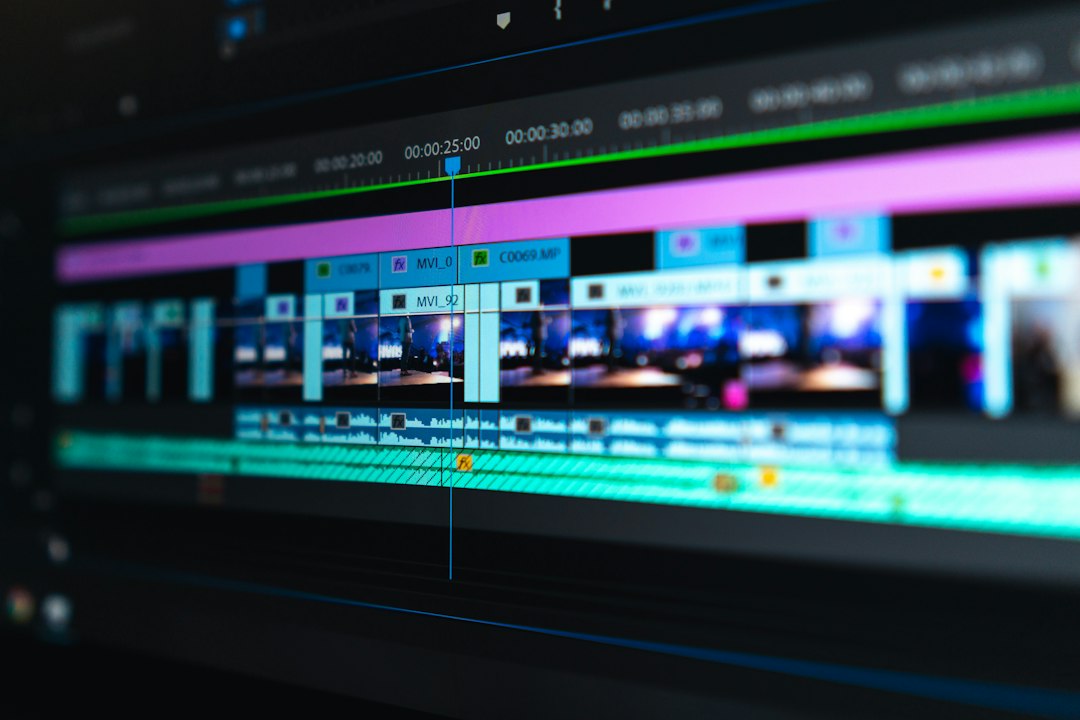
Photo by Peter Stumpf on Unsplash
The Art of the Cutaway: Why Movies Look Away at the Perfect Moment
Watch any well-edited scene closely and you’ll notice something curious: the camera rarely stays locked on the main action for long. It drifts to a clock on the wall, a bystander’s face, a hand gripping a table edge, before returning to whatever we were actually watching. This is the cutaway — one of editing’s most versatile and least appreciated tools.
A cutaway is exactly what it sounds like: a shot that cuts away from the primary action to something else, then (usually) cuts back. It’s distinct from a reaction shot, which shows someone responding to the main action, and from a cut to a new scene, which doesn’t return. The cutaway is a detour with a round trip ticket.
More Than a Breather
The simplest reason editors reach for cutaways is rhythm. A scene that holds on one shot too long starts to feel static, even if the performances are strong. Cutting away to a detail — a ticking watch, a glass sweating with condensation, a foot tapping under a table — resets the visual pace without breaking the scene’s momentum. It’s a way of breathing without losing focus.
But cutaways do heavier lifting than pacing alone. They’re one of the primary tools for controlling information. A cutaway to a locked door before a character tries to leave tells the audience something the character may not yet know. A cutaway to a phone buzzing unanswered on a nightstand builds dread purely through omission — we know something is coming that the scene itself hasn’t addressed yet.
This is why cutaways are so central to suspense filmmaking. Alfred Hitchcock’s oft-cited philosophy of suspense — showing the audience a bomb under the table before the characters sit down — depends entirely on the cutaway. The shot of the bomb is, structurally, a cutaway from the conversation. Remove it, and the scene becomes ordinary dialogue. Insert it, and every line of that same dialogue now carries tension.
The Editor’s Safety Net
There’s also a less romantic, more practical reason cutaways are everywhere: they solve problems. If a take has a flubbed line, a continuity error, or a performance that doesn’t quite land, a cutaway gives editors a place to hide the seam. Cut to a reaction, a prop, a passing detail — then return to the main shot on a cleaner beat. Skilled editing uses this constantly, and audiences almost never notice because the cutaway feels motivated rather than evasive.
This is also why productions shoot so much coverage of secondary elements — hands, background players, insert shots of objects — that never seem strictly necessary on the page. Editors call these “cutaway inserts,” and a good editor treasures them, because they’re the thread that lets a scene be reassembled in dozens of different ways after the fact. A scene without cutaway coverage is rigid; one shot has to work, in full, or the scene doesn’t work at all.
Choosing What to Look At
The choice of what a film cuts away to is rarely arbitrary, even when it looks incidental. A cutaway to a wedding ring being twisted nervously communicates interiority no dialogue could deliver as efficiently. A cutaway to an empty chair signals absence and loss without a single line of exposition. Because cutaways sit outside the main action, they carry a kind of authorial weight — the camera choosing to show us this, right now, means something.
This is part of why sloppy cutaways stand out so uncomfortably. A cutaway that exists only to cover an edit, with no emotional or narrative point of view, tends to register as filler even to viewers who couldn’t articulate why. The best editors treat every cutaway as a small argument about what matters in the scene, not just a mechanical fix.
Next time you watch a tense conversation and the camera drifts, even briefly, to something in the corner of the room, pay attention. It’s rarely just decoration. It’s the film quietly telling you where to look — and, more importantly, why.